



Pregnancy and childbirth bring enormous physical and emotional changes. While welcoming a new baby is often a joyful experience, many women also experience persistent sadness, anxiety, irritability, fatigue, or loss of interest in daily activities after delivery.
When these symptoms become severe and last for weeks, they may indicate postpartum depression (PPD).
According to global estimates, postpartum depression affects 10–20% of new mothers, making it one of the most common complications after childbirth. It can affect a mother’s quality of life, her relationship with her baby, and the overall well-being of the family.
While psychotherapy and medications remain the standard treatments for moderate to severe postpartum depression, researchers are increasingly exploring whether good nutrition during pregnancy and after delivery can help lower the risk.
A recent systematic review examined whether four important trace minerals—selenium, zinc, iron, and iodine—may play a role in preventing or reducing postpartum depressive symptoms. The findings are promising, although more research is still needed.
Why Nutrition Matters for Mental Health
The brain depends on a constant supply of vitamins and minerals to function properly. These nutrients help the brain:
-
Produce neurotransmitters such as serotonin and dopamine
-
Protect brain cells from oxidative stress
-
Support thyroid hormone production
-
Maintain healthy nerve communication
-
Regulate the body’s stress response
During pregnancy, the demand for many nutrients increases significantly because the developing baby relies entirely on the mother’s nutritional stores. If important minerals become depleted, brain function and mood regulation may be affected.
What Did the Review Examine?
Researchers analyzed studies involving pregnant and postpartum women who received trace mineral supplements. The review included:
-
Randomized controlled trials
-
Prospective cohort studies
-
Case-control studies
Most studies assessed maternal mood using the Edinburgh Postnatal Depression Scale (EPDS), one of the most widely used screening tools for postpartum depression. The review focused on four essential trace minerals:
-
Selenium
-
Zinc
-
Iron
-
Iodine
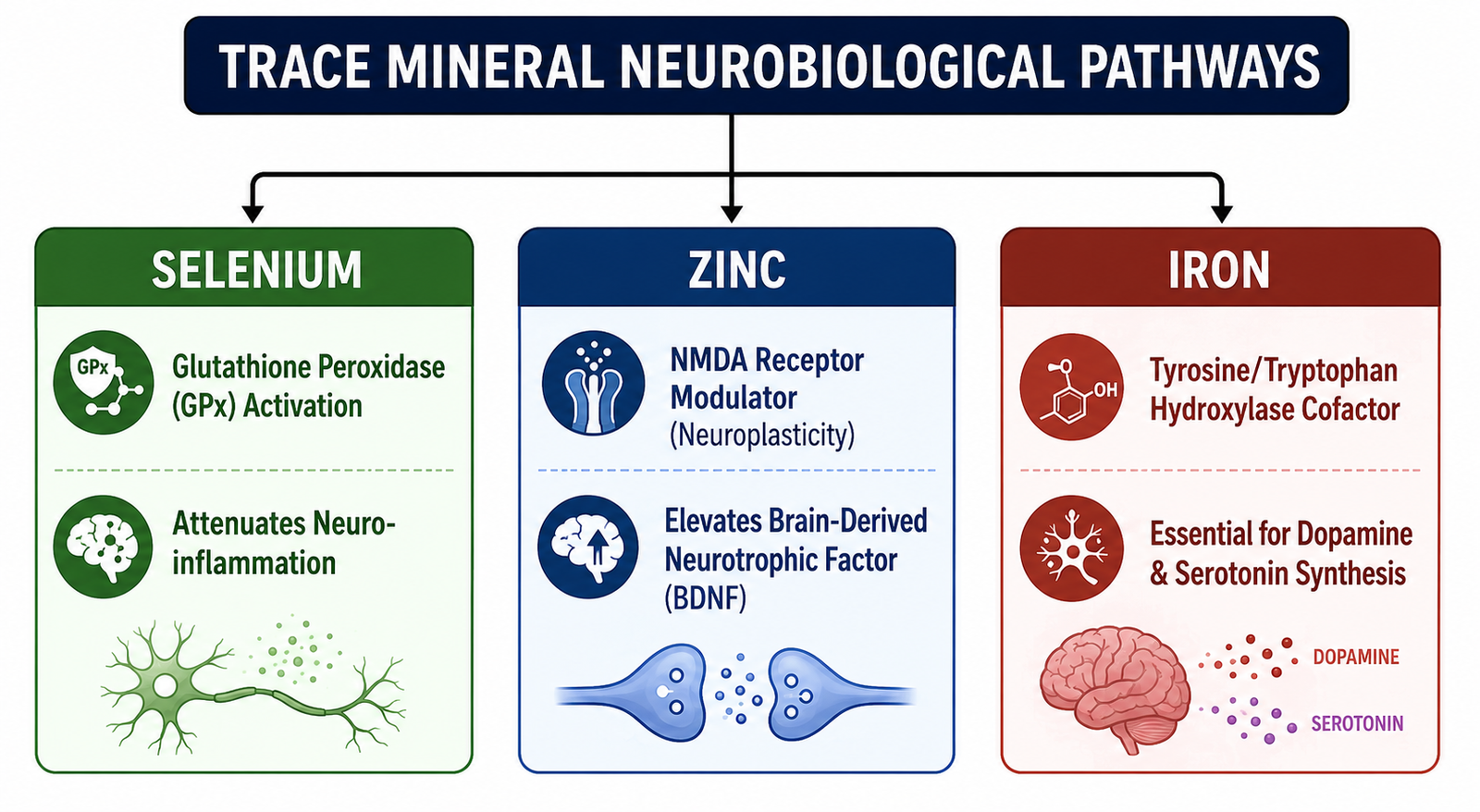
Selenium: The Most Promising Mineral
Among all the minerals studied, selenium showed the most consistent results. Selenium is an essential trace mineral that helps the body produce powerful antioxidant enzymes, particularly glutathione peroxidase (GPx).
These enzymes protect brain cells from damage caused by oxidative stress. Selenium also plays an important role in thyroid hormone metabolism. It helps convert the inactive thyroid hormone (T4) into its active form (T3), which is essential for normal brain function and emotional well-being.
Several studies included in the review found that women who received approximately 100 micrograms of selenium daily during pregnancy had lower postpartum depression scores compared with women who received a placebo.
Although these findings are encouraging, researchers emphasize that selenium supplements should only be taken within recommended limits because excessive intake can be harmful.
Zinc: Supporting Brain Communication
Zinc is involved in hundreds of enzyme reactions throughout the body, including many that influence brain health. It helps regulate communication between nerve cells and supports the production of Brain-Derived Neurotrophic Factor (BDNF), a protein that promotes healthy brain function, learning, and emotional resilience.
Zinc also helps regulate glutamate, one of the brain’s major neurotransmitters, reducing excessive stimulation that may contribute to anxiety and mood disturbances.
Some studies found that women with better zinc status experienced improved mood after childbirth. However, the benefits of zinc supplementation were less consistent than selenium, and results often depended on whether the mother was already zinc deficient before supplementation.
Iron: More Than Just Preventing Anemia
Iron is best known for preventing anemia, but its role extends far beyond making red blood cells. Iron is essential for producing dopamine and serotonin, two neurotransmitters that play key roles in mood regulation.
Women who develop iron deficiency during pregnancy or after childbirth often experience:
-
Persistent fatigue
-
Difficulty concentrating
-
Low energy
-
Reduced motivation
-
Symptoms that can overlap with depression
The review found that correcting iron deficiency anemia improved energy levels and reduced depressive symptoms in many women. However, taking iron supplements when iron levels are already normal did not consistently improve mood. This highlights the importance of testing before supplementing.
Iodine and Thyroid Health
Iodine is required to produce thyroid hormones, which regulate metabolism, energy levels, and normal brain development. Pregnancy increases iodine requirements because the mother’s thyroid must support both herself and her growing baby.
Even mild iodine deficiency may affect thyroid function and could indirectly contribute to mood changes after delivery. Although research on iodine and postpartum depression remains limited, maintaining adequate iodine intake during pregnancy remains an important part of maternal nutrition.
Why Do These Minerals Affect Mood?
Scientists believe these minerals influence mental health through several biological pathways. They help:
-
Protect brain cells from oxidative stress
-
Reduce inflammation within the nervous system
-
Support healthy thyroid hormone production
-
Improve communication between brain cells
-
Promote the production of serotonin and dopamine
-
Support the body’s response to physical and emotional stress
Rather than acting like antidepressant medications, these nutrients help create the biological conditions needed for healthy brain function.
Should Every Pregnant Woman Take Trace Mineral Supplements?
One of the strongest messages from the review is that more is not always better. Researchers recommend targeted supplementation, which means correcting genuine deficiencies rather than taking high doses of multiple minerals without medical advice. Routine screening for nutrients such as:
-
Iron
-
Selenium (where appropriate)
-
Zinc (if deficiency is suspected)
-
Iodine intake
may help healthcare providers identify women who could benefit most from supplementation.
Food Sources of These Important Minerals
A healthy diet remains the best foundation for obtaining trace minerals.
Selenium – Brazil nuts (very rich source), Fish, Eggs, Chicken and Whole grains
Zinc – Pumpkin seeds, Chickpeas, Lentils, Dairy products, Animal Meats, Seafood
Iron – Red meat, Liver, Spinach, Lentils, Beans, Fortified cereals. Eating vitamin C-rich foods alongside plant-based iron sources can improve iron absorption.
Iodine – Iodized salt, Dairy products, Fish, Eggs and Animal Meats
Important Safety Considerations
Although trace minerals are essential, taking large doses without supervision may be harmful. For example:
-
Too much selenium can cause hair loss, brittle nails, and nerve problems.
-
Excess zinc may reduce copper absorption.
-
Unnecessary iron supplementation may cause digestive problems and should not be used unless recommended by a healthcare professional.
Pregnant and breastfeeding women should always discuss supplements with their obstetrician or healthcare provider before starting them.
What Does This Mean for New Mothers?
Current research suggests that maintaining adequate trace mineral status may support maternal mental health, especially in women with nutritional deficiencies. Among the minerals studied:
-
Selenium showed the strongest and most consistent evidence for reducing postpartum depressive symptoms
-
Zinc demonstrated promising but variable results
-
Iron supplementation was beneficial primarily in women with iron deficiency
-
Adequate iodine intake remains important for healthy thyroid function and overall maternal well-being