



A comprehensive evidence-based review of one of the most surprising discoveries in vitamin D research – Some of you may have thought Vit D2 is the same as Vit D3. Science says – No. Vegans and Vegetarians may need to veer back to Vit D3.
For Decades, We Thought Vitamin D2 and Vitamin D3 Were Basically the Same
If you were prescribed a vitamin D supplement ten years ago, there was a good chance your doctor or healthcare provider may have told you that Vitamin D2 (ergocalciferol) and Vitamin D3 (cholecalciferol) were essentially interchangeable. New research sets this discussion to a complete rest.
Long back – Both forms of Vit D were considered effective for treating vitamin D deficiency. Both forms increased blood vitamin D levels. Both forms of Vit D appeared in clinical guidelines by best of the best doctors.
And both forms of Vit D were widely used almost around the world. For decades, very few clinicians questioned whether one form might actually perform better than the other. Then researchers began noticing something unexpected.
In carefully designed clinical studies, people receiving Vitamin D2 supplements often showed a decline in their own blood levels of Vitamin D3, even while their total vitamin D levels increased. Read this highlighted statement again – Vit D2 supplementation actually leads to a decline in your own, already esiting, circulating levels of Vit D3 in your blood – counterproductive. A detailed Systematic Review and Meta-analysis of a number of RCTs (Randomized clinical Trails – the Gold Standard of Clinical Trials) is hyperlinked – a download of this Published Research can be accessed here – Systematic Review and Meta-Analysis Vit D2 supplementatation
At first, many scientists thought it was simply a laboratory error. Repeated studies, however, produced remarkably similar findings.
Today, a growing body of research suggests that Vitamin D2 and Vitamin D3 are not biologically identical, and that the choice of supplement may influence how vitamin D is metabolised inside the body.
The question is no longer simply: “Which vitamin raises vitamin D levels better?” Instead, researchers are uncovering a much more intriguing and uncomfortable truth: Does Vitamin D2 supplementation actually reduces circulating, blood serum Vitamin D3 levels? And Why?
The Short Answer
According to the latest systematic reviews and controlled clinical trials:
Yes. Vitamin D2 supplementation has repeatedly been shown to reduce circulating blood concentrations of 25-hydroxyvitamin D3 [25(OH)D3] in many studies.
However,—and this is the critical point— that this does not necessarily mean Vitamin D2 causes overall vitamin D3 deficiency, as yet – unless proven otherwise in future. So why risk using Vit D2 for supplementation, when Vit D3 supplements are available aplenty.
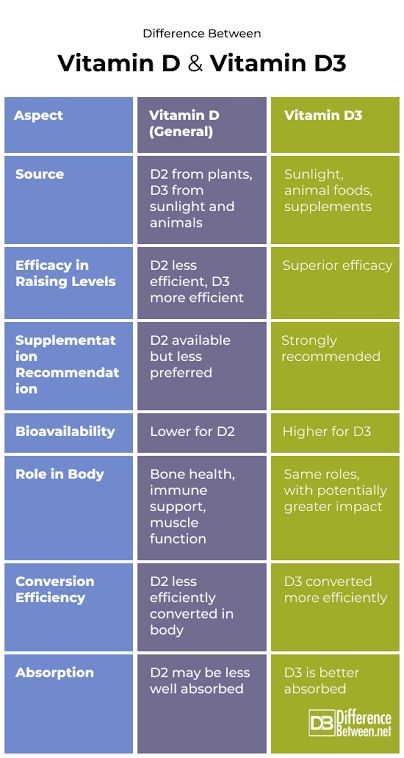
Vitamin D2 supplementation simultaneously increases 25-hydroxyvitamin D2 [25(OH)D2], meaning that total circulating 25-hydroxyvitamin D [25(OH)D] often still rises, although generally less effectively than after Vitamin D3 supplementation. Recent reviews conclude that Vitamin D3 is more effective than Vitamin D2 at increasing and maintaining total vitamin D status in most populations.
This distinction is extremely important because it changes how the scientific findings should be interpreted.
Understanding the Language: What Is 25(OH)D?
One of the biggest sources of confusion is that doctors do not usually measure vitamin D itself. Instead, laboratories measure a storage form called: 25-hydroxyvitamin D, often abbreviated as 25(OH)D.
This exists as two separate molecules:
-
25(OH)D2 – produced after taking Vitamin D2
-
25(OH)D3 – produced from Vitamin D3 made in the skin AFTER SUFFICIENT SUNLIGHT exposure, or obtained from food and supplements
When these two forms are added together, they produce the total 25(OH)D level reported in most blood tests. This means it is entirely possible for:
-
25(OH)D3 to decrease
-
25(OH)D2 to increase
-
Total vitamin D status still to improve
All three can occur at the same time. Understanding this concept is essential before interpreting the research.
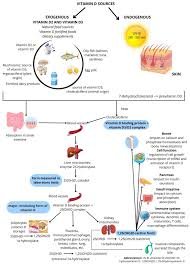
The Discovery That Changed the Conversation
For many years, studies comparing Vitamin D2 and Vitamin D3 focused on only one question: Which supplement raises total vitamin D levels more effectively?
The answer gradually became clear. Beginning with controlled trials in the early 2000s and reinforced by later meta-analyses, researchers consistently found that **Vitamin D3 produced larger and more sustained increases in serum 25(OH)D than Vitamin D2.**² ³
Then scientists began analysing the individual metabolites separately. Instead of measuring only total vitamin D, they measured:
-
Serum 25(OH)D2
-
Serum 25(OH)D3
That is when the unexpected pattern emerged. Across multiple studies, participants taking Vitamin D2 showed falling concentrations of endogenous 25(OH)D3, even though total vitamin D levels frequently increased.
The observation was reproduced often enough that researchers began investigating possible biological explanations.
What Does the Latest Research Show?
One of the most comprehensive recent reviews examined evidence from randomised controlled trials comparing Vitamin D2 and Vitamin D3 supplementation. The review found several consistent observations.
1. Vitamin D3 Raises Total Vitamin D More Effectively – Across numerous trials, Vitamin D3 produced greater increases in serum total 25(OH)D than equivalent doses of Vitamin D2. This superiority was observed with:
-
Daily supplementation
-
Weekly supplementation
-
Monthly dosing
-
Fortified foods
The difference was particularly noticeable during longer treatment periods.¹ ³
2. Vitamin D2 Often Lowers Serum 25(OH)D3 – One of the most intriguing findings was that Vitamin D2 supplementation frequently reduced circulating concentrations of 25(OH)D3. Although the magnitude varied between studies, the direction of change was remarkably consistent.
Researchers now regard this as a genuine biological phenomenon rather than a laboratory artefact.¹
3. Total Vitamin D Usually Still Increases – This is perhaps the most misunderstood point. Although Vitamin D2 may reduce measured 25(OH)D3, it simultaneously increases 25(OH)D2. As a result:
-
Total vitamin D often improves.
-
Deficiency may still be corrected.
-
However, the increase is generally smaller than that achieved with Vitamin D3.
This explains why many professional organisations now favour Vitamin D3 whenever possible.
Why Would Vitamin D2 Lower Vitamin D3?
Scientists still do not have a complete answer. Several mechanisms are currently being investigated. The leading theories include:
Competition for Metabolism – Vitamin D2 and Vitamin D3 use many of the same enzymes during activation and breakdown. Some researchers believe Vitamin D2 alters the metabolism of Vitamin D3 by competing for these enzymes.
Faster Breakdown – Vitamin D2 metabolites appear to be broken down more rapidly than Vitamin D3 metabolites. This shorter biological half-life may influence the balance between the two forms.
Lower Binding to Vitamin D-Binding Protein – Vitamin D travels through the bloodstream attached to a specialised transport protein. Evidence suggests Vitamin D2 metabolites bind less strongly to this protein than Vitamin D3 metabolites. Lower binding may contribute to faster clearance from circulation.
Enhanced Catabolism – Experimental studies also suggest Vitamin D2 may stimulate enzymes involved in vitamin D degradation. Whether this fully explains the fall in 25(OH)D3 remains an active area of investigation. These mechanisms will be explored in detail in the next article in this series.
Why Many Experts Now Prefer Vitamin D3
Over the last decade, many clinicians have gradually shifted towards Vitamin D3 as the preferred supplement. This change has been driven by evidence showing that Vitamin D3 generally:
-
Produces larger increases in total 25(OH)D
-
Maintains blood concentrations for longer
-
Has a longer circulating half-life than Vit D2
-
May provide more stable vitamin D status between doses
-
Performs better across a wide range of supplementation schedules
For these reasons, several expert reviews conclude that **Vitamin D3 should generally be the preferred form for routine supplementation unless there is a specific reason to use Vitamin D2.**¹–⁴
Why This Matters in India
India has one of the world’s highest burdens of Vitamin D deficiency at this moment.
Multiple studies estimate that as high as, 50–90% of Indians have insufficient or deficient vitamin D levels, although prevalence varies according to age, geography, lifestyle and the diagnostic thresholds used. For decades, both Vitamin D2 and Vitamin D3 preparations have been prescribed in clinical practice.
As newer evidence accumulates, clinicians are increasingly questioning whether Vitamin D3 should become the preferred choice for correcting deficiency and maintaining long-term vitamin D status.
Given the enormous number of people receiving Vitamin D supplements in India every year, even modest differences in efficacy could have important public health implications. Unfortunately, a good number of multi-vitamin products being sld in India still have Vit D2 as the only source of Vit D for supplementation. Hope that consumers will make an informed choice and shift to Vit D3 brands only.
The Bottom Line
The debate over Vitamin D2 versus Vitamin D3 is no longer simply about which supplement raises vitamin D levels more effectively.
Research over the past two decades has uncovered a far more intriguing biological phenomenon: Vitamin D2 supplementation often reduces already existing, circulating 25(OH)D3 concentrations while increasing 25(OH)D2.
Although total vitamin D status usually improves, Vitamin D3 consistently outperforms Vitamin D2 in raising and maintaining serum 25(OH)D in most clinical studies. Exactly why this happens remains one of the most fascinating questions in nutritional science.
In the next article, we explore the underlying biology—from vitamin D-binding protein and liver metabolism to enzyme competition and degradation pathways—to understand why these two seemingly similar vitamins behave so differently inside the human body. You, in the interim, may ditch Vit D2 supplements and help support your body get the right Vit D3 supplement, better still consider extensive sun-bathing.
Select References
-
Nutrients/Nutrition Reviews (2025). Systematic review of vitamin D2 versus vitamin D3 supplementation and effects on serum vitamin D metabolites
-
Tripkovic L, Lambert H, Hart K, et al. Comparison of vitamin D2 and vitamin D3 supplementation in raising serum 25-hydroxyvitamin D status: a systematic review and meta-analysis. American Journal of Clinical Nutrition. 2012;95:1357–1364
-
Tripkovic L, Wilson LR, Hart K, et al. Daily vitamin D2 compared with vitamin D3 supplementation: updated evidence from systematic reviews and meta-analyses. Advances in Nutrition. 2024
-
Armas LAG, Hollis BW, Heaney RP. Vitamin D2 is much less effective than vitamin D3 in humans. Journal of Clinical Endocrinology & Metabolism. 2004;89:5387–5391
-
Logan VF, Gray AR, Peddie MC, et al. Long-term vitamin D3 supplementation is more effective than vitamin D2 in maintaining vitamin D status. European Journal of Clinical Nutrition
-
Cashman KD, Seamans KM, Lucey AJ, et al. Relative effectiveness of oral vitamin D2 and vitamin D3 in improving vitamin D status. British Journal of Nutrition
-
Biancuzzo RM, Young A, Bibuld D, et al. Fortification with vitamin D2 or vitamin D3: comparative effects on serum 25(OH)D. Journal of Clinical Endocrinology & Metabolism
-
Holick MF. Vitamin D deficiency. New England Journal of Medicine