



Understanding Methylation, Normal Levels of Homocysteine and Why Millions of Indians May Have Elevated Homocysteine Without Them Knowing About It
A Blood Test That Millions of Indians May Never Have Heard Of
Every year, millions of Indians undergo blood tests. They routinely check: Blood sugar, Cholesterol, Liver function, Kidney function, Vitamin D and Vitamin B12 levels.
Yet there is one blood marker that receives surprisingly very little attention despite decades of scientific research. That marker is homocysteine.
Unlike cholesterol or blood sugar, homocysteine is not a disease. It is a naturally occurring amino acid produced by the body during the metabolism of another amino acid called methionine, which is obtained from dietary protein. Under normal circumstances, homocysteine is rapidly recycled or converted into other beneficial compounds.
However, when this recycling process is disrupted, homocysteine accumulates in the bloodstream—a condition known as hyperhomocysteinemia.
Over the past three decades, elevated homocysteine has been associated with an increased risk of cardiovascular disease, stroke, chronic kidney disease, pregnancy complications, cognitive decline / dementia and other health conditions.
At the same time, research has shown that lowering homocysteine does not always translate into fewer cardiovascular events, highlighting the importance of interpreting this marker within the broader clinical picture. For Indians, this topic deserves special attention because deficiencies of vitamin B12 and folic Acid / floate, both essential for homocysteine metabolism, remain very common in India.
What Exactly Is Homocysteine?
Homocysteine is a sulfur-containing amino acid that is formed inside the body during the normal breakdown of methionine. Think of methionine as the starting material.
As methionine participates in hundreds of important biochemical reactions, it temporarily becomes homocysteine. Homocysteine is therefore an intermediate compound, not a waste product. The body has evolved efficient mechanisms to ensure that it does not accumulate.
When those mechanisms work normally, blood homocysteine remains within the healthy range.
Why Does the Body Produce Homocysteine?
Because methionine is one of the body’s most important amino acids. Methionine helps produce: Proteins, Antioxidants, Cell membranes, DNA methylation molecules, Creatine, Polyamines and Numerous signaling compounds.
During these reactions, homocysteine is generated naturally. Your body produces homocysteine naturally as an intermediate byproduct when it breaks down methionine, an essential amino acid found in protein-rich foods. This process drives the methylation cycle, which is crucial for making DNA, creating neurotransmitters, and performing cellular repair.
Meet the Methylation Cycle
One of the most fascinating biochemical processes in the human body is methylation. Although the word sounds technical, methylation occurs billions of times every second.
Every cell depends upon it. A methyl group is simply one carbon atom attached to three hydrogen atoms (CH₃). The body transfers these tiny methyl groups from one molecule to another to keep essential biological processes running.
Why Is Methylation So Important? – Methylation is involved in:
DNA regulation – Helping switch genes on or off without changing the DNA sequence itself
Brain function – Producing neurotransmitters such as dopamine, serotonin and norepinephrine
Liver function – Supporting normal detoxification pathways and fat metabolism
Energy production – Helping cells generate and utilize energy efficiently
Healthy blood cells – Supporting normal red blood cell formation in body
Immune function – Helping immune cells grow, divide and respond appropriately
Pregnancy – Supporting fetal growth and neural tube development
Without adequate methylation, numerous biological systems may be affected.
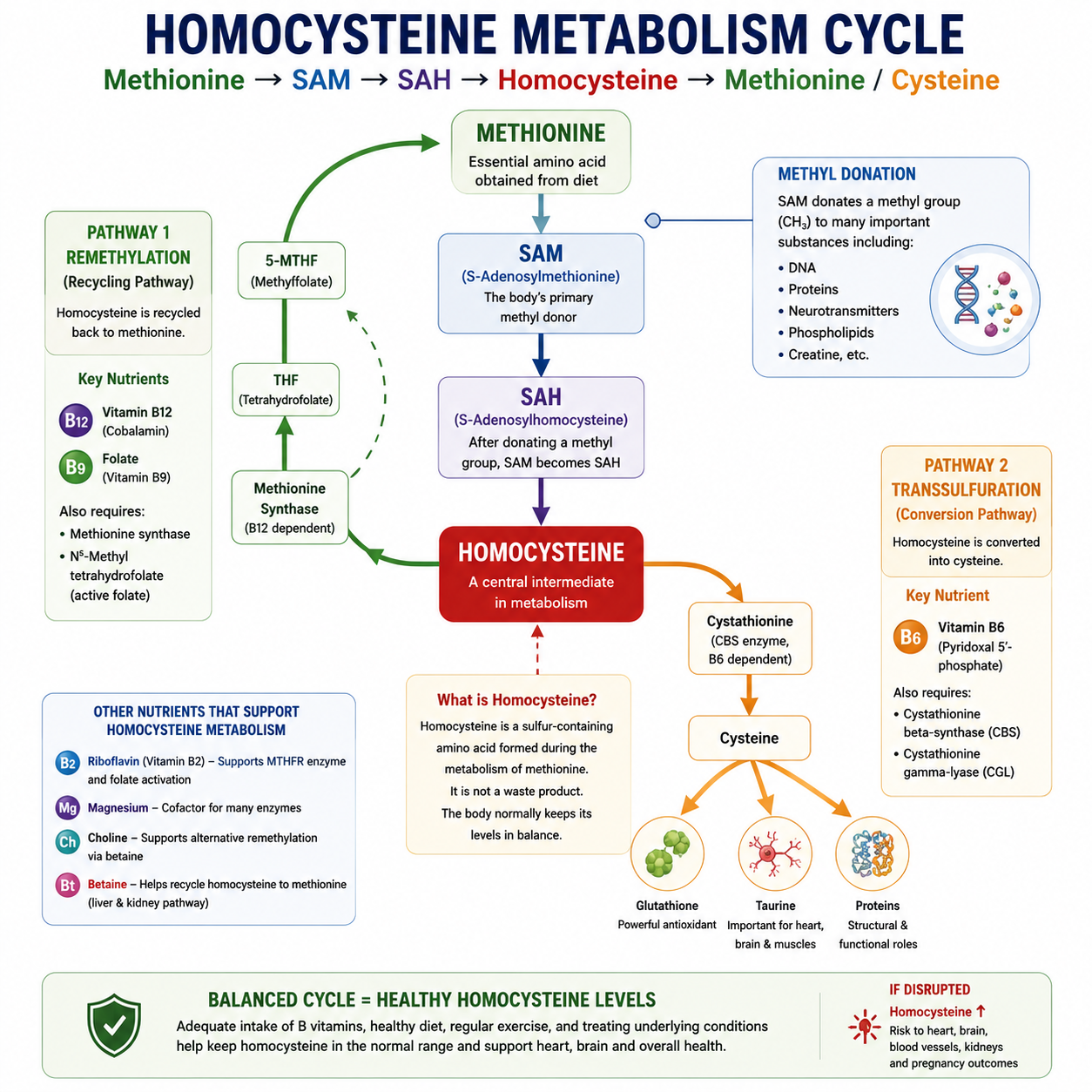
Homocysteine Cycle Explained
Methionine enters the body
↓
It becomes S-adenosylmethionine (SAM)—the body’s primary methyl donor
↓
After donating a methyl group, SAM becomes S-adenosylhomocysteine (SAH)
↓
SAH is converted into homocysteine
At this point, homocysteine reaches a metabolic crossroads. It has two major options.
Pathway 1: Recycling Back to Methionine. Most homocysteine is recycled into methionine. This process requires:
-
Vitamin B12
-
Folate (Vitamin B9)
-
Methionine synthase enzyme
Without adequate vitamin B12 or folate, this pathway slows, allowing homocysteine levels to rise.
Pathway 2: Conversion to Cysteine – The second pathway converts homocysteine into cysteine. This process requires:
-
Vitamin B6
-
Cystathionine beta-synthase (CBS)
Cysteine is then used to produce:
-
Glutathione
-
Taurine
-
Important proteins
This pathway also helps maintain healthy homocysteine concentrations.
Vitamins That Keep Homocysteine Under Control
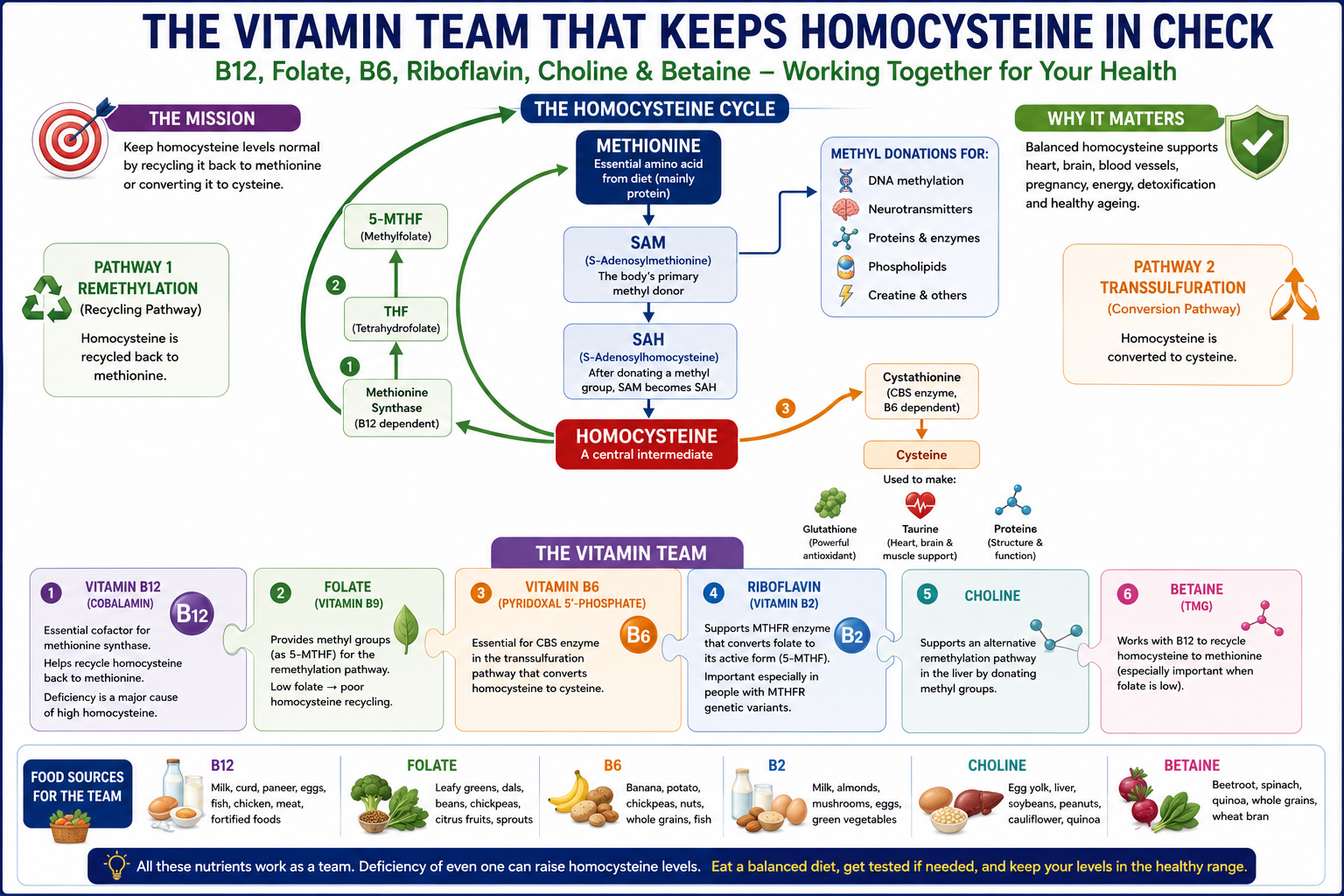
Several nutrients work together to maintain healthy homocysteine metabolism.
Vitamin B12 – Essential for converting homocysteine back into methionine. Deficiency of Vit B12 is one of the most commonest causes of elevated homocysteine in India. Millions of Indians are severly deficient in Vit B12 and hence at high risk of Homocysteinemia which is ahigh risk marker for Cardio-vascualr diseases, Stroke, Cancers and Dementia.
Folate (Vitamin B9) – Provides the methyl groups required for recycling homocysteine. Folate deficiency impairs the conversion of the amino acid homocysteine into methionine, causing homocysteine levels to build up in the blood—a condition known as hyperhomocysteinemia. Elevated homocysteine is associated with an increased risk of cardiovascular disease, blood clots, and neurodegenerative conditions. [1, 2, 3, 4]
Vitamin B6 – Vitamin B6 is essential for processing the amino acid homocysteine. A B6 deficiency impairs this process, leading to elevated homocysteine levels (hyperhomocysteinemia). High homocysteine is a recognized risk factor for cardiovascular disease, blood clots, and cognitive decline.
How Vitamin B6 Affects Homocysteine – Homocysteine is continuously created in the body from the breakdown of methionine, an amino acid found in proteins. Under normal conditions, homocysteine is quickly converted into other harmless compounds through one of two primary pathways:
- The Transsulfuration Pathway: Vitamin B6 (in the form of pyridoxal 5′-phosphate, or PLP) serves as a necessary coenzyme to convert homocysteine into cystathionine and eventually into cysteine
-
The Remethylation Pathway: Homocysteine can also be converted back into methionine, a process that requires both Vitamin B12 and folate (Vitamin B9)
Riboflavin (Vitamin B2) – Vitamin B2 (riboflavin) is crucial for processing homocysteine. It acts as an essential cofactor for the MTHFR enzyme, which helps break down homocysteine into safe amino acids. A deficiency in B2 can cause homocysteine levels to spike, elevating the risk of cardiovascular disease
Choline and Betaine – These food source nutrients, Choline and Betaine act as critical methyl donors that convert toxic homocysteine into the harmless amino acid methionine. A deficiency in these nutrients forces homocysteine levels to build up—a condition known as hyperhomocysteinemia, which significantly increases the risk of cardiovascular disease and fatty liver disease
What Is a Normal Homocysteine Level?
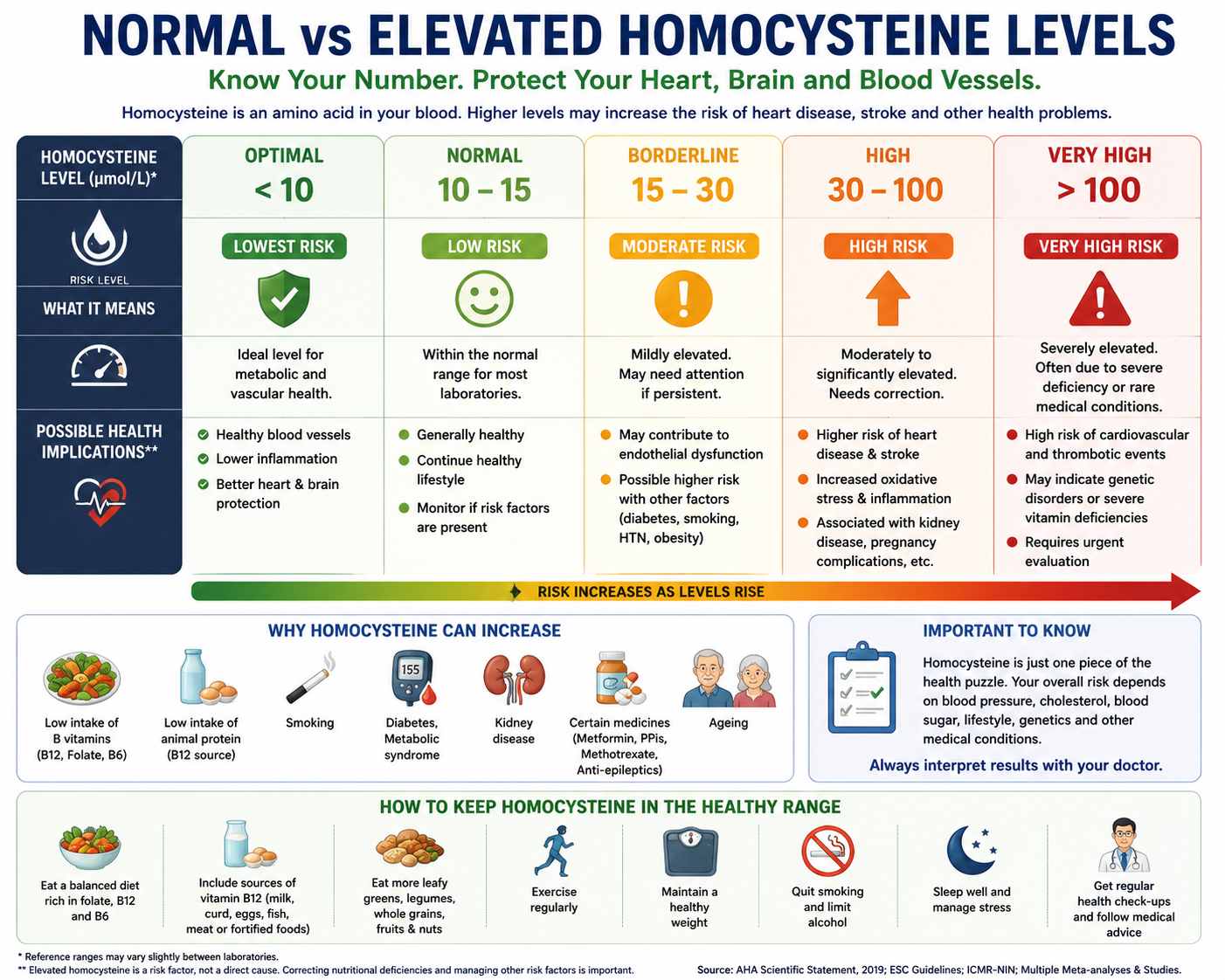
Reference ranges vary slightly among laboratories, but commonly used categories are:
| Homocysteine Level | Interpretation |
|---|---|
| Below 10 µmol/L | Often considered desirable in many clinical settings |
| 10–15 µmol/L | Upper end of the normal range in many laboratories; interpretation depends on clinical context |
| 15–30 µmol/L | Mild hyperhomocysteinemia |
| 30–100 µmol/L | Moderate hyperhomocysteinemia |
| Above 100 µmol/L | Severe hyperhomocysteinemia, often associated with rare genetic disorders or severe vitamin deficiencies |
It is important to interpret homocysteine alongside vitamin status, kidney function and overall health rather than relying on a single number.
Why Are Indians More Likely to Have Elevated Homocysteine?
Several factors make elevated homocysteine particularly relevant in India.
1. Vitamin B12 Deficiency – Large Indian studies have reported high rates of vitamin B12 deficiency, especially among vegetarians, older adults and people taking long-term metformin.
2. Predominantly Vegetarian Diets – Vitamin B12 is naturally found only in animal-derived foods. Strict vegetarian or vegan diets require careful planning to avoid deficiency.
3. Folate Intake May Be Inadequate – Although many traditional Indian foods contain folate, cooking losses and dietary imbalance may reduce intake in some individuals.
4. Diabetes – People with diabetes often have additional factors that influence homocysteine metabolism, including kidney function and medication use.
5. Chronic Kidney Disease – The kidneys help remove homocysteine from the bloodstream. Reduced kidney function often leads to elevated levels.
6. Certain Medications – Examples include:
-
Metformin (indirectly through vitamin B12 deficiency)
-
Proton pump inhibitors (through impaired B12 absorption in some individuals)
-
Some antiepileptic medicines
-
Methotrexate (through folate metabolism)
7. Genetic Variants – Variants in genes such as MTHFR can influence homocysteine metabolism. However, routine genetic testing is not recommended for most people with elevated homocysteine.
Does High Homocysteine Cause Symptoms?
Usually not. That is one of the main reasons it is often overlooked. Unlike high blood sugar or severe anemia, mildly elevated homocysteine generally causes no specific symptoms.
Instead, it may contribute silently to long-term disease risk. Should Everyone Be Tested – Not necessarily. Routine population-wide homocysteine screening is not currently recommended by major international guidelines.
However, testing may be appropriate in selected individuals based on their medical history and risk factors. The detailed recommendations for Indians—including who should be tested and when—will be covered extensively in Part 3 of this series.
Key Takeaways
-
Homocysteine is a normal amino acid produced during methionine metabolism
-
Healthy homocysteine metabolism depends primarily on adequate vitamin B12, folate and vitamin B6 as well as Choline and Betaine levels
-
Methylation is a very vital, routine, extremely regular biological process involving DNA regulation, brain function, energy production and normal cell activity
-
Elevated homocysteine is more common in India because Vitamin B12 deficiency and vegetarian dietary patterns are very widespread due to faith and poor economic status
-
High homocysteine usually causes no symptoms, making it a silent metabolic marker for your cardiovascular health, risk for Dementia and Risk for Certain Cancers
-
Homocysteine should always be interpreted in the context of overall health, nutritional status and kidney function
Select References:
-
Refsum H, Smith AD, et al. Facts and Recommendations about Total Homocysteine Determinations. Clinical Chemistry
-
American Heart Association. Homocysteine, Folic Acid and Cardiovascular Disease Scientific Statement
-
ESC Guidelines on Cardiovascular Disease Prevention
-
National Institute of Nutrition (ICMR–NIN). Nutrient Requirements for Indians
-
Yajnik CS, et al. Vitamin B12 Deficiency and Hyperhomocysteinemia in India. Indian Journal of Medical Research and related publications
-
Selhub J. Homocysteine Metabolism. Annual Review of Nutrition
-
Obeid R, Herrmann W. Mechanisms of Homocysteine Metabolism and B-Vitamin Function. Clinical Chemistry and Laboratory Medicine
-
Clarke R, et al. Homocysteine and Vascular Disease: Meta-analysis. JAMA