



Aim is to Detect Pancreatic Stress Years Before Type 2 Diabetes Is Diagnosed and accordingly institute corrective steps
Part 8 of 10 Part Series on The Silent Death of Pancreas – For Part 7 Click Here
Most Indians Get Tested Too Late
One of the biggest problems in diabetes care is timing. While Prediabetes and Diabetes do not appear overnight and take years and decades – many Indians and specially females in India, wait until they develop: excessive thirst, frequent urination, blurred vision, general tiredness, unexplained weight loss and a few random, benign small skin tags.
By then, diabetes is often already established and from here it may require more aggressive lifestyle and dietary changes than at pre-diabetes stage.
But your body had been sending warning signals years earlier. Should you care to listen to or care to look out for.
Many of these early signals could appear first in blood tests, long before frank, overt symptoms unfortunately develop. Think of these specific tests as the dashboard of your body’s metabolic health. More Metabolically Stronger You are – More Healthier and Longer Life You Have Ahead of You.
Ideal Annual Diabetes Screening Panel
For most adults—especially Indians above 30 years of age of either sex, or younger individuals with risk factors—a comprehensive screening panel should be considered. Thanks to extensive competition in Diagnostics Space – these entire series of tests may cost less than a fancy meal outsie, which in anycase you should be cutting down.
Our perusal of extensive guidelines and published research papers have led us to list the the following tests – at least once a year:
✓ Fasting INSULIN instead of fasting glucose which has no meaning, relevance or value for a young Indian
✓ HbA1c
✓ Lipid Profile
✓ Liver Function Tests
✓ Kidney Function Tests
✓ Waist Circumference – not a test, but a measure
✓ Blood Pressure – must get it checked
Anyone abreast with media reports, specially Post-Covid, would certainly know of the media coverage about excess deaths of young and “apparently” health people including athletes across countries. Some, if not all of those individuals, could certainly have been saved if there was a practice of annual and maybe semi-annual blood tests in place.
For selected high-risk individuals, additional tests such as Gut Microbiome Test may be considered as these tests may highlight any changes in your GUT MICROBIOME before metabolic diseases appear later in life.
Test 1 — Fasting INSULIN. And NOT Fasting Glucose
A fasting insulin test measures the amount of insulin in your blood after you haven’t eaten for 8 to 12 hours. It is primarily done to detect early insulin resistance (when cells stop responding well to insulin), investigate unexplained low blood sugar (hypoglycemia), and monitor pancreatic function.
Advantages of this Test over all other Blood Glucose Testss:
- Detecting Insulin Resistance & Prediabetes: Long before your fasting blood sugar or A1c levels rise, your body may overproduce insulin to keep blood sugar stable. Identifying this early allows for lifestyle or dietary interventions to prevent type 2 diabetes
- Investigating Hypoglycaemia: If you frequently experience dizziness, shaking, or confusion, measuring fasting insulin can reveal if your pancreas is secreting too much of the hormone
- Evaluating Conditions Like PCOS: High insulin often plays a major role in Polycystic Ovary Syndrome (PCOS), and this test helps tailor treatment plans quite early
-
Monitoring Diabetes & Pancreatic Health: For individuals with type 2 diabetes, the test monitors the pancreas’s efficiency and the success of treatments. It is also used to detect insulinomas (rare, insulin-producing pancreatic tumors) and track the success of islet cell transplants
Normal – Less than 2 to 10 μIU/mL – Your Target Should be less than 6 μIU/mL
Test 2 — HbA1c
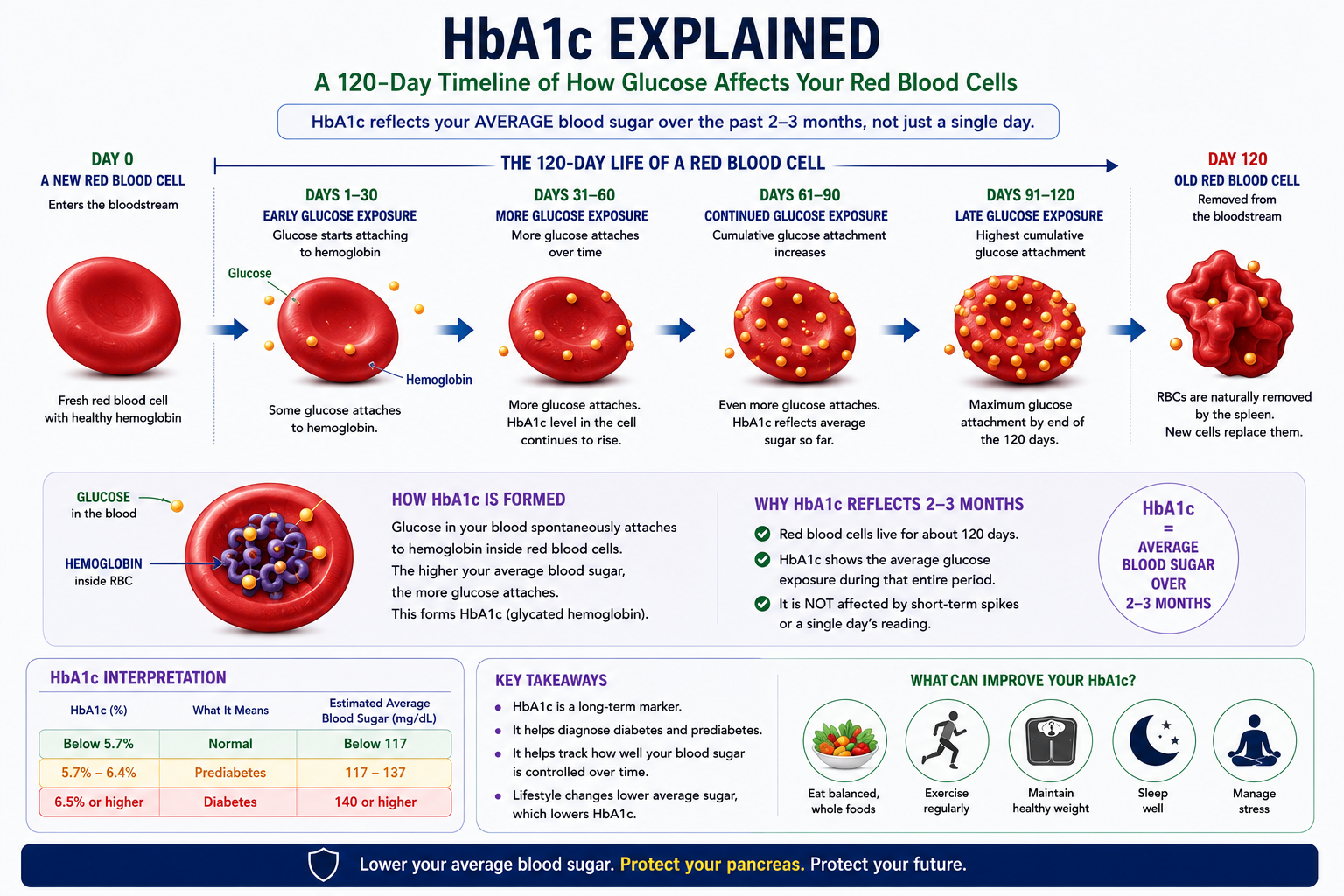
HbA1c measures glucose attached to hemoglobin in red blood cells. Since red blood cells live approximately 120 days, HbA1c reflects average blood sugar over the previous 2–3 months.
Interpretation – Normal: Below 5.7%. Your Target – Below 5.5%
Why HbA1c Is Valuable – Unlike a single fasting glucose measurement, HbA1c shows your overall glucose exposure over 2 to 3 months. It also helps monitor long-term diabetes management.
Limitations – HbA1c can be inaccurate in certain situations including: anemia, hemoglobin disorders, chronic kidney disease, recent blood loss or transfusion etc.
Test 3 — HOMA-IR
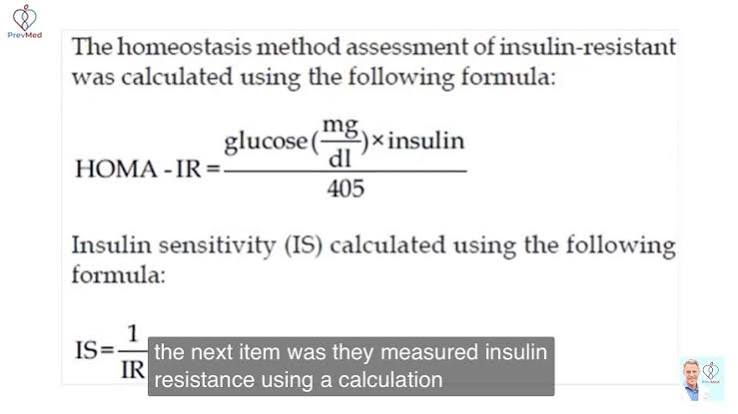
HOMA-IR stands for: Homeostatic Model Assessment of Insulin Resistance
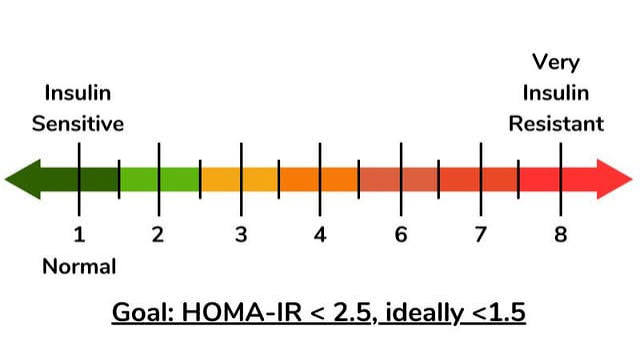
It combines: Fasting glucose and Fasting insulin to estimate potential insulin resistance. This tool WAS widely used in research earlier and may help clinicians assess insulin resistance in all people now, to detect insulin resistance early.
It is not currently recommended as a routine screening test for the general population but you can calculate yourself if you have your Fasting Insulin and Fasting Glucose values.
Test 4 — Lipid Profile
Diabetes rarely occurs alone. It is frequently associated with abnormal cholesterol. The lipid profile includes: Total cholesterol, LDL cholesterol, HDL cholesterol, Triglycerides and VLDL.
Common Pattern in Insulin Resistance – ↑ Triglycerides and ↓ HDL cholesterol. This pattern often appears years before diabetes. Once you have Triglycerides and HDL Values – check for Triglyceride value divided by HDL Value – if the ratio is 1 or less, you have good metabolic health. A ratio between 1.0 – 2.0 already indicates Metabolic issues and a ratio above 3 is not only insulin resistance matter but also a high risk factor for cardiac health.
Test 5 — Liver Function Tests
Fatty liver and diabetes are closely connected. Doctors commonly evaluate: ALT, AST and GGT
Although these enzymes can be elevated in metabolic dysfunction-associated steatotic liver disease (MASLD), normal liver enzyme levels do not exclude fatty liver and Imaging studies such as ultrasound may be required when clinically indicated.
Test 6— Kidney Function Tests
The kidneys and diabetes are closely linked. Routine assessment often includes: Serum creatinine, Estimated glomerular filtration rate (eGFR) and Urine albumin-to-creatinine ratio (UACR).
Early detection of kidney involvement allows timely intervention.
Test 7 — Waist Circumference
This is not a blood test. Yet it may be one of the most informative metabolic measurements. For South Asians, waist circumference often predicts metabolic risk better than BMI alone.
Excess abdominal fat is strongly associated with: insulin resistance, fatty liver, cardiovascular disease and Type 2 diabetes.
Because populations in South Asia (including India) have a higher tendency to store visceral fat, thresholds are lower. The recommended targets are generally below 35 inches (90 cm) for men and 31.5 inches (80 cm) for women.
Test 8 — Blood Pressure – Must for All
High blood pressure frequently accompanies insulin resistance. Checking blood pressure during diabetes screening provides valuable information about potentially cardiovascular risk.
Additional Tests
Researchers continue to study additional biomarkers, including:
-
High-sensitivity C-reactive protein (hs-CRP) – we strongly advise to have this test done at least once a year. Its an early marker of any inflammation ongoing in your body
-
C-peptide
-
Continuous glucose monitoring (CGM) in selected individuals
-
Advanced lipoprotein tests such as Lipoprotein A, Apo A and Apo B Tests
Except for hs-CRP, most are not recommended for routine diabetes screening in healthy adults but may be appropriate in specific clinical situations. Your healthcare provider may recommend a different schedule based on your individual risk.
Don’t Focus on Just One Number
Many people proudly say, “My fasting sugar is normal.” That is good news—but it is only one piece of the incredibly complex puzzle. True metabolic health depends on a combination of: Blood sugar, Insulin sensitivity, Liver health, Kidney health, Cholesterol, Blood pressure, Waist circumference, Body composition, Physical activity and Family history.
Looking at these factors together provides a far more accurate picture of diabetes risk.
Key Takeaways
-
Diabetes often develops silently for years before symptoms appear
-
Fasting INSULIN and HbA1c remain the cornerstone screening tests for most adults
-
HOMA-IR is particularly useful in young, at-risk individuals
-
Lipid profile, liver function, kidney function, blood pressure and waist circumference provide important information about overall metabolic health
-
Fasting insulin and HOMA-IR can help assess insulin resistance in selected cases but are not routine screening tests for everyone
-
Indians with risk factors should consult with their healthcare providers on a regular basis and get a pre-diabetes management plan in place
Select References
-
American Diabetes Association. Standards of Care in Diabetes (latest edition)
-
Indian Council of Medical Research (ICMR). Guidelines for Type 2 Diabetes
-
Anjana RM, et al. ICMR–INDIAB Study. Lancet Diabetes & Endocrinology. 2023
-
International Diabetes Federation. IDF Diabetes Atlas (latest edition)
-
World Health Organization. Classification and Diagnosis of Diabetes
-
EASD/ADA Consensus Reports
-
National Kidney Foundation. CKD Evaluation Guidelines
-
American Association for Clinical Chemistry (AACC). Laboratory Testing for Diabetes