

India talks extensively about iron, vitamin D and vitamin B12 deficiency. Zinc receives far less attention. Yet national data suggest that millions of Indian children and adolescents may have low Zinc levels—and science is increasingly examining Zinc’s role in immunity, respiratory infections, brain health and male fertility.
Zinc is required in small amounts – But “small amount” does not mean “small importance”.
The human body needs Zinc for immune defence, growth, wound healing, DNA production, reproduction, taste, smell and normal brain function. Zinc is involved in hundreds of enzyme-driven processes in the body.
The concern for India is simple: our diet may contain Zinc, but we may not always absorb enough of it.

Zinc deficiency in India is more common than many people realise
India’s Comprehensive National Nutrition Survey, or CNNS 2016–18, is among the most important national sources of Zinc data. A detailed analysis of the CNNS findings reported low serum Zinc in:
-
17.4% of preschool children
-
15.8% of school-age children
-
31.1% of adolescents
The adolescent figure is particularly concerning—almost one in three Indian adolescents had low serum zinc concentrations based on the study criteria.
The International Zinc Nutrition Consultative Group estimated from CNNS findings that approximately 38 million Indian children and 71 million Indian adolescents may be at increased risk of zinc deficiency.
This is not a minor nutrition issue. It is a potentially large micronutrient gap hiding behind India’s better-known Iron, B12 and vitamin D problems.
Why are Indians particularly vulnerable to Zinc deficiency?
The answer may lie partly in the traditional Indian diet. Many Indians obtain a large proportion of their daily food from wheat, rice, millets, pulses and other plant foods. These foods are nutritious.
Anti-Nutritional Factors – However, cereals, legumes and seeds also contain phytate, a natural plant compound that can and does bind Zinc and reduce its absorption.
The US National Institutes of Health notes that Zinc absorption can vary from about 5% to more than 50%, depending partly on the amount of plant food and phytate in the diet. Zinc from mixed or Non-veg / animal origin foods is generally better absorbed than Zinc from diets dominated by plant foods – a concept call bioavailability.
The amount of zinc written in a food composition table is not necessarily the amount of Zinc your body absorbs. A person may technically “eat Zinc” but still absorb less because of the poor chpice of diet.
Zinc is central to the immune system
Zinc is not an “immunity booster” in the marketing sense of the phrase. It is a nutrient the immune system genuinely requires.
Zinc supports the development and activity of immune cells and helps maintain physical barriers that protect the body from infection. Deficiency can weaken normal immune responses. The clearest medical example is childhood diarrhoea.
The World Health Organization recommends Zinc as part of the treatment of acute childhood diarrhoea: 20 mg daily for 10–14 days, or 10 mg daily for infants under six months. Zinc is already an evidence-based medical treatment in specific clinical situations.
Zinc and depression: an emerging area of nutritional psychiatry
One of the most interesting areas of Zinc research is depression. Zinc is present in the brain and is involved in communication between nerve cells, inflammation and systems linked to mood regulation.
Researchers have repeatedly examined whether people with depression have altered zinc status and whether zinc supplementation could support treatment.
A systematic review and meta-analysis of clinical trials found that Zinc supplementation produced a small reduction in depressive symptoms compared with placebo.
The review concluded that Zinc may reduce depressive symptoms when used alongside antidepressant medicines in people being treated for clinical depression. More recent scientific reviews continue to describe altered Zinc balance as a possible factor in major depressive disorder, while also stressing that the exact clinical role of supplementation still requires better-defined trials.
Zinc and male fertility: strong biology, mixed clinical evidence
Zinc has an unusually close relationship with the male reproductive system. It is present in seminal fluid and is involved in sperm development and normal reproductive function.
A 2016 systematic review and meta-analysis examined 20 studies involving 2,600 infertile men and 867 controls. The researchers found significantly lower seminal plasma Zinc concentrations in infertile men. The analysis also suggested improvements in semen volume, sperm movement and normal sperm shape following Zinc supplementation.
That sounds impressive. But the story does not end there.
A large US randomised clinical trial tested 5 mg folic acid plus 30 mg zinc daily in men undergoing infertility treatment.
The results were disappointing. Zinc plus folic acid did not significantly improve semen quality or increase live birth rates. The trial also found increased sperm DNA fragmentation in the supplement group.
A newer 2025 meta-analysis of 38 studies involving 5,070 men also found no significant overall difference in semen zinc levels between infertile men and healthy controls.
Zinc is essential for male reproductive health. But giving extra zinc to every infertile man is not an evidence-based fertility treatment. The benefit may be greater in men who are genuinely zinc deficient.
Zinc deficiency may be especially relevant to Indian men India has several factors that make this question worth studying more carefully. Large sections of the population consume cereal-heavy diets. Vegetarianism is common.
Animal-source foods—the foods from which Zinc is relatively more BIOAVAILABLE and is often more readily absorbed—may be consumed infrequently or in small amounts by Indian men and hence rising instances of male infertility. This creates a strong case for better assessment of Zinc status in selected men with poor diets or fertility problems.
What are the symptoms of zinc deficiency?
Mild zinc deficiency can be difficult to recognise. Possible signs include poor appetite, reduced taste or smell, slow wound healing, skin changes and impaired immune function. More severe deficiency can affect growth and development.
Food Sources of Zinc
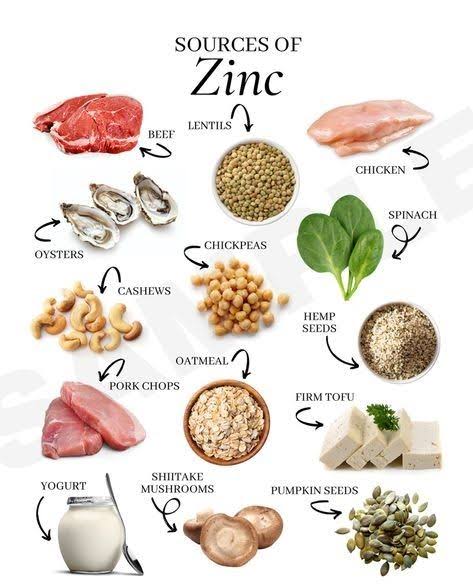
Animal foods generally provide highly bioavailable and absorbable Zinc. Important sources include meat, shellfish, poultry, eggs and dairy foods.
Indian vegetarian diets can obtain zinc from pulses, chickpeas, beans, nuts, seeds and whole grains. But quantity of Zinc is way too in plant foods and further absorption is very poor. Soaking, sprouting and fermentation can reduce phytate in some foods and may improve mineral bio-availability just a bit. For India, the solution should not simply be “everyone take a Zinc tablet”.
The larger nutrition strategy should include better diet quality, food diversity and improved mineral absorption FROM NON-VEGETARIAN foods.
India and Indians are seriously underestimating its Zinc deficiency and daily availability problem India’s national nutrition conversation remains dominated by iron deficiency, vitamin D and vitamin B12. These are major public health problems.
But Zinc deserves an Equal Place in the same discussion.
Nearly one in three Indian adolescents had low serum zinc concentrations in national survey analysis. Zinc is essential for immune function. It has an established role in childhood diarrhoea treatment. Research is examining its possible supportive role in depression, common colds and male reproductive health.
An important mineral required for immunity, brain function and reproduction is grossly inadequate in a significant section of the Indian population—and we are probably not discussing it enough and not taking corrective steps.