

What is Riboflavin
Riboflavin (also known as vitamin B2) is one of the B vitamins, which are all water soluble. Riboflavin is naturally present in some foods, added to some food products, and available as a dietary supplement.
This vitamin is an essential component of two major coenzymes, flavin mononucleotide (FMN; also known as riboflavin-5’-phosphate) and flavin adenine dinucleotide (FAD). These coenzymes play major roles in energy production; cellular function, growth, and development; and metabolism of fats, drugs, and steroids.
The conversion of the amino acid tryptophan to niacin (vitamin B3) requires FAD. Similarly, the conversion of vitamin B6 to the coenzyme pyridoxal 5’-phosphate needs FMN. In addition, riboflavin helps maintain normal levels of homocysteine, an amino acid in the blood – and a marker of cardiac health.
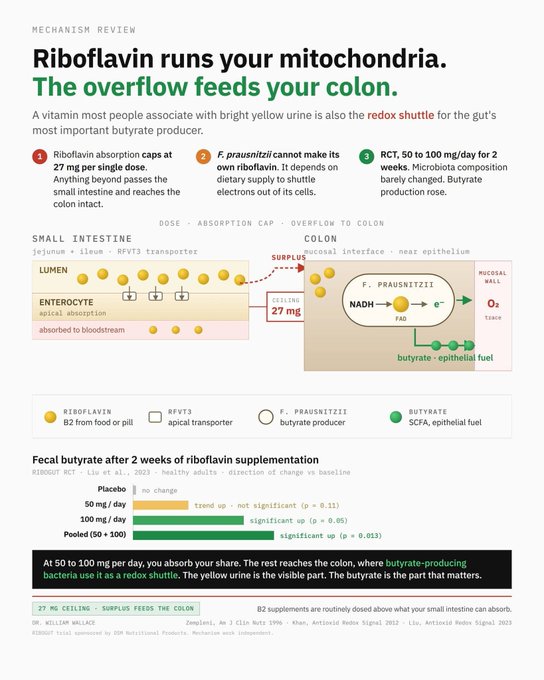
More than 90% of dietary riboflavin is in the form of FAD or FMN; the remaining 10% is comprised of the free form and glycosides. Most riboflavin is absorbed in the proximal small intestine. The body absorbs little riboflavin from single doses beyond 27 mg and stores only small amounts of riboflavin in the liver, heart, and kidneys. When excess amounts of Riboflavin are consumed, these are either not absorbed or the small amount that is absorbed is excreted in urine – giving urine a distinct yellow colour.
Riboflavin and Gut Health
Bacteria in the large intestine produce free riboflavin that can be absorbed by the large intestine in amounts that depend on the diet. More riboflavin is produced after ingestion of vegetable-based than meat-based foods.
The human gut microbiota is increasingly associated with health. Specifically, a gut microbiome with a high diversity and with a high abundance of strict anaerobic short-chain fatty acid (SCFA)–producing bacteria appears to be very beneficial.
One of the most abundant bacteria in the human adult gut is Faecalibacterium prausnitzii, a butyrate-producing bacterium whose numbers are reduced in gut-related disorders such as inflammatory bowel diseases (IBDs) and obesity (Sokol et al, 2008).
This reduction leads to a lower production of butyrate in the gut, a SCFA that is an energy source for enterocytes and has anti-inflammatory properties.
A possible therapy for these IBD patients could be augmentation of these SCFA-producing bacteria, in particular F. prausnitzii, by nutrition, probiotics, or prebiotics. Vitamins such as Riboflavin – have antioxidant and redox properties offer a simple and highly accessible method of modulating the gut microbiota and its associated metabolome, and as such, have been suggested to promote health through microbial manipulation (Steinert et al., 2020; Steinert et al., 2016).
Evidence – Riboflavin Effect on Gut Butyrates and Metabolic Health
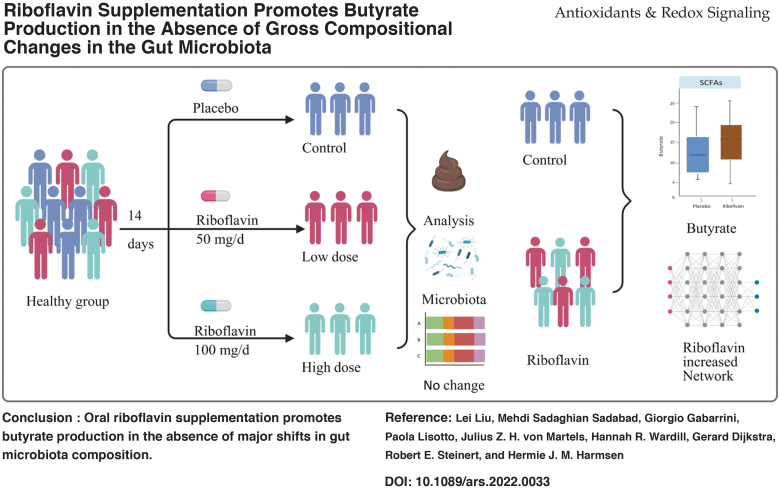
In a 2 week, High-Dose supplementation of Riboflavin Trial (RIBOGUT) – dosing at 50 mg/day and at 100 mg/day were signficantly associated with Gut Microbiome changes with increased number of SCFA producing Faecalibacterium prausnitzii as evidenced by increased fecal butyrate levels. Overall, the summary of RIBOGUT Trial
-
Enhanced Bacterial Function: Riboflavin is utilized by butyrate-producing bacteria (like Faecalibacterium prausnitzii) to shuttle electrons, helping the gut microbiome thrive
-
Increased Butyrate Levels: Clinical study showed that dietary supplementation with riboflavin significantly elevates fecal concentrations of short-chain fatty acids (SCFAs), creating a healthier, more complex microbial network
-
Appetite Regulation: Increased SCFA metabolic activity can stimulate the secretion of gut hormones that signal satiety, potentially assisting in weight management and metabolic disease
-
Cellular Energy: As an essential coenzyme, riboflavin is directly involved in metabolizing fats, carbohydrates, and proteins into usable cellular energy

Sources of Riboflavin
To naturally boost your riboflavin intake, prioritize these nutrient-dense foods:
- Dairy: Milk and yogurt contain about one-third of your daily recommended intake per cup
- Lean Meats: Mutton tenderloin, liver, and salmon are highly bioavailable sources
- Plant-based: Spinach, portobello mushrooms and dry-roasted almonds are excellent choices for vegetarians and vegans
- Fortified Foods: Many cereals and breads are fortified with B vitamins