


For decades, most common medical advice has been to take vitamin D and calcium as regular supplements for strong bones, especially for elderly for prevention of fractures, during unfortunate falls.
Most adults over 50 Years of age have religiously followed this advice with the hope and assumption of having strong bones.
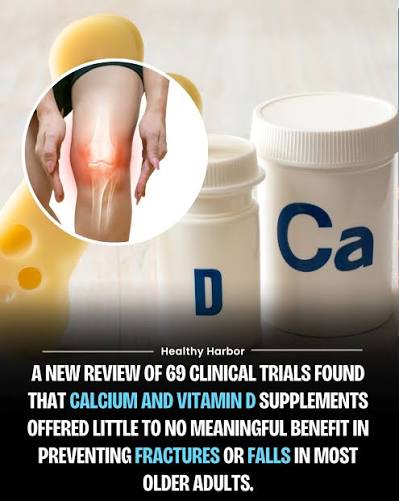
A new systematic review published recently in prestigieous The British Medical Journal says that the evidence does not support the need for routine, regular supplementation of Calcium and Vit D3 for healthy adults as benefits are negligible if any.

Findings of The Systematic Review
The review, published in May 2026, pulled together every randomized controlled trial they could find on this question. Researchers covered 69 trials and 153,902 adults. The largest analysis of this specific question to date.
The result were consistently consistent across all three groups they looked at:
-
Vitamin D alone produced no measurable difference in fracture risk compared to placebo
-
Calcium alone showed a small reduction that the authors did not consider clinically meaningful
-
Combined supplementation of Calcium with Vit D3 showed a similar small reduction, also below the threshold the authors set for clinical relevance
-
The pattern was the same for hip fractures and for falls
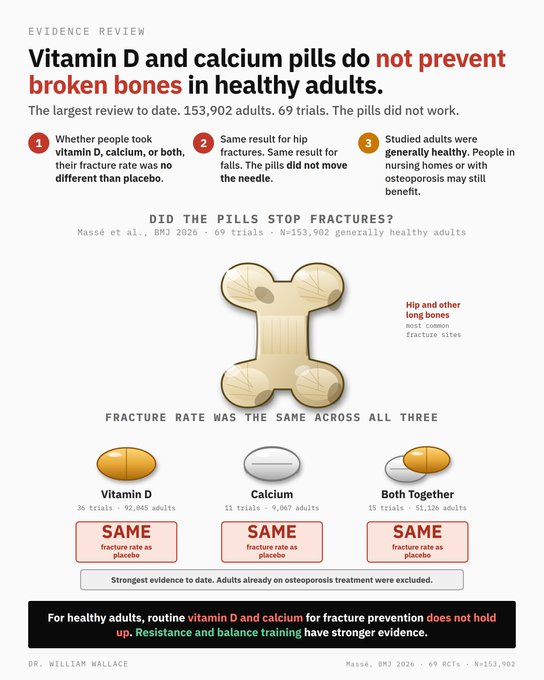
These research findings held up across age groups, dose levels, and trial designs. However, a silver lining – The authors of this systematic review did not say that vitamin D supplementation is useless. They said that in adults who are generally healthy, who are not already being treated for osteoporosis and who live independently rather than in nursing care, routine supplementation with Vit D and Calcium does not appear to prevent fractures or falls by a meaningful amount.
People at High Risk
For people in those higher-risk groups, the evidence is more limited and more nuanced. What the authors did recommend as a higher priority for fracture prevention:
-
resistance training and balance work
-
alongside hazard assessment and tailored interventions for individual risk