

What is Health / Ageing
Health refers to a sufficiently independent physical and mental state in the activities of daily life. The health and survival of an organic organism is a dynamic equilibrium process between the process of cellular damage and repair, occurrence and maintenance.
Aging – Biologically speaking, the survival of an organism is a continuous struggle between biochemical damage and internal repair processes in the body. All age-related variations, such as decreased hormone levels and remodeling of immune function, may not be harmful, appear without any benefits, and they may be an adapting sign.
Similarly, the results of stress can be beneficial or harmful, depending on the frequency, intensity, and duration of stress, the cost of energy consumption and other metabolic disorders. This understanding of aging has led to a shift in our approach to aging interventions from “anti-aging” to “healthy aging”. In order to achieve healthy aging, we must abandon disease-oriented research methods and adopt health-oriented prevention strategies.
Can We Slow Down Ageing
Over the past 30 years, several interventions and numerous preclinical studies have been shown to slow aging and increase the healthy lifespan of organisms from yeast, flies, rodents to non-human primates.
Interventions can be divided into two broad categories: lifestyle changes and pharmaceutical/genetic regulation. Lifestyle changes includes caloric restriction and regular physical exercise. While the pharmaceutical interventions The include an increasingly wide range of chemically unrelated molecules, including natural products, endogenous substances, approved drugs, and synthetic compounds.
There is strong evidence that aging interventions will delay and prevent the onset of many chronic diseases in adults and older adults, and may safely and effectively extend the healthy lifespan of humans.
Supoplements to Slow Ageing – With Evidence
Here are 6 underrated tools that EXTEND LIFESPAN in research:
#1 Glycine
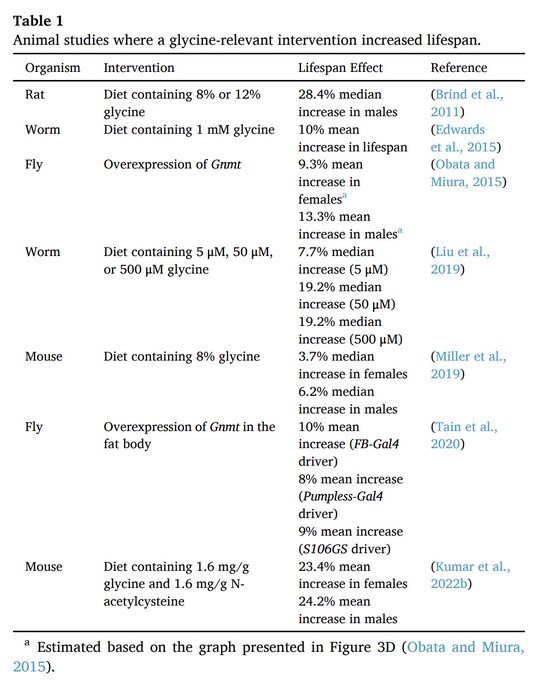
First thing first – Glycine increases lifespan by up to ~28% across different organisms as evdienced in few clinical studies.
Mechanism – Glycine counteracts the pro-aging effects of excess methionine, a major component of muscle meat. It’s able to do this through the GNMT enzyme – which absorbs extra methyl groups from methionine. Those extra methyl groups otherwise alter global gene expression, disrupting several health promoting processes.
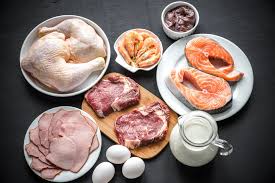
Sources of GLYCINE – Glycine is found in connective tissues from animal foods (bone broth, fish skins, chicken bones, etc). It’s also dosed at 3-6g as a supplement (a bit higher than this to reflect the lifespan extending effects in animals).
#2 Selenium – Super Antioxidant
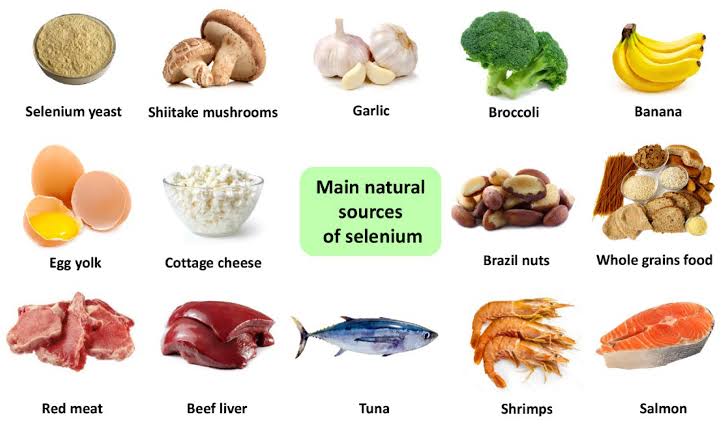
Incredibly, Selenium COMPLETELY prevented death over the two year study period in a recent published paper. 100% of animals given selenium survived to two years as compared to Less than 50% of the control animals survival.
Researchers also documented additional benefits of Selenium:
-
Better insulin sensitivity
-
Less cell senescence (aging)
-
Lower inflammation
-
Better body composition
-
Less hair greying due to selenium’s critical role in selenoproteins
#3 Coenzyme Q10
Coenzyme Q10 (12) is a fat-soluble substance that is directly involved in the body’s energy production system and plays an important role in the mitochondrial electron transport system. In addition, it has recognized roles in antioxidant and genetic induction. Coenzyme Q10 was first synthesized in 1958 and was approved for the treatment of congestive heart failure in Japan in 1974.
One study for instance showed that ~25 mg human equivalent)of CoQ10 increased:
-
Average lifespan by 17%
-
Median lifespan by nearly 26% in animals fed sunflower oil, but there was NO benefit in animals fed fish oil or virgin olive oil
A recent review concluded: “Thus, it seems that CoQ10 is useful to counteract the consequences of unhealthy diets that ‘accelerate’ the aging process, but it has no additional effects under more favorable conditions.”
But, in real life, almost nobody has “favorable conditions” – we all encounter way more toxins, stressors and poor diet than an animal in a research study ever will.
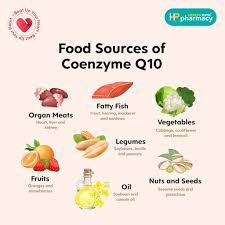
CoQ10 is found in small amounts in beef heart and liver, and of course as a supplement.
#4 Astaxanthin
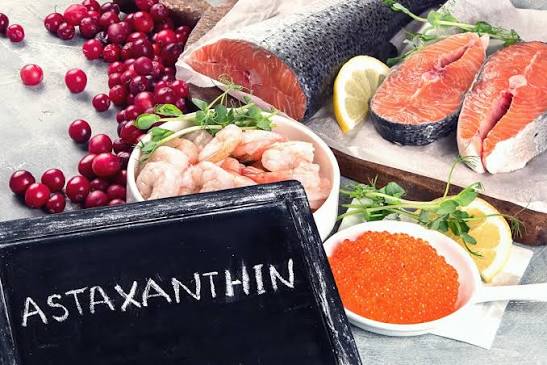
Astaxanthin is a kind of carotenoid that belongs to the subclass of xanthophyll. It is a nutrient with many clinical benefits and acts through unique cell membrane effects.
A recent study showed that it extends lifespan by ~12%. Male animals saw this benefit with inclusion of it in the diet. Astaxanthin is a potent antioxidant found in red seafood, and also regulates key genes:
-
SIRT1 gene – anti-inflammatory, increases metabolic gene expression
-
FOXO3 gene – controls autophagy, ups DNA repair + antioxidant enzymes
-
Klotho gene – regulates calcium balance, fibrosis
-
NRF2 gene – master antioxidant gene regulator
#5 Urolithin A
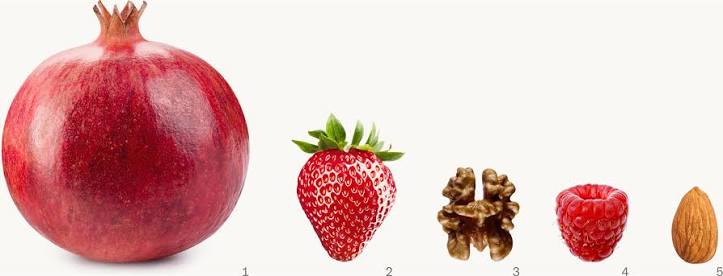
Urolithins are intestinal metabolites produced by foods rich in ellagitannin such as blackberries, strawberries, pomegranate, tea, walnuts, raspberries, and raspberries.
Urolithins have a variety of biological activities, including cardiovascular protection, anti-inflammatory, anti-cancer, anti-diabetic and anti-aging, and have attracted increasing interest in recent years.
The results of many in vitro and in vivo based experimental studies support the beneficial effects of urolithins in the treatment of diseases such as Alzheimer’s disease, type 2 diabetes, liver disease, cardiovascular disease and various cancers.
A One study showed it was able to extend lifespan by ~14-19%. Urolithin A is a bacterial metabolite of certain polyphenols found in pomegranate and strawberries. Roughly 30 mg human equivalent in animals was shown to increase:
-
Max lifespan by ~14%
-
Median lifespan at 80th %ile mortality by ~19%
Urolithin A promotes the process of mitophagy – which clears old / damaged mitochondria and thus improves whole body metabolic health

#6 Nicotinamide Mononucleotide
This study showed that females consuming NMN had longer lifespans by around 9%. In both genders, NMN lowered the frailty score, which is a key indicator of aging, measuring things like:
-
Skin condition
-
Hair loss
-
Tumors
-
Digestive issues and more.
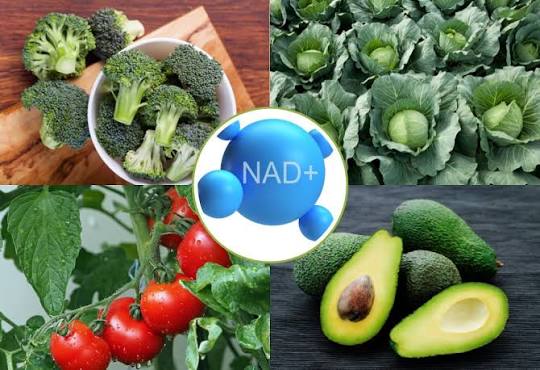
NMN is a precursor to NAD+, a central molecule in metabolism and gene regulation, that declines with aging.