



Walk into any urban healthcare clinic in Mumbai, Bengaluru, or Delhi, and you will hear a familiar narrative: a man in his late 30s or early 40s complains of chronic fatigue, reduced muscle mass, abdominal weight gain, and low libido. The conventional explanation offered by peers, media, and even many clinicians is almost always the same—“It is just a natural part of aging.”
This belief has fueled a multi-million-rupee market for direct-to-consumer testosterone replacement therapy (TRT) clinics, Ayurvedic “vitality” supplements, and androgen boosters across India.
However, a landmark study published by researchers at the U.S. Army Research Institute of Environmental Medicine upends this entire paradigm. By analyzing National Health and Nutrition Examination Survey (NHANES) data from nearly 5,000 men aged 20 to 59, researchers separated the actual drivers of testosterone variation: chronological aging vs. body fat accumulation.
The findings represent a fundamental shift for men’s metabolic and hormonal health worldwide—and hold profound implications for South Asian men, who carry the highest global risk for visceral adiposity and early metabolic dysfunction.
Copenhagen/NHANES Data: Quantifying the True Driver of Low T
The study set out to answer a clear question: Does testosterone drop primarily because the testes age, or because men accumulate body fat as they grow older?
To measure body composition with precision, researchers used dual-energy X-ray absorptiometry (DXA)—the gold-standard technology used for bone density and precise soft-tissue scans—to quantify total body fat percentage and visceral adipose tissue (VAT) area.

Key Quantitative Findings:
-
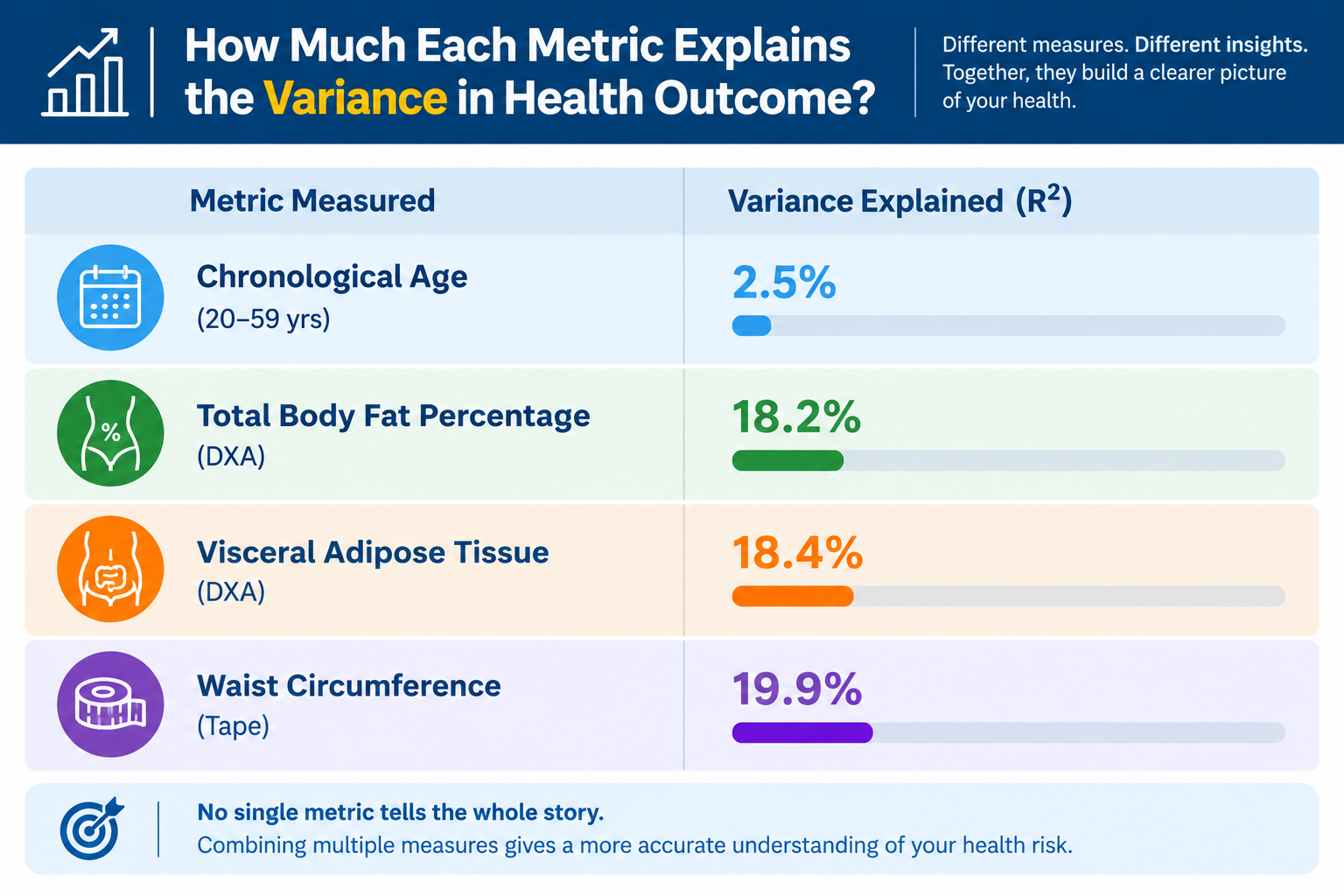
Age explained a mere 2.5% of testosterone variation across adult men. Knowing a man’s chronological age gives virtually zero predictive ability regarding his hormonal status
-
Total body fat percentage explained 18.2% of the variation
-
Visceral fat (the metabolically active fat around internal organs) explained 18.4% of the variation
-
Waist circumference explained 19.9% of the variation—performing slightly better than advanced imaging
The Takeaway: If you only know a man’s age, you cannot accurately predict his testosterone level. If you measure his waist circumference, you possess nearly 8 times more predictive information
Across every age bracket, men with testosterone levels below the clinical threshold of 300 ng/dL carried substantially higher body fat than men above that threshold.
For instance, among men aged 30–39:
-
Low Testosterone Group (<300 ng/dL): Averaged 30.3% body fat and 130.5 cm² of visceral fat
-
Normal Testosterone Group (≥300 ng/dL): Averaged 26.4% body fat and 94.6 cm² of visceral fat
Interestingly, testosterone levels declined from ages 20–29 to 40–49, then plateaued between ages 50–59. This plateau occurred despite continued body fat accumulation in older age groups, indicating that the threshold for adiposity-induced testosterone suppression is crossed primarily during midlife, rather than progressing linearly with age.
Biological Axis: How Visceral Fat Suppresses Testosterone
To understand why abdominal fat exerts such a dominant effect over serum testosterone, we must examine the biochemical cross-talk between adipose tissue and the Hypothalamic-Pituitary-Gonadal (HPG) Axis.
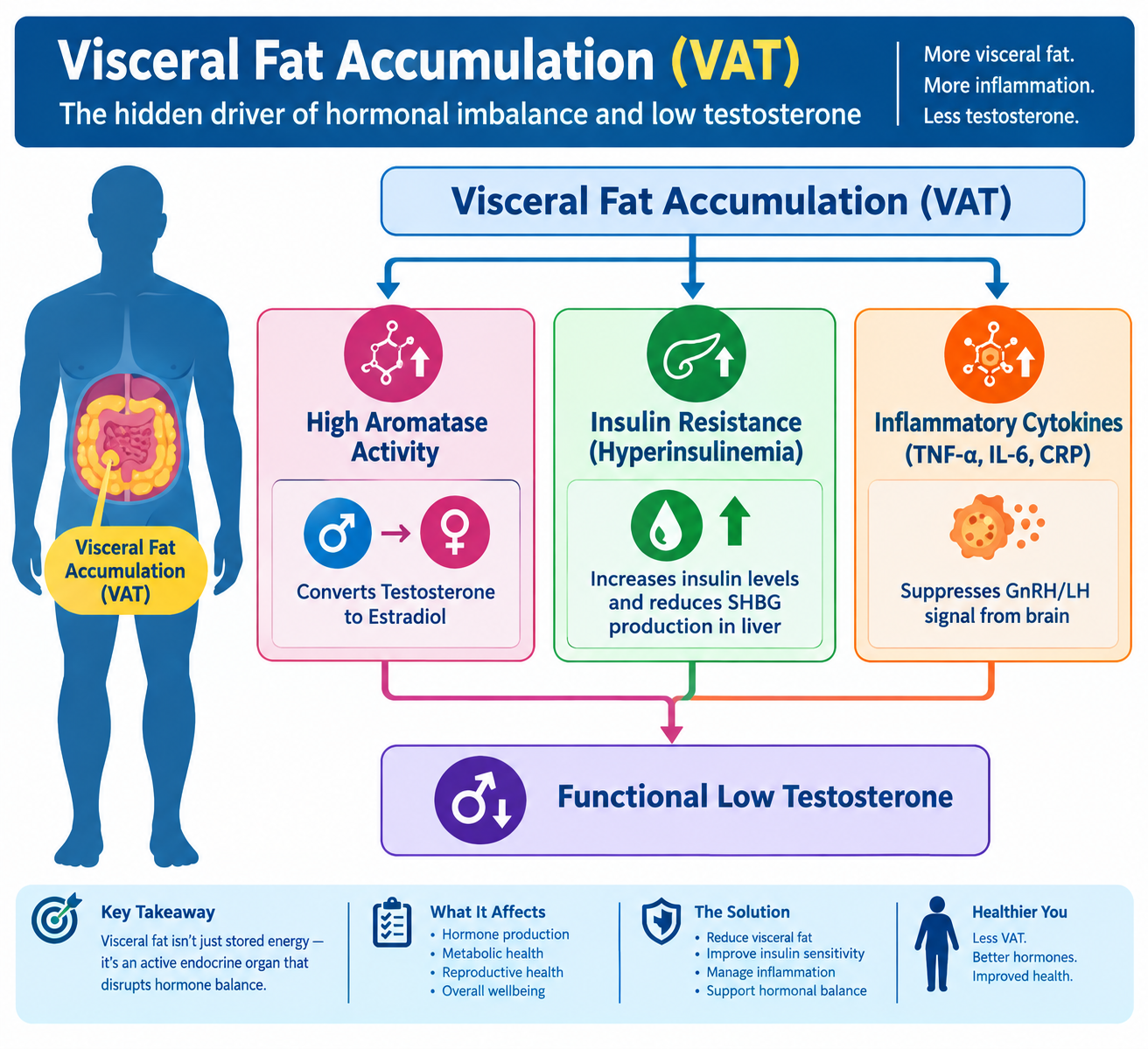
1. The Aromatase Pathway (Conversion to Estradiol)
Adipose tissue is not an inert energy storage depot; it is an active endocrine organ rich in the aromatase enzyme. Aromatase converts circulating testosterone into estradiol (estrogen). The more visceral fat a man carries, the higher his rate of peripheral aromatization, depleting circulating free testosterone.
2. Insulin Resistance & SHBG Downregulation
Visceral fat directly promotes systemic insulin resistance. Elevated circulating insulin signals the liver to suppress the synthesis of Sex Hormone-Binding Globulin (SHBG)—the primary transport protein for sex steroids in the bloodstream. Because clinical blood tests measure total testosterone (which includes SHBG-bound fractions), a drop in SHBG depresses total testosterone readings, even if testicular clearance rates remain unchanged.
3. Chronic Inflammation & HPG Suppression
Visceral fat cells secrete pro-inflammatory cytokines, including Tumor Necrosis Factor-alpha (TNF-$\alpha$) and Interleukin-6 (IL-6). These circulating inflammatory markers cross the blood-brain barrier and dampen the pulsatile secretion of Gonadotropin-Releasing Hormone (GnRH) from the hypothalamus and Luteinizing Hormone (LH) from the pituitary gland. The testes stop receiving the biological signal to manufacture testosterone.
Self-Reinforcing Vicious Cycle
This biological relationship operates bidirectionally:Excess body fat suppresses serum testosterone production.

-
Low testosterone impairs lipolysis (fat breakdown) and reduces basal metabolic rate while encouraging pre-adipocyte differentiation into mature fat cells.
-
The resulting increase in fat mass further suppresses testosterone output.
Indian Phenotype: Why This Research Matters for South Asians
While the US Army study utilized NHANES demographic data, its biological implications apply acutely to the Thin-Fat Indian Phenotype (South Asian Phenotype).
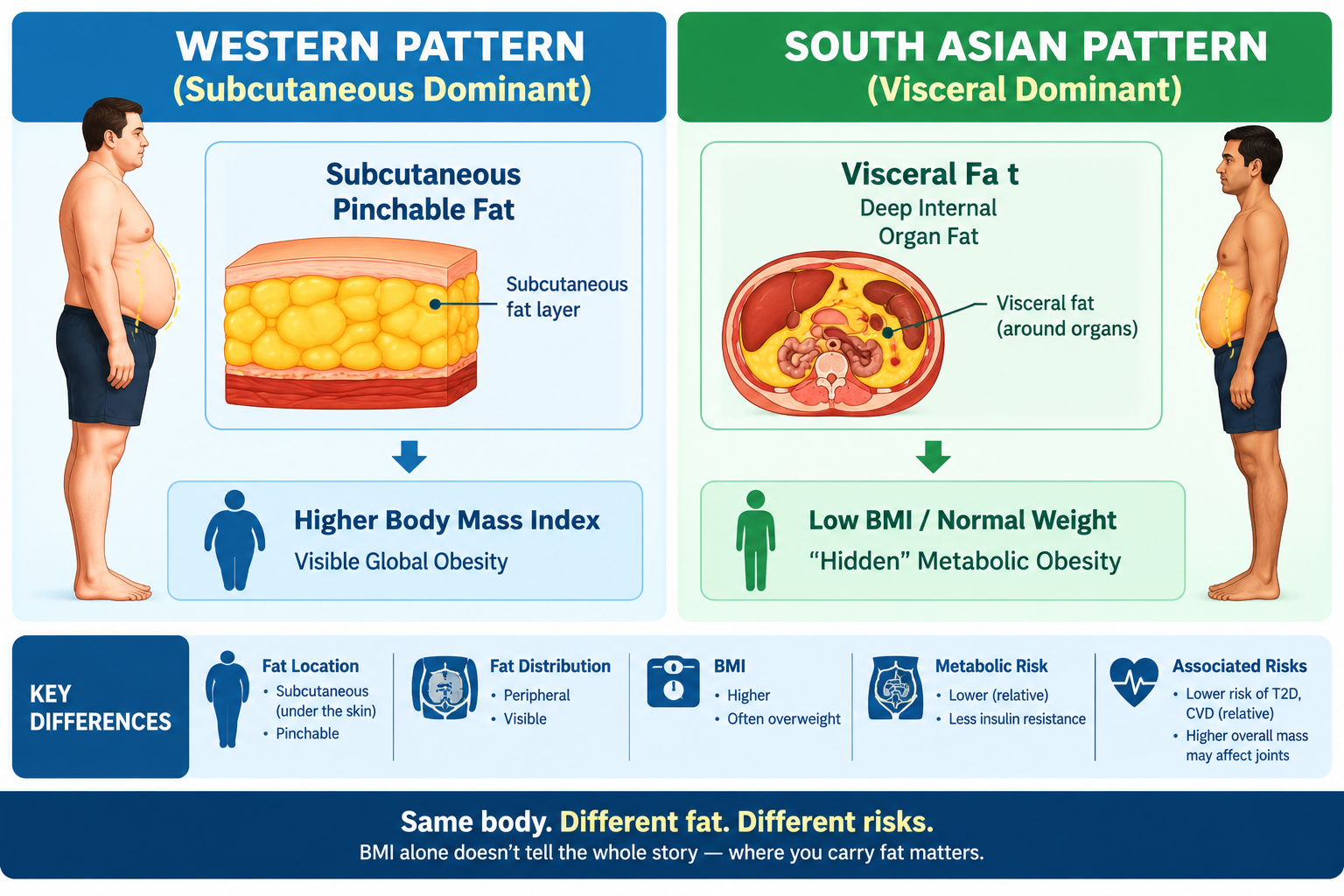
An Indian man with a “normal” BMI of 23 kg/m² may carry a disproportionate volume of deep visceral abdominal fat, presenting clinically with a visible “potbelly” despite thin limbs.

Tape Measure vs. Expensive Diagnostics
The finding that waist circumference (R² = 19.9%) predicts testosterone levels as effectively as high-tech DXA scans offers immense clinical utility for Indian primary care.
In resource-limited settings across tier-2 and tier-3 Indian cities, DXA scans and comprehensive hormone panels are expensive or inaccessible. Clinicians can use a standard tape measure:
-
In South Asian populations, a waist circumference exceeding 90 cm (35.4 inches) indicates significant visceral adiposity (ICMR Guidelines)
-
The study demonstrated that a waist circumference above 110–115 cm corresponds to a visceral fat area $>300\text{ cm}^2$, where predicted testosterone drops by more than 400 ng/dL compared to lean peers
Reversibility: Reclaiming Endogenous Testosterone Without TRT
The central takeaway of this study is encouraging: Because testosterone decline in midlife is primarily driven by adiposity rather than intrinsic gonadal failure, it is functionally reversible.
When testosterone drops due to testicular tissue degeneration (primary hypogonadism), androgen replacement is necessary. However, when testosterone drops secondary to visceral fat overload, reducing the metabolic burden can restore the body’s natural production.

1. Evidence from Weight Loss & Incretin Therapies
Clinical trials evaluating structured weight loss demonstrate marked improvements in endogenous testosterone. Studies involving GLP-1 receptor agonists (such as semaglutide and liraglutide) show that as visceral fat mass decreases, endogenous LH and testosterone levels rise proportionally without exogenous hormone administration (Jensterle et al., 2019).
2. Experimental Proof of Adaptive Suppression
Human physiological models demonstrate that hormonal suppression under metabolic stress is adaptive. Healthy, lean men subjected to severe caloric deficits and physical exhaustion experience drops in testosterone near castrate levels. However, upon refeeding and recovery, their HPG axis recovers rapidly, restoring normal testosterone production without long-term damage.
Danger of Over-Prescribing Commercial TRT
The growth of direct-to-consumer digital health platforms offering online testosterone prescriptions across major Indian cities presents notable public health risks.

When a 38-year-old Indian male with a 100 cm waist line is prescribed exogenous testosterone without addressing his underlying metabolic health, several complications can follow:
-
Shutdown of Endogenous Axis: Exogenous testosterone provides negative feedback to the pituitary gland, shutting down LH and FSH production. This leads to testicular atrophy and impaired spermatogenesis (infertility).
-
Failure to Treat the Root Cause: TRT does not reduce visceral fat or resolve underlying insulin resistance. The cardiovascular and metabolic risks associated with visceral obesity remain unaddressed.
-
Cardiovascular & Polycythemia Risks: Unmonitored androgen therapy can trigger erythrocytosis (elevated hematocrit), increasing blood viscosity and cardiovascular risk in populations already vulnerable to coronary artery disease.
Study Limitations
To interpret these conclusions accurately, several study limitations must be acknowledged:
-
Cross-Sectional Design: The NHANES dataset provides a snapshot in time. It cannot definitively prove causality—whether visceral fat causes low testosterone, or low testosterone causes fat accumulation. As established, both processes likely occur simultaneously in a reinforcing loop
-
Single Hormone Sampling: NHANES relies on a single testosterone measurement without confirmatory repeat testing or detailed symptom scoring. Clinical diagnosis of hypogonadism requires multiple early-morning blood draws alongside physical evaluation
-
Age Range Restrictions: The cohort was restricted to men aged 20 to 59. These conclusions may not extend to men aged 65 and older, where primary testicular tissue aging (Leydig cell senescence) plays a larger role independent of body composition
Clinical Action Plan for Indian Men
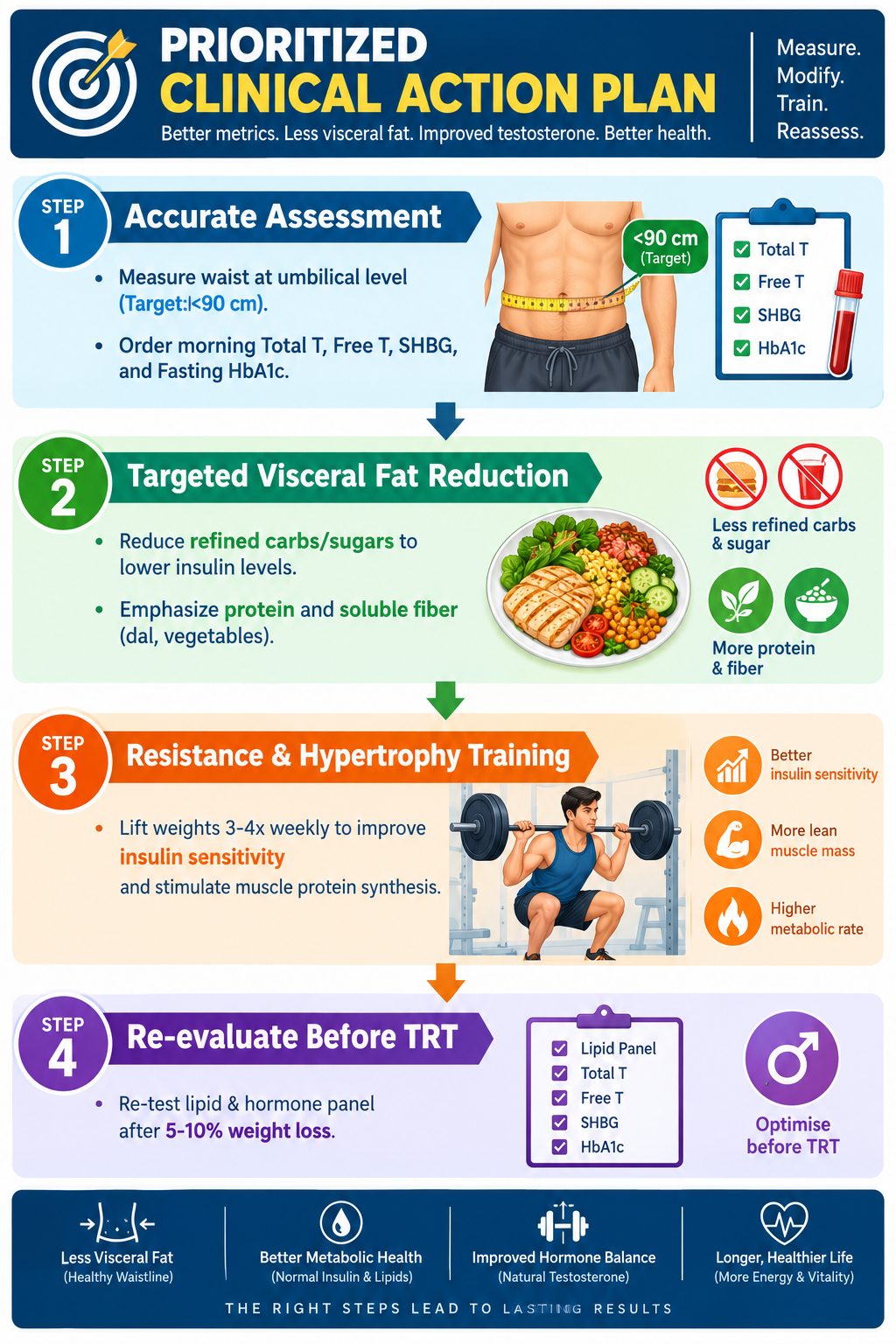
If you are an Indian man seeking to optimize your hormonal profile and energy levels, medical literature supports prioritizing body composition over immediate hormone replacement.Measure Your Waist First: Use a tape measure across your belly button. For Indian men, aim to keep your waist circumference below 90 cm.
-
Address Diet Quality: Reduce refined carbohydrates, commercial seed oils, and sugar-sweetened beverages that drive hepatic fat synthesis and visceral adiposity. Prioritize protein intake and fiber-dense whole foods
-
Build Muscle Mass: Engage in progressive resistance training 3 to 4 days per week. Skeletal muscle serves as the body’s primary sink for glucose clearance, improving insulin sensitivity and helping reduce visceral fat
-
Consult a Qualified Endocrinologist: Before starting any hormone therapy, consult a specialist who will evaluate your metabolic health, insulin levels, and waist-to-hip ratio alongside a comprehensive hormone panel
Conclusion
Aging is not an inescapable sentence for declining vitality and falling hormone levels. By demonstrating that age accounts for only 2.5% of testosterone variation while body composition accounts for nearly 20%, science offers a clear message: Your hormonal health in your 40s, 50s, and beyond is largely driven by modifiable metabolic factors.
For Indian men, taking control of hormonal health starts by looking past chronological age, putting away the syringe, and picking up the tape measure.
References
-
Bhasin, S., et al. (2018). Testosterone Therapy in Men With Hypogonadism: An Endocrine Society Clinical Practice Guideline. The Journal of Clinical Endocrinology & Metabolism, 103(5), 1715–1744
-
Camacho, E. M., et al. (2013). Age-associated changes in hypothalamic-pituitary-testicular axis function in middle-aged and older men are largely explained by weight change and health status. European Journal of Endocrinology, 168(3), 445–455
-
Jensterle, M., et al. (2019). Effect of GLP-1 receptor agonists on testosterone levels in obese men with functional hypogonadism. Biomedicine & Pharmacotherapy, 114, 108821
-
Misra, A., et al. (2009). Consensus Physical Activity Guidelines for Asian Indians. Journal of the Association of Physicians of India, 57, 141–145
-
U.S. Army Research Institute of Environmental Medicine. (2023). Analysis of Body Composition, Visceral Adiposity, and Serum Testosterone in Adult Males: NHANES 2011–2016 Cohort. Endocrine Research Communications