



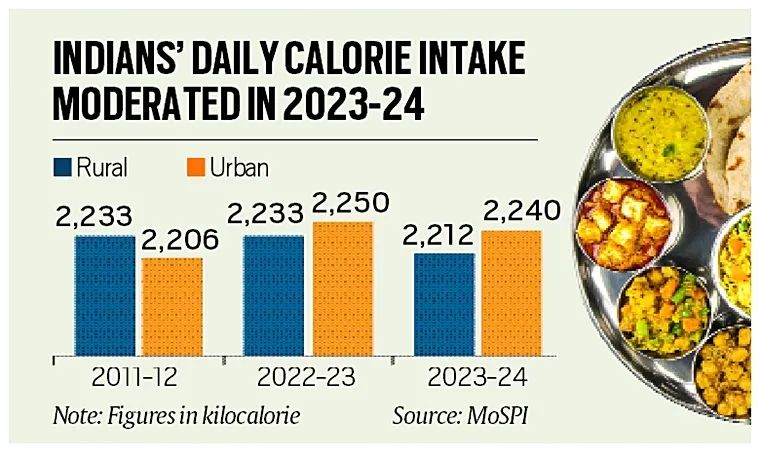
The average daily macronutrient consumption in India accounts for 62.3% carbohydrates, 25.6% fats, and 12% protein as a percentage of total daily calorie intake.
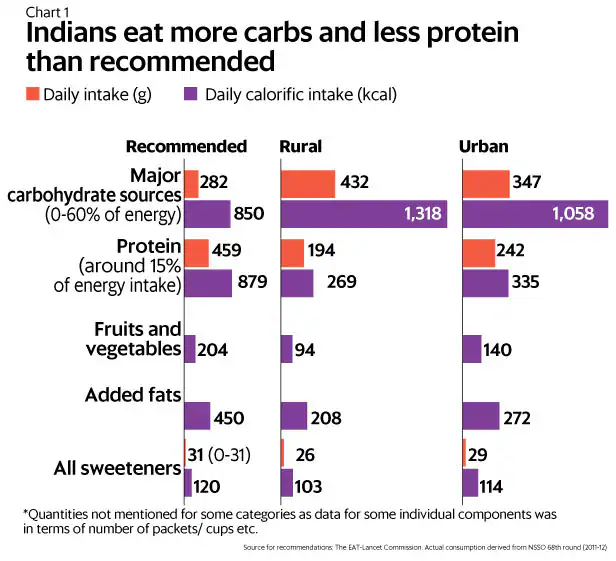
According to a nationwide ICMR-INDIAB study published in Nature Medicine analyzing dietary profiles across states, the typical Indian diet relies heavily on refined grains and cereals rather than balanced sources.
A minor tweak in the daily macronutrient consumption, by bringing down Carbohydrates to 45% or even 50% instead of current almost 65% and correspondingly increasing consumption of Proteins and Good Fats can certainly and immediately help manage high diabetes burden in Indians. Yes, it may entail additional cost for this change but again the trade-offs from such a change way far outweigh than the minor, additional cost of this change. Read On..
7-Day Low-GI Indian Meal Plan (Veg + Non-Veg) {#meal-plan}
Methodology: This meal plan is designed for 1,600-1,800 kcal/day, with 45-50% carbs (low-GI), 25-30% protein, 25-30% fat. It includes both vegetarian and non-vegetarian options, with regional variations (North, South, East, West Indian foods).
Portion Sizes: Adjust based on individual needs (age, gender, activity level, diabetes status). Consult a registered dietitian for personalized plans.
Day 1: North Indian (Veg)
Day 2: South Indian (Non-Veg)
Day 3: East Indian (Veg)
Day 4: West Indian (Non-Veg)
Day 5: Pan-Indian (Veg)
Day 6: Continental-Indian Fusion (Non-Veg)
Day 7: Traditional Indian (Veg)
Key Takeaway: This 7-day meal plan demonstrates that low-GI Indian eating is diverse, culturally appropriate, and delicious. It includes millets, dals, vegetables, fruits, dairy, and both veg/non-veg proteins, with an average daily GI of 40-48 (well below the 55 threshold for low-GI diets).
Cooking Hacks to Lower GI of Indian Foods {#cooking-hacks}
Science-Backed Techniques: These cooking methods reduce GI by 10-30% without changing taste or cultural acceptability.
1. Cooling & Reheating Rice (Resistant Starch Formation)
Method:
-
Cook rice as usual (brown basmati preferred)
-
Spread on a plate, let cool to room temperature (30 min)
-
Refrigerate for 4-6 hours (or overnight)
-
Reheat before eating (microwave or stir-fry)
Science: Cooling converts digestible starch → resistant starch (RS3), which is not digested in small intestine, reducing glucose absorption by 20-30%.
GI Reduction: White rice (GI 73) → Cooled & reheated rice (GI 45-55).fittour
Tip: Add 1 tsp coconut oil or ghee while cooking – increases RS formation by 10-15%.droracle
2. Fermentation (Idli, Dosa, Dhokla, Khandvi)
Method:
-
Soak rice + dal (or besan) for 4-6 hours
-
Grind to batter, ferment overnight (8-12 hours) at room temperature
-
Cook as idli, dosa, dhokla, or khandvi
Science: Fermentation by lactic acid bacteria breaks down complex carbs → simpler sugars, which are consumed by bacteria, reducing available carbs by 10-15%. Also produces organic acids that slow gastric emptying.journalijar
GI Reduction: Unfermented rice batter (GI 75) → Fermented idli/dosa (GI 63-69).journalijar
Tip: Add 1 tsp fenugreek seeds (methi) to batter – enhances fermentation, lowers GI further.journalijar
3. Parboiling Rice (Before Cooking)
Method:
-
Soak rice in hot water (60-70°C) for 10-15 min
-
Drain, rinse, and cook as usual
Science: Parboiling gelatinizes starch, which retrogrades on cooling, forming resistant starch that resists digestion.droracle
GI Reduction: Regular brown rice (GI 55) → Parboiled brown rice (GI 48-52).droracle
Tip: Buy parboiled basmati or parboiled brown rice – already processed for lower GI.
4. Adding Acid (Lemon, Tamarind, Vinegar)
Method:
-
Add 1-2 tbsp lemon juice, tamarind paste, or vinegar to rice, dal, or sabzi while cooking
-
Alternatively, squeeze lemon over cooked food before eating
Science: Acid lowers gastric pH, slowing amylase enzyme activity (which breaks down starch), reducing glucose absorption rate by 10-15%.droracle
GI Reduction: Plain rice (GI 73) → Rice with lemon (GI 60-65).droracle
Tip: Make lemon rice, tamarind rice, or add vinegar to salads – tasty and effective.droracle
5. Combining High-GI with Low-GI Foods (Meal Balancing)
Method:
-
Never eat high-GI foods (rice, roti) alone
-
Always pair with protein (dal, paneer, chicken) + fiber (vegetables, salad) + fat (ghee, oil, nuts)
Science: Protein, fiber, and fat slow gastric emptying, reducing the rate of glucose absorption from high-GI carbs by 20-30%.
Example:
-
White rice alone (GI 73, GL 40) → Rice + dal + sabzi + dahi (Overall GI 55, GL 25)
Tip: Follow the “Plate Method”: 50% vegetables, 25% protein, 25% low-GI carbs.fittour
6. Sprouting (Moong, Chana, Lentils)
Method:
-
Soak whole moong/chana in water for 8-12 hours
-
Drain, wrap in damp cloth, keep in warm place for 24-48 hours
-
Rinse, cook as sprouts sabzi, chaat, or salad
Science: Sprouting activates enzymes (amylase, protease) that break down complex carbs → simpler sugars, which are used by the sprout, reducing available carbs by 15-20%. Also increases fiber, protein, and vitamins.yogyaahar
GI Reduction: Whole moong (GI 30) → Sprouted moong (GI 25).yogyaahar
Tip: Add sprouts to salads, parathas, or make sprouts chaat – crunchy, nutritious, low-GI.yogyaahar
7. Using Whole Grains Instead of Refined (Atta vs. Maida)
Method:
-
Replace maida (refined flour) with whole wheat atta, khapli wheat, or millet flour
-
Make rotis, parathas, chillas from whole grain flours
Science: Whole grains retain bran (fiber) and germ (protein, fat), which slow digestion and reduce GI by 15-25% compared to refined flour
GI Reduction: Maida roti (GI 75) → Whole wheat roti (GI 62) → Khapli wheat roti (GI 50).fittour
Tip: Buy stone-ground atta (traditional chakki) – less processed, lower GI than commercial atta.fittour
Frequently Asked Questions (FAQ) {#faq}
Q1: Can Indians with diabetes eat rice?
A: Yes, but choose wisely:
-
Best: Brown basmati (GI 50-52), parboiled brown rice (GI 48-54), black rice (GI 52-55)
-
Acceptable: White basmati (GI 50-58), day-old cooled rice (GI 45-55)
-
Avoid: Regular white rice (short-grain, sticky, GI 70-90)
Portion: Limit to 1 cup cooked (150g) per meal, paired with dal, sabzi, and salad.
Q2: Is roti better than rice for diabetes?
A: It depends on the flour:
-
Khapli wheat roti (GI 45-55) is better than white rice (GI 70-90)
-
Whole wheat roti (GI 55-62) is comparable to brown basmati rice (GI 50-52)
-
Maida roti/naan (GI 70-85) is worse than both
Recommendation: Rotate between khapli wheat roti, jowar roti, bajra roti, and brown basmati rice for variety.
Q3: Are millets really better than rice and wheat?
A: Yes, scientifically proven:
-
Kodo, foxtail, barnyard, little millets have GI 40-55 vs. white rice (GI 70-90) and wheat bread (GI 70-75)zenodo
-
Millets have 2-3× more fiber, protein, and micronutrients (iron, calcium, magnesium) than rice/wheatzenodo
-
RCT evidence: Millet-based diets reduce HbA1c by 1.2% vs. 0.4% for rice-based diets over 12 weekszenodo
Caveat: Ragi (finger millet) flour roti (GI 85) is worse than white rice – only eat coarse ragi mudde (GI 65-75).fittour
Q4: Can I eat fruits if I have diabetes?
A: Yes, but choose low-GI fruits and control portions:
-
Best: Guava (GI 12-24), jamun (GI 15-25), apple (GI 36), pear (GI 38), orange (GI 43)
-
Limit: Mango (GI 55-60, ½ cup/day), banana (GI 51-60, 1 small/day), grapes (GI 59, 15 grapes/day)
-
Avoid: Chikoo (GI 70), dried dates (GI 70), overripe banana (GI 60-70)
Tip: Pair fruits with protein/fat (nuts, yogurt) to blunt glucose spikes.
Q5: Is dahi (yogurt) good for diabetes?
A: Yes, dahi is one of the best foods for Indians with diabetes:
-
GI 30 (low), high protein (10g/cup), probiotics (improve gut health, insulin sensitivity)
-
Studies show: Daily dahi consumption reduces diabetes risk by 18% and improves HbA1c by 0.3-0.5%
Tip: Choose plain, full-fat dahi (not sweetened, flavored yogurt). Add to rice (curd rice), make chaas, or eat with meals.
Q6: What about sweets? Can I ever eat Indian desserts?
A: Traditional Indian sweets are high-GI (75-85) due to sugar + ghee + maida. However:
-
Occasional indulgence (once/week, small portion) is acceptable if blood sugar is well-controlled
-
Better alternatives: Dark chocolate (85%+ cocoa, GI 23), fruit with nuts, date-nut laddoo (no added sugar), shrikhand with stevia
Tip: If craving sweets, eat after a low-GI meal (mutton-rice, roti-paneer / chicken) – protein/fiber/fat will blunt the glucose spike.
Q7: How much protein do Indians need on a low-GI diet?
A: ICMR-NIN 2025 recommends:
-
Sedentary adults: 1.0 g protein/kg body weight/day
-
Diabetics/prediabetics: 1.2-1.5 g/kg/day (to preserve muscle mass, improve satiety)
-
Elderly (>60 years): 1.2-1.5 g/kg/day (to prevent sarcopenia)
Example: For a 70 kg adult with diabetes: 70 × 1.2 = 84g or 105 g of protein/day
Sources: Dal (18g/cup), paneer (18g/100g), eggs (13g/2 eggs), chicken (31g/100g), fish (18-25g/100g), soy chunks (52g/100g dry value)
Q8: Can I follow a low-GI diet if I’m vegetarian?
A: Absolutely! Indian vegetarian diets are naturally rich in low-GI foods:
-
Dals (GI 8-45): Chana dal, moong dal, masoor dal, rajma
-
Vegetables (GI 10-35): Palak, methi, gobhi, bhindi, baingan
-
Fruits (GI 12-50): Guava, jamun, apple, pear, orange
-
Dairy (GI 25-41): Dahi, paneer, chaas, milk
-
Grains (GI 40-55): Millets, brown basmati, khapli wheat
Protein Tip: Combine dal + rice + ghee or roti + ghee + dal for complete protein (complementary amino acids)
References & Scientific Sources {#references}
Grade A Evidence (Systematic Reviews, RCTs, ICMR Guidelines):
-
ICMR-NIN (2025). Carbohydrate profiling & glycaemic indices of selected traditional Indian foods. Indian Journal of Medical Research.ijmr.org
-
Anjana RM, et al. (2025). Dietary profiles and associated metabolic risk factors in Indian adults. Nature Medicine.nature
-
Sushrutokta Kudhanyas Study (2026). Critical Evaluation of Role of Millets In Management of Obesity and Diabetes Mellitus. Zenodo.zenodo
-
FitTour (2026). Indian Diet Plan for Diabetes 2026 — Veg & Non-Veg | CGM Data. fittour
-
FreeIndianTools (2026). Glycemic index of Indian foods — full GI chart.freeindiantools
-
Journal of Food Research & Health (2026). Indian Food Database for Diabetes: 30+ Foods With GI, Carbs and Fiber Data.jforh
-
EatHealthy365 (2026). Which Rice Has the Lowest Glycemic Index? A Full Guide.eathealthy365
-
GlycemicSnap (2026). Rice Glycemic Index Chart: Every Variety Ranked (GI 50-89).glycemicsnap
-
PBHealth (2026). Glycemic Index and Glycemic Load Chart of Indian Foods.pbhealth
-
Tap Health (2025). Low Glycemic Index Rice in India: Best Varieties for Diabetics.tap
-
Sugar.Fit (2026). Glycemic Index Chart of Indian Foods.home.sugarfit
-
Journal of Indian Academy of Research (2026). Investigating The Role Of Traditional Indian Diets In Diabetes Risk.journalijar
-
DrOracle (2026). Which rice varieties have the lowest glycemic index?droracle
-
ScienceInsights (2026). Is Basmati Rice Low Glycemic? What the GI Data Shows.scienceinsights
-
LetsModerate (2023). Indian Glycemic Index Food Chart (Low, Medium and High).letsmoderate
-
Indian Express (2025). 5 fruits pre-diabetic and diabetic people must avoid (and try these alternatives instead).indianexpress
-
TarlaDalal (2025). List of Low GI (Glycemic Index) Indian Veg Foods.tarladalal
-
Gheware Health (2026). Best Dals & Lentils for Diabetics: Complete Indian Guide (2026).health.gheware
-
Tap Health (2025). High Glycemic Fruits: Indian Guide for Blood Sugar Control.tap
-
Scribd (2026). GI Chart Indian Foods Expanded.scribd
-
Plant-Powered Living (2025). GI – GL reference chart to track Glycemic Index and Load of Fruit.plant-powered-living
-
Times of India (2025). Does eating ‘roti and sabzi’ increase blood sugar? What diabetic patients must know.timesofindia.indiatimes
-
Tap Health (2025). Glycemic Index of Pulses: Why Dal Is the Secret Weapon for Diabetics.tap
-
Yogyaahar (2026). Glycemic Index of Indian Foods: Complete Guide.yogyaahar
-
Scribd (2025). Indian Foods Glycemic Load Chart Extended.scribd
-
Organic Mandya (2026). Masoor Dal (Red Lentil) — Nutrition, Iron & Benefits.know.organicmandya
-
Scribd (2026). Glycemic Index of Indian Foods.scribd
-
ClearCals (2026). Complete Indian Food List with GI Values.clearcals