



Unsung Bioenergetic Engine: Why Vitamin B2 (Riboflavin) Is Critical for Indians’ Health
In the world of functional nutrition and preventive health, certain nutrients hog the spotlight. Health-conscious individuals routinely obsess over Vitamin D3, B12 injections, methylated folate and trendy NAD+ boosters.
Yet, sitting quietly at the precise center of your body’s entire bioenergetic, detoxification, and methylation machinery is Vitamin B2 (Riboflavin)—arguably one of the most underrated and widely deficient micronutrients in the Indian population.
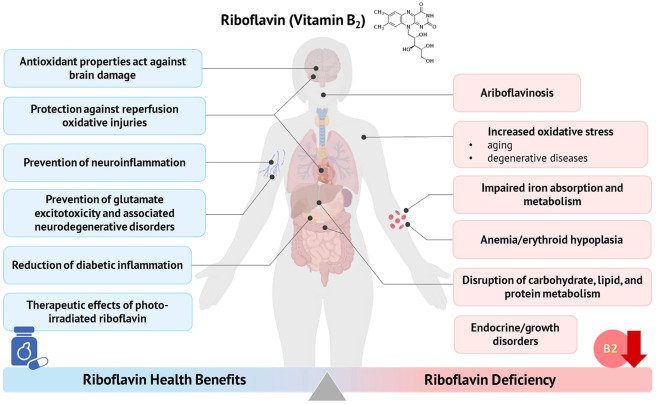
Vit B2 / Riboflavin Deficiency in Indians
Epidemiological surveys conducted by the Indian Council of Medical Research (ICMR) and National Nutrition Monitoring Bureau (NNMB) reveal a striking reality: riboflavin deficiency is among the most widespread subclinical vitamin deficits in India, affecting anywhere from 50% to over 80% of urban and rural populations.
Because riboflavin is required to produce two critical coenzymes—Flavin Mononucleotide (FMN) and Flavin Adenine Dinucleotide (FAD)—a functional shortage in B2 throttles at least 77 distinct human flavoproteins, causing a cascade of systemic metabolic friction.
77 Flavoproteins: What Vitamin B2 Actually Powers in Our Body
To understand why a functional B2 deficit wreaks such widespread havoc, consider the primary metabolic systems that depend directly on FMN and FAD coenzymes:
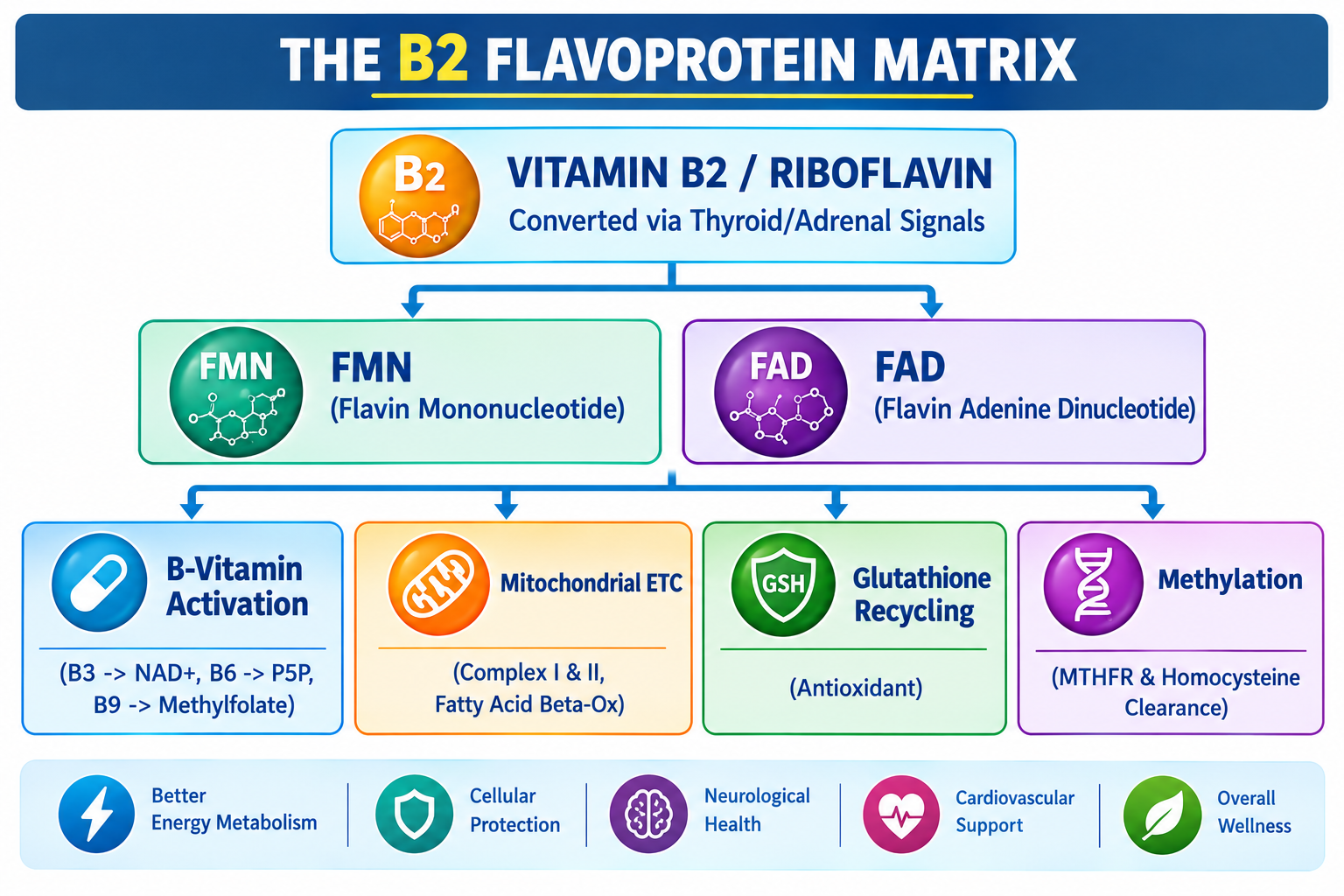
Ultimate B-Vitamin Network Activator
Without active B2, the rest of your B-complex supplement stack sits idle:
-
Vitamin B9 (Folate): The MTHFR enzyme (methylenetetrahydrofolate reductase), which turns folate into active 5-MTHF for DNA repair and methylation, is a FAD-dependent flavoprotein. Without B2, MTHFR stalls.
-
Vitamin B6: The enzyme Pyridoxine 5′-phosphate oxidase (PNPO), which converts dietary B6 into its active coenzyme form (P5P), requires FMN.
-
Vitamin B3: Converting tryptophan into NAD+ requires B2-dependent enzymatic steps.
Mitochondrial Power Generation (ATP)
Riboflavin forms the structural heart of Complex I and Complex II of the mitochondrial Electron Transport Chain (ETC). Furthermore, Electron Transfer Flavoprotein Dehydrogenase (ETF-DH) and Acyl-CoA Dehydrogenases (ACAD)—the enzymes that burn dietary fats for cellular fuel—are entirely FAD-dependent. Without B2, fatty acid oxidation backs up.
Glutathione Recycling & Master Antioxidant Defense
Your body cannot reuse glutathione without B2. Glutathione Reductase uses FAD to convert oxidized glutathione (GSSG) back into its active, protective reduced state (GSH), shielding cells, Vitamin C, and Vitamin E from Reactive Oxygen Species (ROS).
Sulfur Clearance & Gut Biome Balance
Excessive hydrogen sulfide (H2S) acts as a cellular toxin and drives bacterial overgrowth in the gut (SIBO). B2 powers the enzymes necessary to break down hydrogen sulfide into non-toxic sulfates for urinary excretion.
Neurotransmitter & Hormone Breakdown
Monamine Oxidase (MAO-A and MAO-B), the primary enzymes responsible for clearing excess dopamine, serotonin, noradrenaline, and histamine, rely on FAD. Low B2 status can result in poor neurotransmitter clearance, contributing to anxiety, agitation, and histamine intolerance.
Indian Perspective: Why Deficiencies Are Epidemic in South Asians
The high prevalence of riboflavin deficiency across India is driven by a combination of traditional dietary patterns, high metabolic demand, and widespread gut dysfunction.
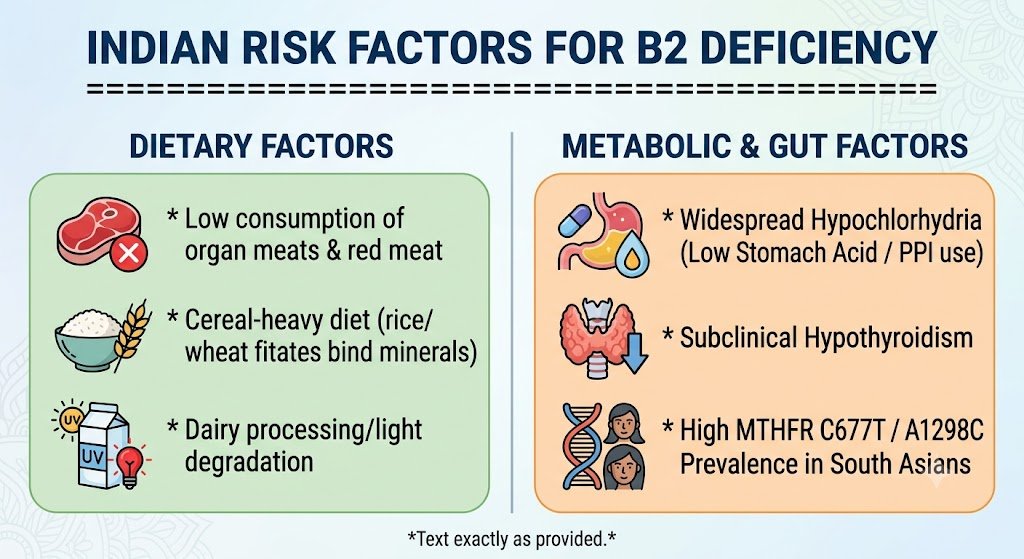
1. Cereal-Based Diets vs. Organ Meats
The primary dietary sources of highly bioavailable riboflavin are animal liver, organ meats, red meat, eggs, and dairy. Traditional Indian diets are overwhelmingly cereal-based (polished white rice, refined wheat flour/maida) with low intake of organ meats or rich animal proteins. While pulses and green leafy vegetables contain modest amounts of B2, their bioavailability is lower, and traditional high-heat cooking and boiling can leach water-soluble B2 into discarded cooking water.
2. High Prevalence of MTHFR Polymorphisms in India
Genomic studies show that South Asians carry a high prevalence of MTHFR gene mutations (C677T and A1298C). Research published in The American Journal of Clinical Nutrition demonstrates that individuals with the MTHFR C677T mutation require significantly higher levels of Riboflavin to stabilize the mutated enzyme and keep homocysteine levels normal. In India, where hyperhomocysteinemia (elevated homocysteine) is widespread and drives premature coronary artery disease, addressing B2 is often the missing link.
Activation Bottleneck: Stomach Acid, Thyroid, and Adrenals
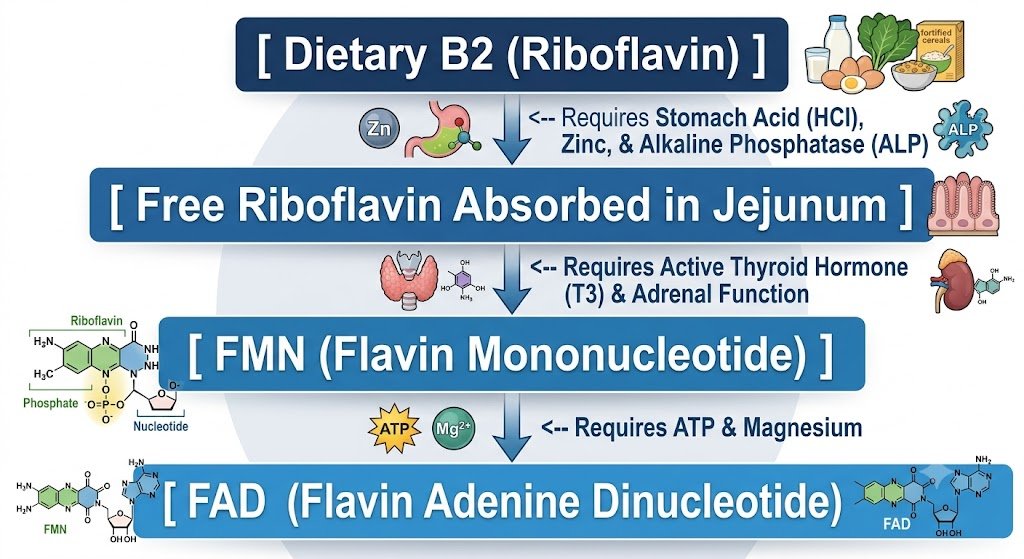
Consuming B2 in food does not guarantee functional cellular utilization. Riboflavin must undergo specific activation steps:
-
Stomach Acid & Digestion: B2 absorption requires adequate gastric acid (HCl) to cleave it from food proteins. The rampant over-the-counter use of Proton Pump Inhibitors (PPIs) and antacids across urban India suppresses stomach acid, blocking B2 cleavage.
-
Thyroid Dependency: The conversion of riboflavin into its active FMN form by the enzyme flavokinase is directly stimulated by active thyroid hormone (T3). With subclinical hypothyroidism affecting over 10–11% of Indian adults, poor thyroid function directly creates a functional B2 deficiency.
Lab Work Indicators: Decoding Functional B2 Deficiency
Standard commercial laboratories in India rarely offer direct erythrocyte glutathione reductase activity coefficient (EGRAC) testing. However, clinicians can spot functional B2 deficits by reading standard blood panels and Organic Acids Tests (OAT) carefully:
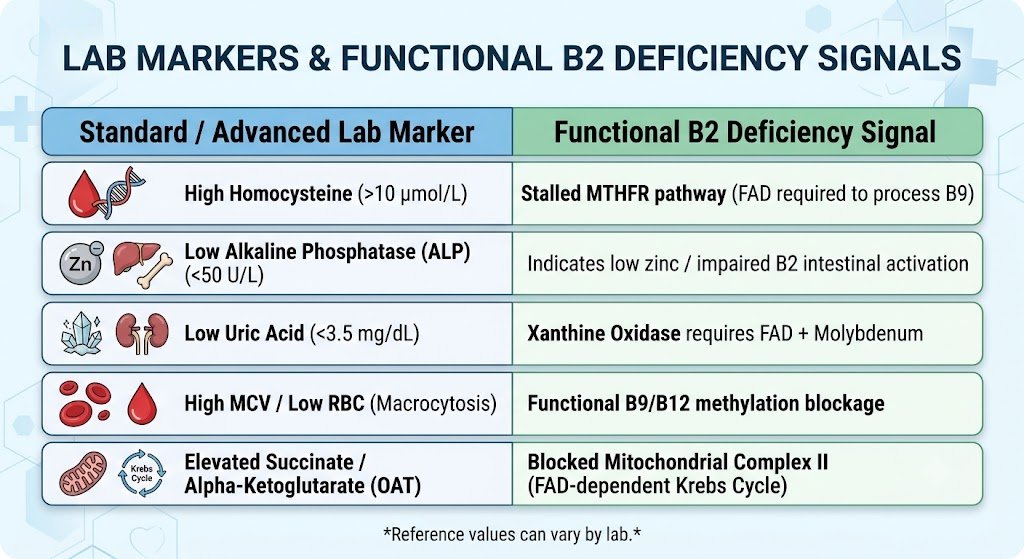
Clinical Action Plan: How to Restore B2 Status Safely
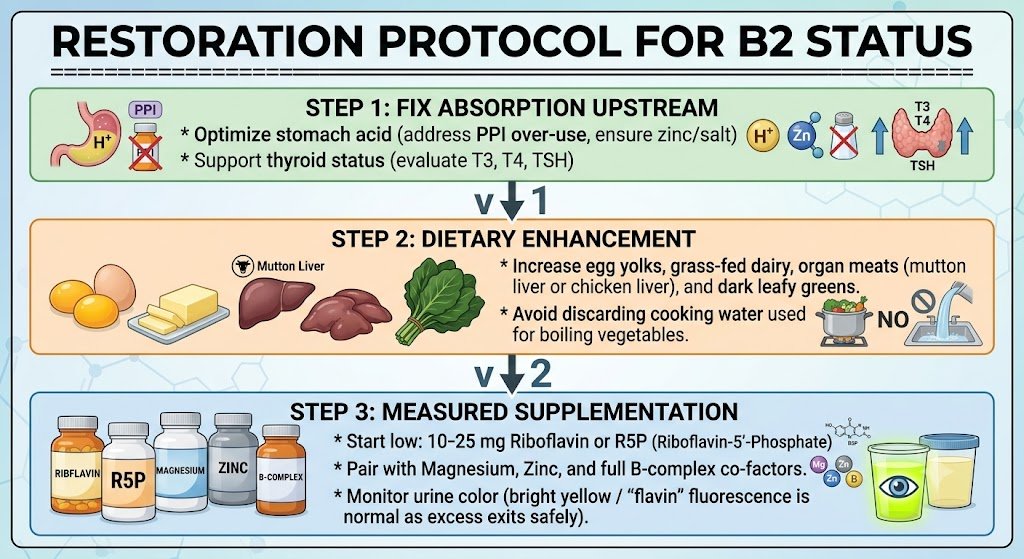
If functional B2 deficiency is suspected, restoring levels requires a deliberate, step-by-step approach rather than high-dose single-nutrient mega-dosing.
-
Address Upstream Digestion: Work with a physician to optimize stomach acid production, reduce unnecessary antacid reliance, and ensure adequate zinc intake (required for Alkaline Phosphatase activity)
-
Prioritize B2-Rich Foods: Incorporate pasture-raised eggs, quality dairy (curd/paneer), organ meats (such as mutton liver), mushrooms, and almonds into your daily diet
-
Use Bioactive Supplementation Wisely: For those with gut absorption issues or MTHFR mutations, supplementing with Riboflavin-5′-Phosphate (R5P)—the active coenzyme form—bypasses initial phosphorylation steps. Start with moderate dosages (10 – 50 mg) alongside a balanced B-complex, as high-dose single B-vitamins can create functional imbalances in other pathways
Conclusion
Vitamin B2 is far more than an entry on a standard multivitamin label. It is the primary biochemical linchpin that turns on your other B-vitamins, drives mitochondrial ATP generation, recycles glutathione, and enables smooth methylation.
For the Indian population—navigating high rates of MTHFR gene variants, widespread subclinical hypothyroidism, and cereal-heavy dietary patterns—recognizing and correcting Vitamin B2 status is a foundational step toward long-term metabolic vitality.
References & Clinical Evidence
-
National Nutrition Monitoring Bureau (NNMB). Diet and Nutritional Status of Urban Population in India. ICMR – National Institute of Nutrition, Hyderabad
-
McNulty, H., et al. (2006). Riboflavin, MTHFR genotype and blood pressure: A personalized nutrition approach to prevention of hypertension. The American Journal of Clinical Nutrition, 84(4), 936–943
-
Powers, H. J. (2003). Riboflavin (vitamin B2) and health. The American Journal of Clinical Nutrition, 77(6), 1352–1360
-
Yajnik, C. S., et al. (2006). Vitamin B12, folate, and homocysteine status in Asian Indians. Refractory Hyperhomocysteinemia and Vascular Disease, Journal of Association of Physicians of India, 54, 769–775
-
Hustad, S., et al. (2000). Riboflavin, FMN, and FAD in human plasma and erythrocytes: relation to dietary intake and MTHFR 677C->T genotype. American Journal of Clinical Nutrition, 71(6), 1521–1528