



Cortisol is often called the “stress hormone”. But cortisol is not bad. We need it to survive. The problem begins when cortisol remains abnormally high for way too long. Thats problematic for our health.
What is cortisol?
Cortisol is a hormone made by the adrenal glands, located just above the kidneys.
Cortisol helps the body respond to stress, control blood sugar, regulate blood pressure, influence inflammation and manage how the body uses energy.
Cortisol normally follows a daily rhythm: levels are generally higher in the morning and lower at night.
What does high cortisol do to the body?
Long-term high levels of cortisol, as seen even in Cushing’s syndrome, can affect almost every part of the body.
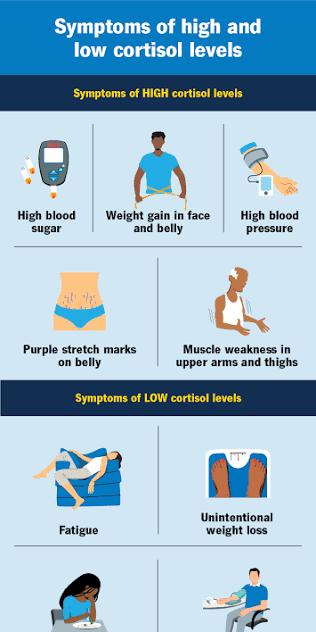
Cortisol may cause weight gain, increased abdominal fat, a rounder face, high blood pressure, high blood sugar or diabetes, muscle weakness, thinner bones, easy bruising and wide purple stretch marks.
Your cortisol levels are through the roof and you don’t even realize it. 10 symptoms that confirm it:
1- Eyelid tremors
That involuntary eyelid twitch isn’t random. Eye twitches are caused by either of Low magnesium, high cortisol and poor deep sleep as the three most important causes. All three causes trace back to the same root problem.
2- Waking Up from 2 am to 4 am in the Morning – It’s not insomnia. It’s not anxiety. Cortisol has a natural peak during those early hours. When it’s chronically elevated, that peak pulls you out of sleep early. Fully awake. The mind racing. Can’t settle back down.
3- Exhausted all day, wired at night – Normal cortisol is high in the morning and low at night. Chronic stress completely reverses that curve. You drag yourself through the day and then can’t unplug when you finally get into bed. Thanks to your Cortisol levels
4- Warts on your neck or armpits – It’s not random. It’s not just aging. Warts are a direct marker of insulin resistance, which is a documented consequence of chronically high cortisol levels. Your body is showing you on the outside what’s happening on the inside.
5- Intense Cravings for Sugar and Salt – Cortisol raises blood sugar to prepare you for a threat. When no threat arrives but cortisol stays high, your body demands to replenish what was burned. Intense cravings without real hunger. It’s not a willpower problem. Its Pure chemistry.
6- Bleeding Gums Without a Dental Explanation – Cortisol suppresses your immune response in a general way. Gums are a highly exposed tissue. Under immune suppression, bacteria take control quickly. If your gums bleed regularly and your hygiene is good, look at cortisol.
7- Skin that bruises and tears easily – Cortisol blocks collagen production over time. The skin thins. Bruises from almost nothing. Stretch marks appear without significant weight changes. It’s not age. Cortisol breaking down your connective tissue.
8- Getting sick often and staying sick longer – Frequent infections. Slow recovery. Wounds that take forever to heal. Chronic cortisol keeps your immune system permanently suppressed. It’s not bad luck. Your body can’t defend itself properly when cortisol is always active.
9. Hungry Right After Eating – Cortisol raises blood sugar. Insulin acts to lower it. That drop generates real hunger even though you’ve just finished a meal. It’s not boredom. It’s not habit. A hormonal loop that runs on its own.
10- Abdominal and facial fat that won’t go away – You’re eating well. You’re training. But your facial fat and abdominal fat areas just won’t budge. Cortisol receptors are specifically concentrated in the abdomen and face. With elevated cortisol, your body stores fat in these 2 areas, no matter what you eat.
Which cortisol tests are available?
Cortisol can be measured in blood, saliva or urine.
The main tests used by doctors when they suspect true cortisol levels are way too high, are late-night salivary cortisol, 24-hour urinary free cortisol and the overnight dexamethasone suppression test. Doctors often need more than one test because no single cortisol test is perfect.
A simple random cortisol blood test can be misleading because cortisol naturally changes during the day and can be affected by stress, exercise and some medicines.
Best Exercises to Lower Cortisol and Reduce Stress
Exercise can help regulate the body’s stress response, but more intense exercise is not always better for cortisol.
A 2025 systematic review of 44 studies involving 3,284 people found that exercise was linked with lower cortisol in people experiencing psychological stress. Yoga showed the strongest evidence for cortisol reduction.
-
Yoga — best studied: Try 30–60 minutes, 3 times a week. Hatha yoga, gentle yoga and yoga combining postures with slow breathing such as Praanayams are sensible options. Earlier meta-analysis also linked yoga with lower waking and evening cortisol.
-
Brisk walking: Aim for 30–45 minutes on most days. Moderate aerobic exercise may support healthier cortisol regulation and sleep. Walk without our phone
-
Slow breathing with gentle stretching: Spend 10–15 minutes on slow, comfortable breathing combined with neck, shoulder, hip and back stretches. The aim is relaxation rather than a hard workout.
-
Moderate cycling or swimming: 30–40 minutes at a comfortable pace can provide aerobic exercise without pushing every session to maximum effort.
-
Strength training: Do 2–3 moderate sessions a week. Avoid turning every workout into an exhausting, high-volume session if stress and poor recovery are already problems.
-
Tai chi or qigong: These slow movement practices combine controlled movement and breathing. Qigong ranked favourably in the recent cortisol exercise review, although the evidence was less certain than for yoga.