


This is about an extremely critical for human body, element called Cholesterol which in our opinion gets more bad press than good, despite the fact that each and every cell in human body requires cholesterol, most of body hormones are made from cholesterol and that human brain is Most cholesterol RichOrgan in Human body. This much is the importance of cholesterol for human beings. Objective of this write up is to understand Cholesterol and its levels in human body more scientifically, rationally and un-emotionally.
Cholesterol – More Hero Than Villain
For more than half a century, lowering low-density lipoprotein cholesterol (LDL-C, unwittingly dubbed as “bad cholesterol”) has been a central strategy in the prevention of atherosclerotic cardiovascular disease (ASCVD). Large randomized clinical trials, genetic studies and international guidelines consistently identify elevated LDL-C as a causal contributor to atherosclerosis and cardiovascular events.
However, an intriguing body of observational research has reported an apparently contradictory finding. In several community-based cohorts, particularly among adults aged 60 years and older, individuals with lower baseline LDL-C or total cholesterol (TC) have sometimes experienced higher rates of all-cause mortality than those with moderately elevated cholesterol levels. This observation has become widely known as the “cholesterol paradox.”
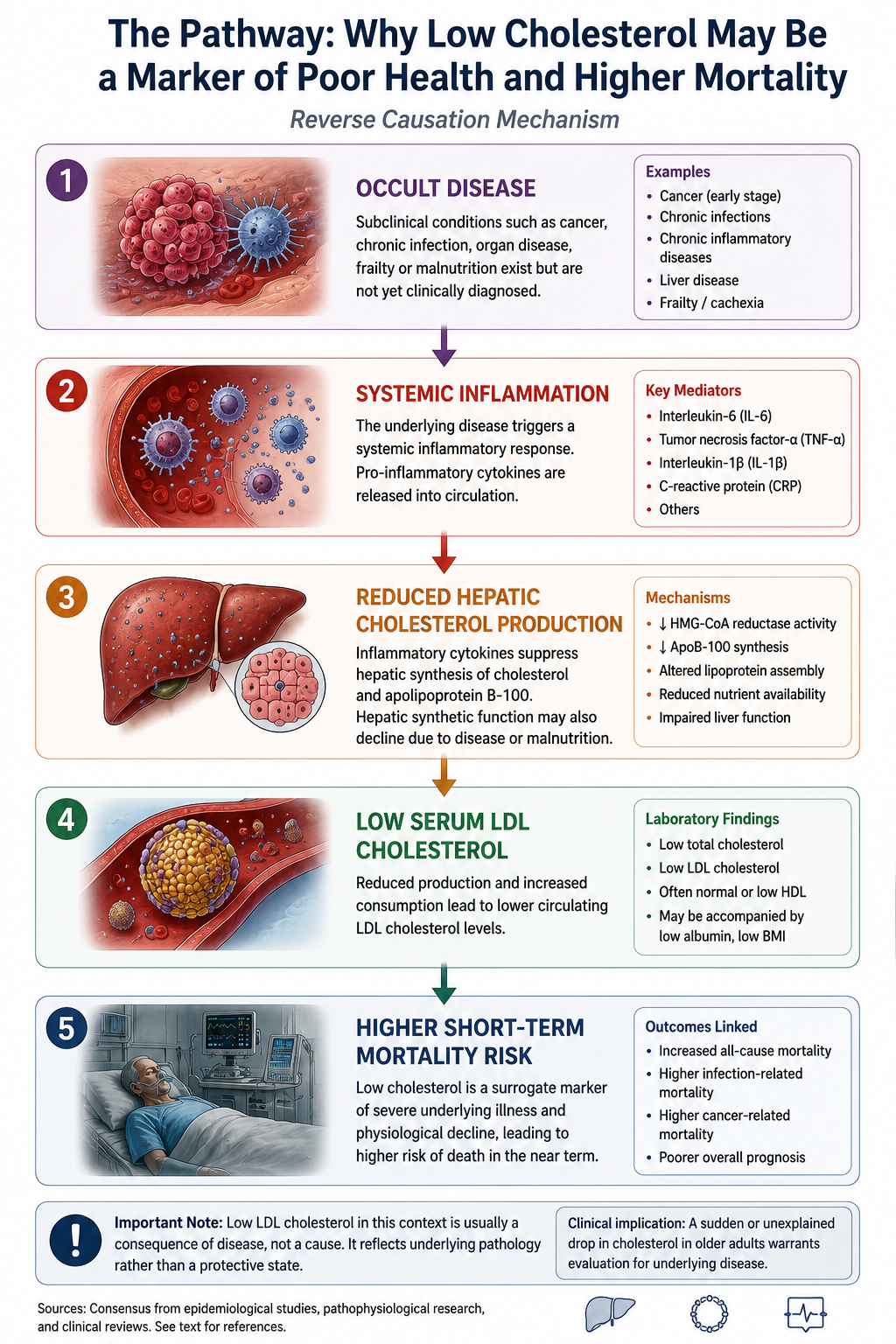
At first glance, these findings appear to challenge decades of cardiovascular research. Yet a closer examination reveals a far more complex picture. Modern epidemiology, Mendelian randomization studies and randomized controlled trials suggest that – Low serum cholesterol is frequently a potential biomarker of underlying frailty, subclinical disease, or systemic inflammation (reverse causation) rather than a direct cause of death, while lifelong exposure to elevated ApoB-containing lipoproteins remains a causal driver of atherosclerotic cardiovascular disease (ASCVD).
Understanding this distinction is essential for clinicians, researchers and patients alike. Misinterpreting observational associations as proof of causation can lead to misleading conclusions and inappropriate clinical decisions.
This review examines the biological basis of the cholesterol paradox, critically evaluates the major observational and interventional studies published over the past six decades, and explains why the relationship between cholesterol and mortality differs depending on age, health status, and study design.
1. Cholesterol Paradox: Understanding the Epidemiological Observation
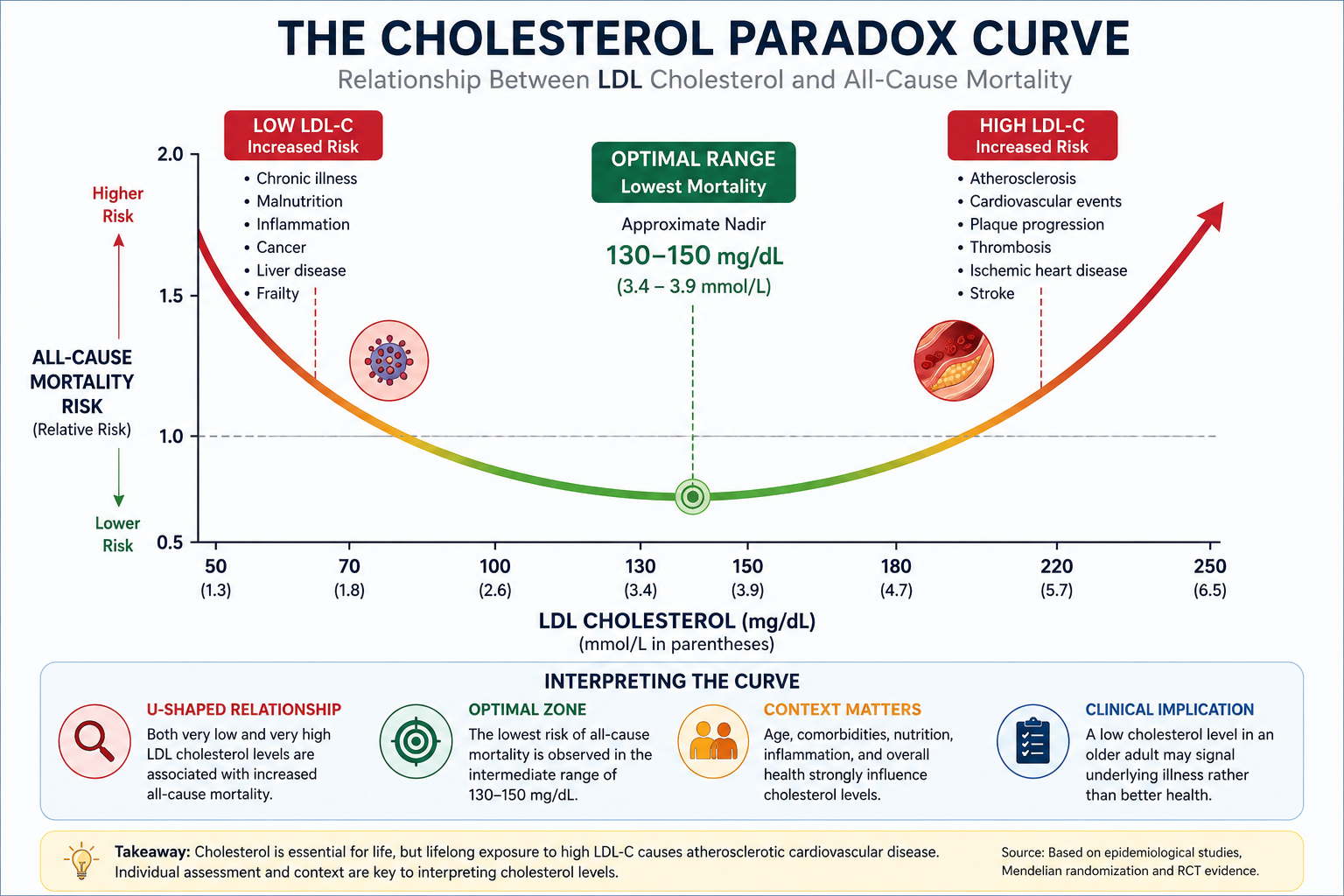
One of the most consistent findings in nutritional epidemiology is that biological relationships are rarely linear. Instead, many biomarkers—including blood pressure, body weight, fasting glucose, and cholesterol—demonstrate U-shaped or J-shaped associations with mortality.
Several large observational studies have reported that both extremely low and extremely high LDL-C concentrations are associated with higher all-cause mortality, while intermediate concentrations are associated with the greatest survival.

Key Conclusion
Elevated cholesterol is not inherently “heart-friendly” or protective against cardiovascular disease. While observational studies demonstrate that abnormally low cholesterol levels track with higher overall mortality, this is primarily driven by reverse causation—where subclinical illness, chronic inflammation, and frailty depress lipid levels prior to death.
-
Context Matters: In robust, healthy individuals, elevated oxidised-LDL-C promotes the development of vascular plaque
-
Biomarker of Frailty: In frail elderly patients or those with severe chronic illness, a rapid drop in total cholesterol should serve as a clinical warning sign of systemic decline or malnourishment rather than an indicator of ideal health
-
Lipid Goals: Lipid-lowering interventions (statins, ezetimibe, PCSK9 inhibitors) reduce total and cardiovascular mortality proportionally to baseline risk and absolute LDL-C reduction