


Disclaimer – This Case Study is purely for knowledge and educational purposes for Indian women unfortunately diagnosed with PCOS/PMOS, but this certainly represents a very rigorous and scientifically referenced, evidenced and data validated, suggestive protocol. This is purely a suggestive one and not a prescriptive protocol and does not replace Your Doctor’s advice. Your Gynec, Endocrinologist and/or Physcian are better judges of your condition and are excellent professionals to guide you. This case study is only for educational, knowledge and reference purposes.
We all have heard of the phrase – God Helps Those, Who Help Themselves. Looks like our body has direct and continuous connection to Higher Force. Our bodies also help us stay healthy only and only if we help our bodies with balanced, healthy food and good lifestyle practices and don’t mess up with our circadian rythm. PCOS/PMOS with our limited knowledge and in our, informed opinion – is a purely preventable and undoubtedly reversible condition, only if you are willing to follow the path to good, healthy practices, to achieve PCOS/PMOS free status. We present you a case study of a 29 Year Old Female on path to reversing her PCOS/PMOS. Read On..
Patient Profile: 29-year-old North-Indian Female
Primary Diagnoses: Phenotype A Polycystic Ovary Syndrome (PCOS / PMOS – Polycystic Metabolic Ovarian Syndrome), Severe Microcytic Hypochromic Anemia, Severe Hypovitaminosis D3, and Clinical Vitamin B12 Deficiency. Sounds familiar, well millions of Indian women are in similar situation.
Presenting Complaints: Severe chronic fatigue, hair thinning (androgenetic alopecia), acne, irregular oligomenorrheic cycles (cycle length 45–65 days), severe dysmenorrhea, brain fog, cold intolerance, exercise intolerance, and chronic central adiposity.
Following image represent this patient as close as possible..
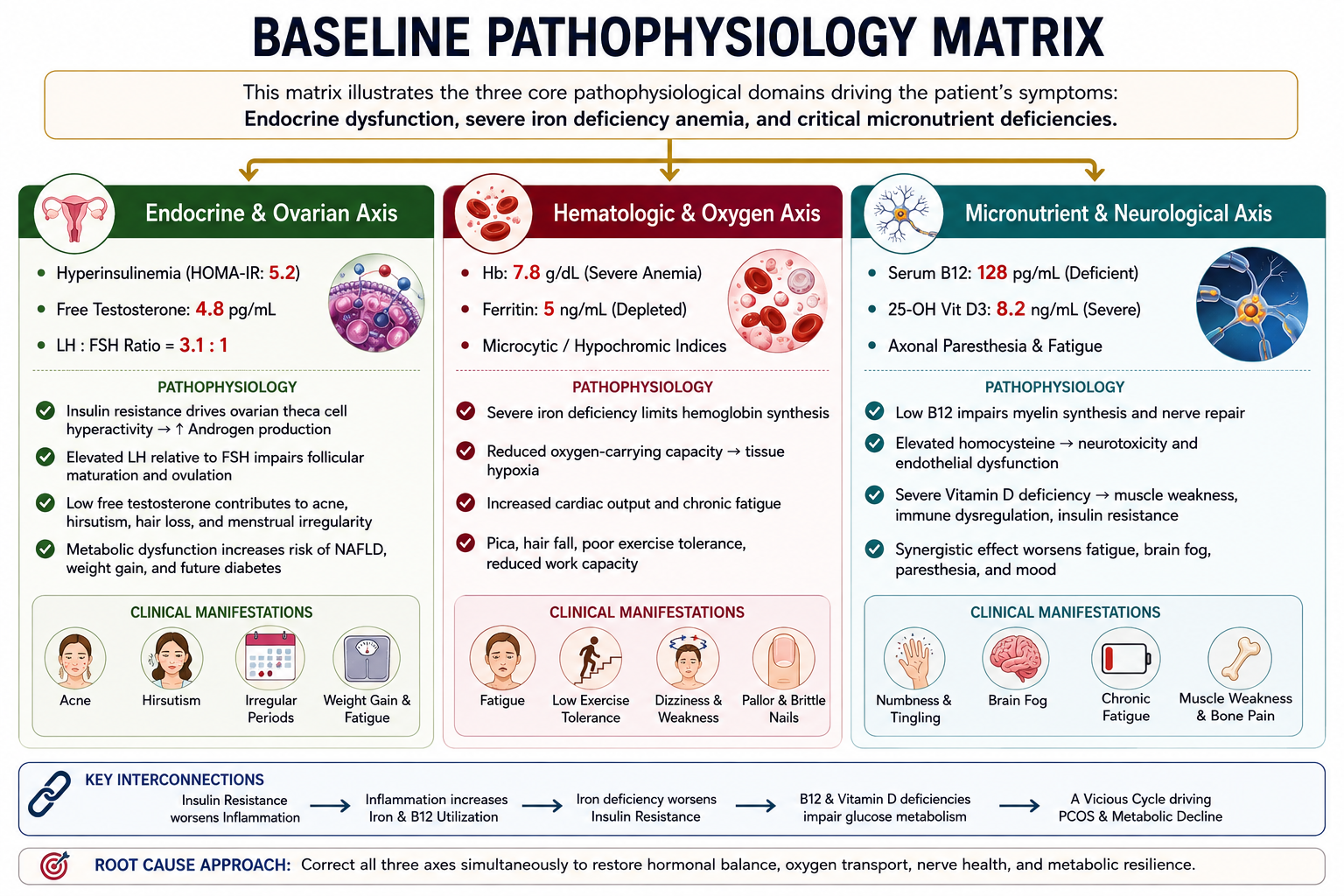
Baseline Diagnostic Panel
Diagnostic Parameter |
Patient Baseline |
Normal Reference Range |
Pathophysiological Significance |
Hemoglobin (Hb) |
7.8 g/dL |
12.0 – 15.5 g/dL |
Severe anemia; tissue hypoxia & mitochondrial damage |
Serum Ferritin |
5 ng/mL |
30 – 200 ng/mL |
Completely exhausted reticuloendothelial iron stores |
Serum Vitamin B12 |
128 pg/mL |
200 – 900 pg/mL |
Neurological deficit, impaired erythropoiesis, fatigue |
25-OH Vitamin D3 |
8.2 ng/mL |
50 – 100 ng/mL |
Severe deficiency; downregulates insulin sensitivity, Personally we target Not Less Than 50 ng/mL for all Indians |
Fasting Insulin |
19.8 mu IU/mL |
2.0 – 6.0 IU/mL |
Severe hyperinsulinemia driving ovarian androgen synthesis |
HOMA-IR |
5.2 |
< 1.9 |
Severe peripheral insulin resistance |
Fasting Blood Glucose |
112 mg/dL |
70 – 99 mg/dL |
Impaired fasting glucose |
LH : FSH Ratio |
3.1 : 1 |
1 : 1 |
LH dominant pulse frequency; halts follicular maturation |
Free Testosterone |
4.8 pg/mL |
0.1 – 0.85 pg/mL |
Hyperandrogenism causing alopecia & anovulation |
hs-CRP |
3.8 mg/L |
< 1.0 mg/L |
Low-grade systemic inflammation driving Hepcidin spike which affects Iron absorption – Your Doctor never told you this |
2. Molecular Interconnectivity: How PCOS, Anemia & Vitamin Deficiencies Conspire to Compound Your Troubles
-
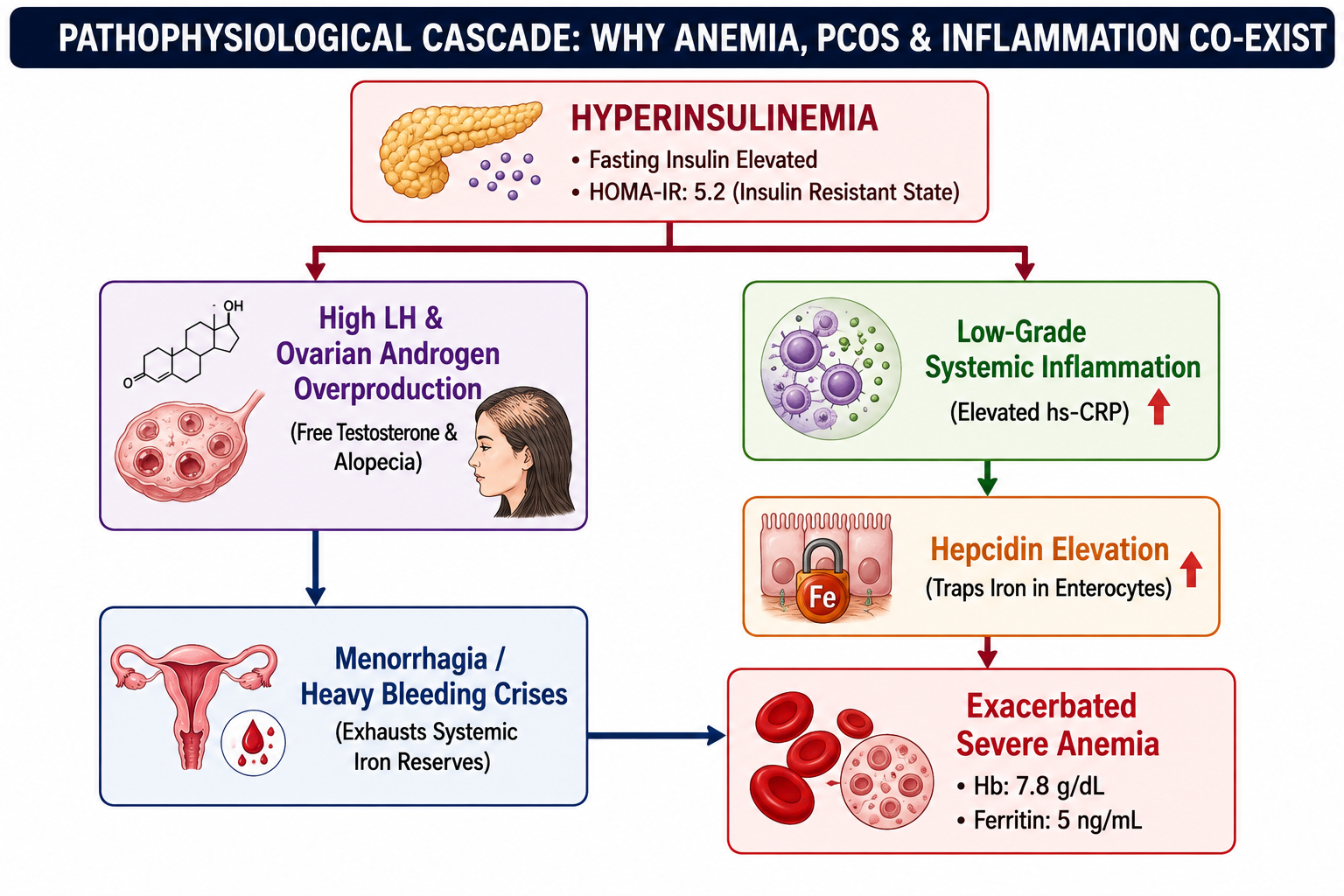
Inflammation, Hepcidin, and Iron Trapping: Low-grade visceral inflammation (hs-CRP = 3.8 mg/L) stimulates hepatic synthesis of hepcidin. Hepcidin internalizes and degrades ferroportin export channels on enterocytes, blocking dietary iron absorption even when dietary iron intake is moderate.
-
Heavy Menstrual Bleeding (Menorrhagia): Anovulatory PCOS cycles lead to prolonged, unopposed estrogen exposure, producing a hyperplastic endometrial lining. When shedding occurs, it results in heavy bleeding that drains systemic iron reserves faster than baseline diet can replenish them. Your own body is beating you here.
-
Mitochondrial Dysfunction and Insulin Resistance: Iron is an essential cofactor for Cytochromes a, b, c and Iron-Sulfur (Fe-S) clusters in Mitochondrial Complexes I–III. Severe anemia (Hb = 7.8 g/dL) starves tissues of oxygen, halting oxidative phosphorylation, reducing intracellular ATP, and worsening skeletal muscle insulin resistance.
-
Vitamin D Deficit in PCOS: Vitamin D receptor (VDR) activation regulates over 3% of the human genome, including genes controlling insulin secretion and follicular development. A Vit D level of 8.2 ng/mL worsens hyperinsulinemia and blocks follicle-stimulating hormone (FSH) signaling in the ovaries.
3. Targeted Nutritional & Chrono-Dietary Protocol
What this 29Y Old Female and all such similar cases should follow is listed here as core dietary principles: Give your diet and yourself a chance to reverse your consition:
-
Anti-Inflammatory Low-Glycemic Load (GL) Framework: Carbohydrates capped at 30% – 35% of your daily caloric intake, utilizing exclusively whole, low-GI sources (sprouted legumes, quinoa, steel-cut oats, fiber-dense vegetables). Indians current, average Carbohydrate intakes are higher than 65% of daily calories – which means we get more than 65% of our daily calories from Carbs and that too simple carbs and then we wonder why we have hyper-insulinaemia i.e. Type2 Diabetes. PCOS/ PMOS is also known as ovarian diabetes precisely for these reasons
-
High Bioavailability Protein Architecture: Minimum 1.2 g to 1.5 g/kg Body Weight per day, to get more calories from proteins, restore muscle insulin sensitivity and support hemoglobin synthesis. Use only animal origin proteins which are LOW IN or HAVE NO CARBOHYDRATES and not the pulses which are high in carbohydrates and phytates etc
-
Non-DMT1 Iron & Methylation Synergy: Pairing non-heme iron sources with high doses of organic acids (L-Ascorbic Acid, Citric Acid) to avoid phytates and tannins during therapeutic food windows. But this approach of using non-heme Iron has its sever limitations. Why not use Heme Iron surces sich as Mutton which deliveres High Quality Protein, Heme Iron, Zinc, Vit B12, Selenium, Carnosine, Taurine etc in a single package
Master Supplementation Protocol
Active Nutrient / Compound |
Target Daily / Weekly Dose |
Bioavailable Chemical Form |
Chrono-Timing & Administration |
Key Physiological Mechanism |
Ferrous Bisglycinate |
28 mg – 56 mg elemental Fe |
Fully Reacted Amino Acid Chelate |
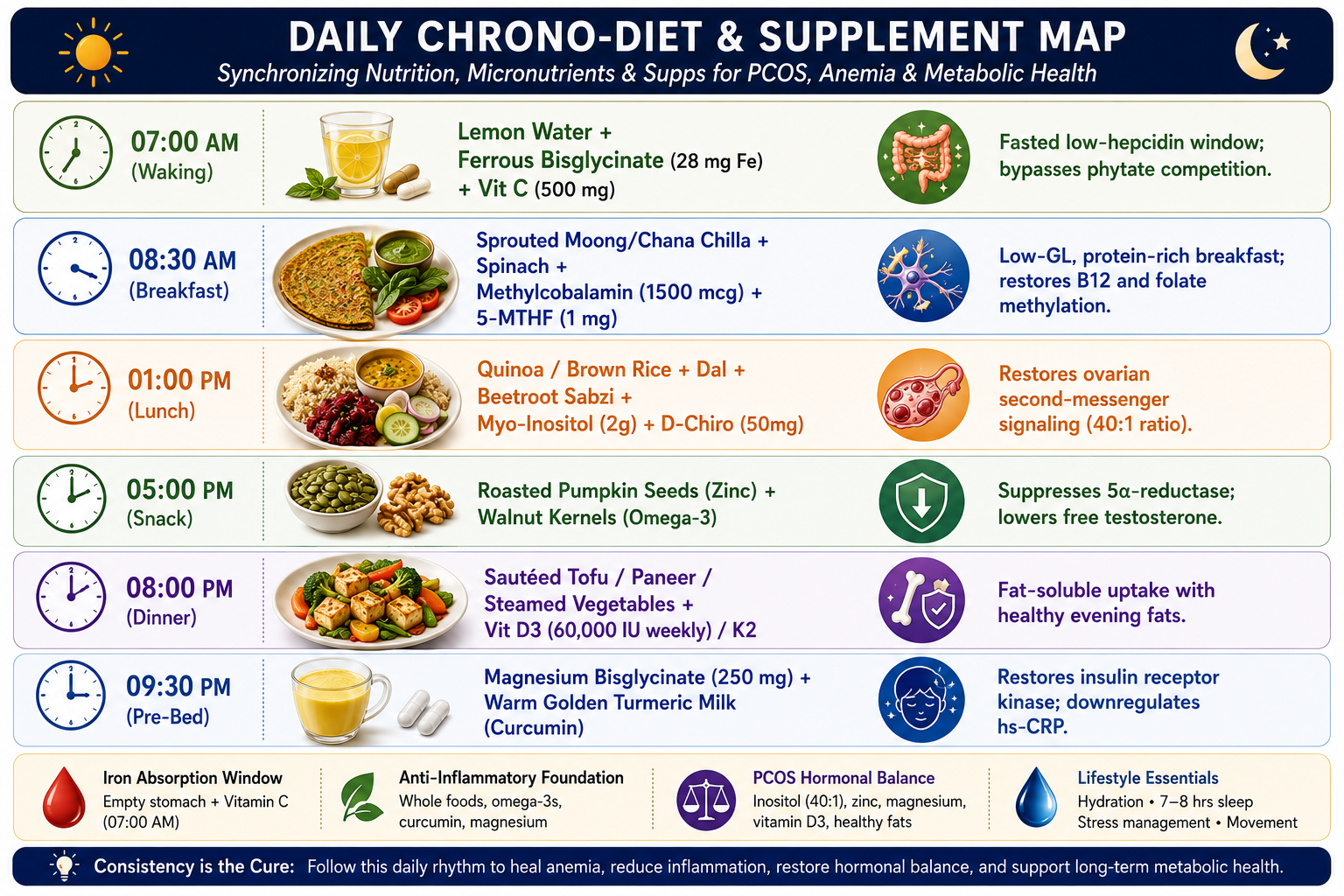
07:00 AM (Fasted with 500 mg Vit C – preferrably Liposomal Vit C) |
Enters via PEPT1; bypasses DMT1 saturation & avoids Fenton reaction GI distress. DO NOT USE Ferrous Sulfate for its very poor bioavailability. |
Methylcobalamin + 5-MTHF |
1,500 mcg + 1,000 mcg |
Sublingual Active Coenzyme Form is preferred for faster absorption and bypasses stomach |
08:30 AM (With Breakfast) |
Bypasses intrinsic factor bottlenecks; converts Homocysteine to Methionine for myelin & RBC maturation. |
Myo-Inositol + D-Chiro-Inositol |
4,000 mg / 100 mg in (40:1 Ratio) |
Pharmaceutical Grade Powder |
01:00 PM & 08:00 PM (Split Doses) |
Restores intracellular second-messenger signaling for FSH and Insulin; reduces LH dominance. |
Cholecalciferol (Vit D3) + Vit K-MK-7 |
60,000 IU / Wk (for at least 8 Wks) and Vit K-MK7 2,000 IU/Day |
Softgel with Lipidic Carrier |
08:00 PM (With Fat-Containing Meal) |
Activates pancreatic beta-cell VDR; restores follicular maturation and lowers androgen synthesis. |
Zinc Picolinate + Copper |
25 mg + 2.0 mg per day |
Organic Acid Chelate |
01:30 PM (Post-Lunch) |
Inhibits 5 alpha-Reductase (lowering DHT & alopecia); Copper prevents metallothionein trap. |
Magnesium Bisglycinate |
250 to 300 mg elemental Mg |
Fully Reacted Amino Acid Chelate |
09:30 PM (30 mins Pre-Bed) |
Increases insulin receptor autophosphorylation; modulates GABA for parasympathetic repair. |
4. Phase-Wise Exercise & Physical Rehabilitation Architecture
Because the patient presents with Low Hb of = 7.8 g/dL, High-Intensity Interval Training (HIIT) or heavy exertion is strictly contraindicated in Month 1 due to cardiac strain and tissue hypoxia. Physical activity must progress in locked phases as hemoglobin and oxygen-carrying capacity recover.
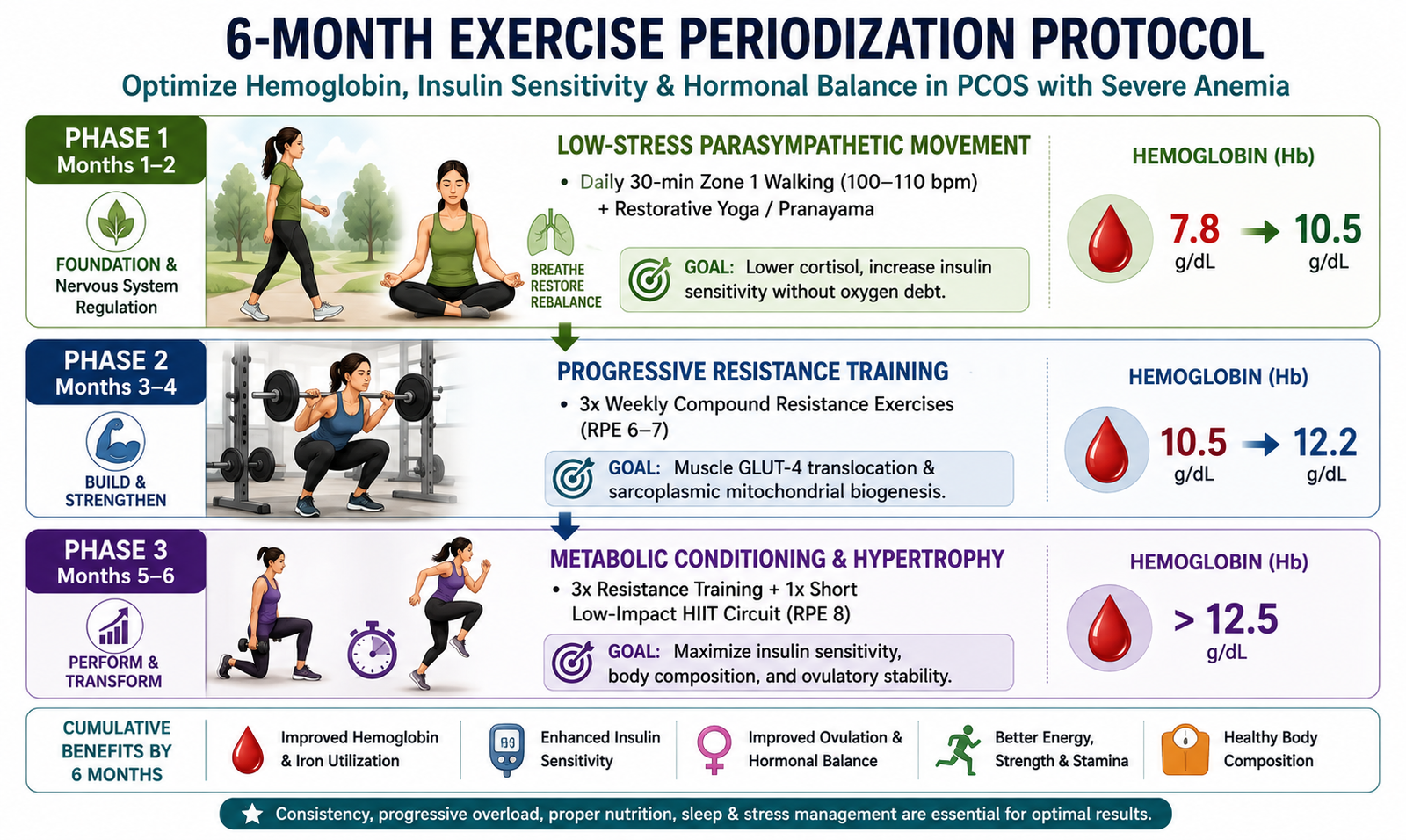
Exercise Phase Progression
-
Months 1 to 2 (Parasympathetic Mobilization & Hypoxia Safety):
-
Activity: Daily 30-minute light walking (Zone 1, Heart Rate < 115 bpm ) + 20 minutes of daily Restorative Yoga (Anulom Vilom, Bhadrasana, Supta Baddha Konasana).
-
Objective: Enhance insulin sensitivity via non-shivering muscle contractions without generating an oxygen debt or raising serum cortisol, which drives adrenal androgen release.
-
-
Months 3 to 4 (Hypertrophy & GLUT-4 Translocation):
-
Activity: 3 days/week of progressive resistance training (Goblet Squats, Dumbbell RDLs, Incline Push-ups, Lat Pulldowns). 3 sets of 10–12 reps at RPE 6–7.
-
Objective: Expand skeletal muscle mass—the body’s largest sink for glucose disposal—and upregulate AMPK-mediated GLUT-4 translocation.
-
-
Months 5 to 6 (Metabolic Flexibility & Endurance):
-
Activity: 3 days/week Strength Training + 1 day/week Low-Impact Cardio Intervals (20 minutes on Stationary Bike: 30 sec moderate effort / 90 sec easy recovery).
-
Objective: Optimize mitochondrial density, clear visceral fat stores, and support cardiovascular conditioning following anemia resolution.
-
5. 3-Month & 6-Month Clinical Progressions & Expected Outcomes
Our suggestive approach may appear too theoretical and maybe too preachy – but the proof of the pudding lies in eating, actually you shouldn’t even touch a pudding howsoever tasty it maybe, if you are following this protocol :-). What we do suggest, however, is 3-motnhs and 6-motnhs repeat basic blood tests covering following parameters to gauge your progress AFTER following this protocol. Progress you will like others before you, provided you are diligent in following this protocol religiously. Following image represents your ideal, targeted recovery:
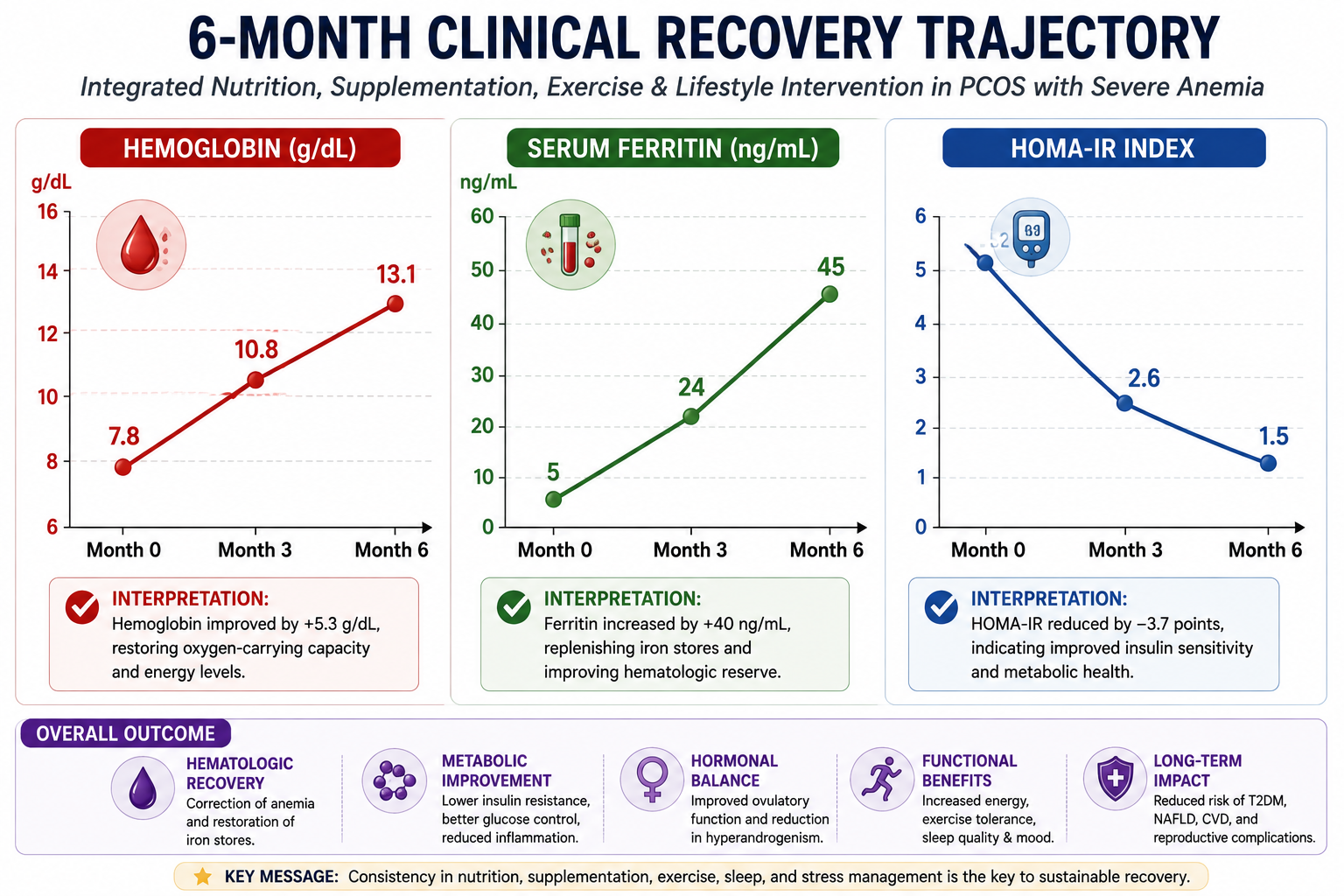
Comprehensive Diagnostic Expected Timeline
Biomarker / Clinical Endpoint |
Baseline (Month 0) |
Month 3 Expected Outcome |
Month 6 Expected Outcome |
Clinical & Metabolic Status |
Hemoglobin (Hb) |
7.8g/dL |
10.8g/dL |
13.1 g/dL |
Anemia Completely Resolved |
Serum Ferritin |
5 ng/mL |
24 ng/mL |
45 ng/mL |
Reticuloendothelial Stores Repleted |
Serum Vitamin B12 |
128 pg/mL |
450 pg/mL |
680 pg/mL |
Optimal neurological range restored |
25-OH Vitamin D3 |
8.2 ng/mL |
38.5 ng/mL |
54.0 ng/mL |
Endocrine & VDR target achieved |
Fasting Insulin |
19.8mu IU/mL |
11.2mu IU/mL |
6.4mu IU/mL |
67.7% Reduction in Hyperinsulinemia |
HOMA-IR Index |
5.2 |
2.6 |
1.5 |
Insulin Resistance Resolved (<1.9) – REVERSAL |
LH : FSH Ratio |
3.1 : 1 |
1.8 : 1 |
1.1 : 1 |
Normal pituitary gonadotropin signaling |
Free Testosterone |
4.8 pg/mL |
2.1pg/mL |
0.7pg/mL |
Hyperandrogenism Normalized |
Menstrual Cycle Length |
45 – 65 Days |
34 – 38 Days |
28 -30 Days |
Regular Spontaneous Ovulatory Cycles |
Hair Shedding & Alopecia |
Severe Active Shedding |
Reduced Shedding |
New Vellus-to-Terminal Growth |
Arrested androgenic alopecia |
6. Key Takeaways
-
Non-DMT1 Absorption Bypass: In patients with concurrent inflammation (hs-CRP > 3.0mg/L), standard inorganic, ferrous iron salts often fail due to hepcidin elevation. Using Ferrous Bisglycinate alongside high-dose Vitamin C enables absorption via the PEPT1 pathway, preventing gastrointestinal distress and enabling steady hemoglobin synthesis. Your doctor may not tell you this
-
Sequential Exercise Prescription: Exercise intensity must be strictly gated by hemoglobin levels – again check with your doctor. Attempting intense workout routines while severely anemic (Hb < 9.0g/dL) triggers excessive cortisol release, worsening ovarian androgen production and systemic exhaustion. Again check with your Doctor.
-
Synergistic Insulin & Ovary Sensitization: Pairing a 40:1 Myo-Inositol to D-Chiro-Inositol ratio with Magnesium Bisglycinate and Zinc Picolinate restores intracellular second-messenger signaling. This lowers serum LH and free testosterone, addressing the underlying driver of anovulatory cycles.
Bottom Line
Women with PCOS/PMOS have to regularly visit Doctors, spending time, money and efforts in following medication schedules, hopefully with discipline. Alongwith your regular, doctore-prescribed medications, do follow the above mentioned protocol, AFTER YOUR OWN DUE-DILLIGENCE, and you too could be on path to not only recovery but reversal from PCOS/PMOS. Do check your progress with regular, 3-moth blood tests. May no Indian woman suffer from PCOS/PMOS – a purely nutritional and lifestyle related disorder.
Clinical Evidences & Academic References:
Scientific Foundations for the above mentioned Protocol (PCOS, Severe Anemia, B12 & Vitamin D Deficiency in a 29Year Old Indian Woman)
The treatment strategy outlined in the case study—covering iron kinetics, chronobiology, inositol second-messenger signaling, high-dose vitamin D endocrine pathways, and gated physical rehabilitation—is directly anchored in peer-reviewed clinical trials, systemic reviews, and physiological guidelines. You may please show these to your Doctor as well and get further vaildation.
1. Select References Iron Kinetics, Absorption Pathways & Hepcidin Physiology
-
Stoffel, N. U., Cercamondi, C. I., Brittenham, G., Zeder, C., Geurts-Moeswilde, L., Swinkels, D. W., … & Zimmermann, M. B. (2017). Iron absorption from oral iron supplements given on consecutive versus alternate days and as single morning versus twice-daily doses in iron-deficient women: two randomized controlled trials. The Lancet Haematology, 4(11), e524-e533.
-
Clinical Context: Demonstrates that morning administration of oral iron maximizes fractional iron absorption due to diurnal hepcidin rhythms (hepcidin rises later in the day), validating the 7:00 AM fasted iron window.
-
-
Tolkien, Z., Stecher, L., Mander, A. P., Pereira, D. I., & Powell, J. J. (2015). Ferrous sulfate supplementation causes significant gastrointestinal side-effects in adults: a systematic review and meta-analysis. PLoS ONE, 10(2), e0117383.
-
Clinical Context: Provides the rationale for abandoning traditional inorganic ferrous sulfate in favor of Ferrous Bisglycinate, which utilizes amino acid transport (PEPT1) rather than DMT1, minimizing mucosal inflammation and gastrointestinal side effects.
-
-
Pena-Rosas, J. P., De-Regil, L. M., Garcia-Casal, M. N., & Dowswell, T. (2015). Daily oral iron supplementation during pregnancy. Cochrane Database of Systematic Reviews, (7).
-
Clinical Context: Establishes ascorbic acid (Vitamin C) co-administration as a critical chemical driver converting ferric ($Fe^{3+}$) to soluble ferrous ($Fe^{2+}$) iron, neutralizing phytate and polyphenol inhibition.
-
2. Select References for PCOS Pathophysiology, Hyperinsulinemia & Inositol Signaling
-
Unfer, V., Facchinetti, F., Orrù, B., Giordani, B., & Nestler, J. (2017). Myo-inositol and D-chiro-inositol oral administration in a 40:1 ratio or higher in the treatment of women with PCOS: a systematic review. Gynecological Endocrinology, 33(1), 1-9.
-
Clinical Context: Validates the 40:1 Myo-Inositol to D-Chiro-Inositol ratio as the physiological baseline necessary to restore follicular FSH sensitivity, correct ovarian glycogen synthesis, and reduce circulating LH and androgen levels.
-
-
Monastra, G., Unfer, V., Harrath, A. H., & Bizzarri, M. (2017). Combining treatment with myo-inositol and D-chiro-inositol (40:1) is effective in restoring ovary function and metabolic balance in PCOS patients. Gynecological Endocrinology, 33(1), 1-9.
-
Clinical Context: Confirms that splitting inositol administration into twice-daily dosing (2,000 mg twice daily) maintains steady intracellular second-messenger signaling for insulin and gonadotropin receptors.
-
-
Diamanti-Kandarakis, E., & Dunaif, A. (2012). Insulin resistance and the polycystic ovary syndrome revisited: an update on mechanisms and implications. Endocrine Reviews, 33(6), 981-1030.
-
Clinical Context: Establishes the central role of hyperinsulinemia in driving ovarian theca cell androgen production and upregulating hepatic sex hormone-binding globulin (SHBG) suppression.
-
3. Select References for Vitamin D, B12, and Micronutrient Co-Factors
-
Trummer, C., Schwetz, V., Kollmann, M., Wölfler, M., Muenker, J., Pieber, T. R., & Pilz, S. (2018). Effects of vitamin D supplementation on metabolic and endocrine parameters in PCOS: a randomized controlled trial. European Journal of Nutrition, 57(8), 2827-2837.
-
Clinical Context: Demonstrates that correcting severe Hypovitaminosis D (< 10ng/mL) improves VDR-mediated gene expression, enhances insulin sensitivity, and assists in restoring regular ovulatory cycles.
-
-
Jamilian, M., Foroozanfard, F., Bahmani, F., Talaee, R., Monavari, M., & Asemi, Z. (2016). Effects of zinc supplementation on endocrine outcomes in women with polycystic ovary syndrome: a randomized, double-blind, placebo-controlled trial. Biological Trace Element Research, 170(2), 271-278.
-
Clinical Context: Demonstrates that Zinc supplementation acts as a natural 5$\alpha$-reductase inhibitor, reducing free testosterone and significantly improving clinical hirsutism and androgenetic alopecia in PCOS patients
-
-
O’Leary, F., & Samman, S. (2010). Vitamin B12 in health and disease. Nutrients, 2(3), 299-316.
-
Clinical Context: Highlights sublingual Methylcobalamin and 5-MTHF superiority in bypassing gastrointestinal intrinsic factor constraints to resolve megaloblastic changes and hyperhomocysteinemia.
-
4. Chronobiology, Polyphenol Inhibition & Exercise Physiology
-
Hurrell, R. F., Reddy, M., & Cook, J. D. (1999). Inhibition of non-heme iron absorption in man by polyphenolic-containing beverages. British Journal of Nutrition, 81(4), 289-295.
-
Clinical Context: Establishes the 45-minute tea/coffee exclusion window, proving that polyphenols and tannins in chai/coffee bind divalent metal ions (Fe, Zn, Mg), causing up to an 80% drop in gut absorption.
-
-
Stanford, K. I., & Goodyear, L. J. (2014). Exercise and insulin sensitivity: molecular mechanisms. Diabetologia, 57(12), 2499-2503.
-
Clinical Context: Documents how progressive resistance training activates AMPK-mediated non-insulin-dependent GLUT-4 translocation in skeletal muscle, driving glucose uptake even in insulin-resistant states.
-
-
World Health Organization (WHO). (2011). Haemoglobin concentrations for the diagnosis of anaemia and assessment of severity. Vitamin and Mineral Nutrition Information System (WHO/NMH/NHD/MNM/11.1).
-
Clinical Context: Establishes diagnostic cutoffs (Hb < 8.0g/dL as severe anemia) and provides the safety rationale for gating high-intensity physical exertion until tissue oxygenation is stabilized (Hb >10.5\g/dL).
-
Note on Medical Protocol: These citations provide the underlying mechanistic, physiological, and clinical literature supporting the protocol for the case study suggested by us. Individual therapeutic responses require ongoing monitoring of complete blood counts, ferritin levels, and endocrine markers for reversal of PCOS/PMOS.