

This is Part 3 of Our Special, 4-Part Series under Evidence-Explained, on Knee Osteoarthritis and subsequent need for Knee Replacements in Indians. For Part 1 and Part 2 of the Series – pls click the highlighted text.
A Familiar Indian Food, an Intriguing Scientific Question
Could a modest serving of mutton have benefits beyond protein, iron and taste? A biochemical compound called carnosine makes the question worth investigating.
Mutton is an exceptionally rich dietary source of carnosine (β-alanyl-L-histidine), an endogenous dipeptide recognized for its multi-functional antioxidant, metal-chelating, and anti-glycation properties. In the context of joint health, Carnosine is increasingly being evaluated as a potential chondroprotective agent capable of mitigating the structural and inflammatory pathways driving osteoarthritis (OA)
This creates an appealing hypothesis: might dietary Carnosine help limit harmful protein modifications associated with ageing, osteoarthritis and metabolic dysfunction?
For people concerned about osteoarthritis, the question is important. But the distinction between a plausible mechanism and a proven health outcome is essential.
There is currently a growing clinical evidence to conclude that eating mutton prevents osteoarthritis, rebuilds cartilage, reduces knee pain or avoids knee replacement. The compound is worth studying; the proposed clinical benefit still needs to be fully demonstrated.
What is Carnosine? Why is Everyone Excited About Carnosine?
Carnosine is made from two amino acids: beta-alanine and histidine. It is present in skeletal muscles, where it has been studied for its roles including intracellular buffering and reactions with certain reactive compounds.


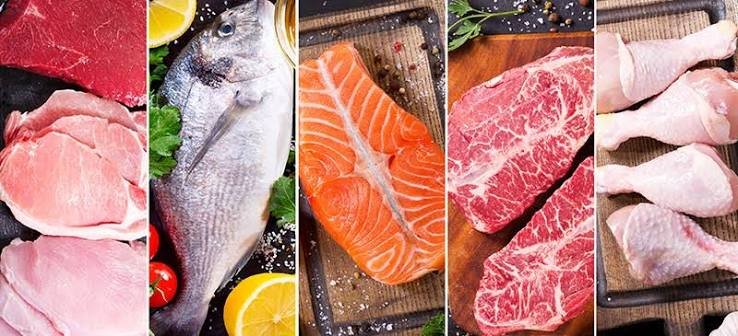
Because muscle foods contain carnosine, meat can provide a rich dietary and fairly, highly bio-available source of Carnosine. The amount of carnosine reaching human body, varies with animal species as source of meat, muscle type, type of cut, storage of animal meat and cooking style.
Mutton (sheep or lamb meat) contains approximately 400 mg of carnosine per 100 grams of raw muscle tissue, varying slightly depending on the specific cut, animal age, and muscle fiber type – one of highest amongst red meats. Heat and preparation methods can alter levels; boiling or stewing can reduce carnosine content in the meat by up to 30% as it leaches into cooking juices/broths.
Carnosine – Human Clinical Evidence
Direct clinical evidence establishing carnosine’s ability to prevent or treat osteoarthritis in humans is currently lacking. While its therapeutic benefits are heavily supported by preclinical research, human validation remains indirect:
-
Preclinical Dominance: The majority of scientific evidence supporting carnosine for Osteoarthritis stems from in vitro cell cultures (human and rodent chondrocytes/synoviocytes) and in vivo animal models (such as rats with surgically or chemically induced knee OA)
-
Indirect Human Markers: Human clinical trials have primarily focused on metabolic and cardiovascular health. In these cohorts (e.g., individuals with type 2 diabetes or obesity), oral L-carnosine supplementation significantly reduces systemic biomarkers of glycation—such as carboxymethyl lysine (CML) and pentosidine—alongside inflammatory cytokines like tumor necrosis factor-alpha (TNF-α). Because systemic metabolic dysfunction and high advanced glycation end-product (AGE) burdens are heavily linked to accelerated cartilage degradation, these systemic improvements suggest a theoretical chondroprotective carryover effect in humans
Carnosine – Biological Mechanisms
Carnosine targets the pathophysiology of osteoarthritis through three intersecting biological pathways:
A. Anti-Glycation & Carbonyl Scavenging
With age or metabolic stress, non-enzymatic reactions between reducing sugars and proteins form Advanced Glycation End-products (AGEs). Inside joints, AGE accumulation cross-links the collagen matrix, rendering articular cartilage stiff, brittle, and highly susceptible to mechanical failure.
The “Sacrificial” Target: Carnosine acts as an alternative target for glycation. It possesses a reactive amino group that directly competes with the amino groups of long-lived joint proteins (like collagen and aggrecan) to bind reactive dicarbonyls and sugars. By doing so, it intercepts early glycation before irreversible protein cross-linking occurs.
RAGE Axis Suppression: By lowering the surrounding concentration of AGEs, carnosine minimizes the activation of the Receptor for Advanced Glycation End-products (RAGE) on chondrocytes. This prevents downstream, self-reinforcing inflammatory loops.

B. Anti-Inflammatory & Matrix Protection
During joint stress, inflammatory cytokines like Interleukin-1 beta (IL-1β) upregulate catabolic enzymes that actively dismantle the extracellular matrix. [1, 2]
-
Enzyme Suppression: Carnosine has been shown to drastically downregulate the expression of Matrix Metalloproteinase-3 (MMP-3) and Matrix Metalloproteinase-13 (MMP-13)—the prime enzymes responsible for degrading type II collagen and proteoglycans in joints.
-
Inflammatory Cascades: It suppresses the nuclear translocation of NF-κB p65 and reduces production of inflammatory mediators, including cyclooxygenase-2 (COX-2), TNF-α, and IL-1β.
C. Antioxidant Pathways & Mitochondrial Homeostasis
-
Nrf2/HO-1 Activation: Carnosine upregulates the Nrf2/heme oxygenase-1 (HO-1) signaling pathway. This master-switch activates endogenous antioxidant enzymes, such as superoxide dismutase (SOD), catalase, and glutathione peroxidase (GPx).
-
Mitochondrial Protection: In synoviocytes and chondrocytes exposed to inflammatory stress, carnosine preserves mitochondrial membrane permeability, mitigating mitochondrial breakdown and subsequent apoptosis (cell death)
Unanswered Questions & Research Gaps
Despite strong mechanistic plausibility, several key obstacles prevent carnosine from being standardly recommended for osteoarthritis prevention:
-
The Carnosinase Barrier: Humans possess high levels of highly active endogenous enzymes called carnosinases in the serum and tissue. Oral carnosine is rapidly hydrolyzed into its constituent amino acids (β-alanine and L-histidine) upon absorption. It remains unknown whether standard dietary intake (or even basic oral supplements) can maintain a high enough concentration of intact dipeptide within human joint capsules to exert localized anti-glycation effects
-
Optimal Dosing and Vehicle: Animal studies showing profound reductions in joint damage utilize remarkably high oral doses (often 0.5 to 1.0 g/kg/day in rodents), which do not translate directly or practically to human diets. Researchers are exploring alternatives, such as chemical conjugation with hyaluronic acid (e.g., intra-articular injections) to bypass systemic degradation, but human parameters for these are completely undefined
-
Phenotypic Variance: Osteoarthritis is heterogeneous. It is unclear if carnosine’s anti-glycation mechanism is globally effective or if its benefits are strictly limited to metabolic osteoarthritis (OA driven primarily by type 2 diabetes and high blood sugar) where systemic glycation load is highest
What should Indian consumers do today?
If you enjoy mutton and have no medical or dietary reason to avoid it, it can be included as one very good protein source in a balanced diet – which delivers not only protein, iron and zinc but as well carnosine in fairly high concentration. Choose portions appropriate to your overall energy needs, consider muscle cuts and avoid relying on heavily processed or excessively fatty preparations as everyday staples.
People with diabetes, cardiovascular disease, kidney disease or other relevant conditions have also a lot to gain from consumption of mutton / red meats as Carnosine evidence shows some improvements in Type 2DM.
For joint health, the better-established priorities remain good, high protein diet, appropriate exercise, muscle strengthening, weight management when indicated, and timely assessment of persistent symptoms.
The Verdict
Carnosine is scientifically interesting. Mutton is a dietary source of highly bioavailable carnosine. Human supplementation trials with Carnosine offer preliminary and mixed evidence for selected metabolic outcomes.
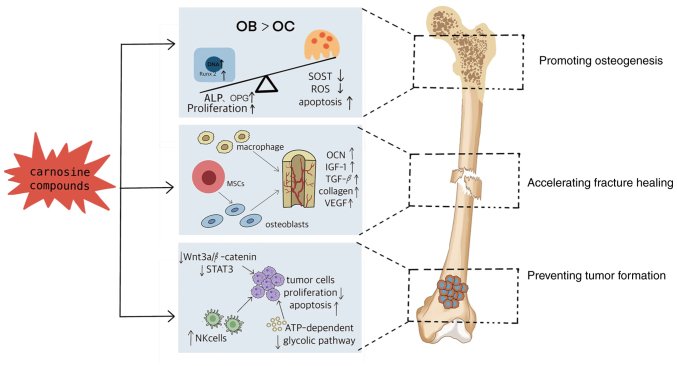
But the missing clinical link is substantial: we do not yet know whether eating mutton at ordinary dietary amounts changes knee cartilage biology or reduces osteoarthritis progression in humans while theoretically Carnosine (component of mutton) does have many beneficial effects on bone osteoblasts, fracture healing and bone re-modelling, as indicated in the following image.