



Under our Evidence-Explained Series – this is 1st of a 4-Part Series on India’s Rising Knee Pain, Knee Replacements’ Burden. Every, virtually, every single disease increasingly finds its genesis in our food and daily habits and knee health depends much more on these 2 aspects. Explore the details…
India’s osteoarthritis burden is rising. Explore Indian epidemiology, risk factors, women’s joint health, metabolic health and evidence-based ways to protect knee function.
Knee Problem India Can No Longer Ignore
For many Indians, knee pain gradually becomes part of everyday life: difficulty climbing stairs, getting up from the floor, walking to the market, travelling on public transport or keeping up with grandchildren.
Families may spend years trying painkillers, home remedies and supplements before seeking a structured assessment.
For some people, osteoarthritis (commonly known in India as Arthritis) eventually leads to knee replacement surgery. For others, pain and disability persist without surgery, because of cost, access barriers to knee replacements or as a personal preference.
This is not simply an unavoidable consequence of getting older. Age matters, but so does body weight, previous injury, muscle strength, occupational loading and more importantly, your metabolic health.
Understanding these factors creates an opportunity to improve mobility and quality of life long before a surgical decision becomes necessary.
Prevalence of Knee Issues in Indians
A Global Burden of Disease 2019 analysis published in Osteoarthritis and Cartilage estimated that the number of Indians living with osteoarthritis across joint sites rose from approximately 23.46 million in 1990 to 62.35 million in 2019. Knee osteoarthritis was the most common form, and the estimated burden was consistently higher in women than men.
Key Findings from the Study
-
Total Burden: Symptomatic cases grew from 23.46 million (1990) to 62.35 million (2019), with age-standardized prevalence rising from 4,895 to 5,313 per 100,000 people
-
Disability Impact: Disability-adjusted life years (DALYs) more than doubled from 0.79 million to 2.12 million. Osteoarthritis ranked as the 20th leading cause of years lived with disability (YLDs) in India by 2019
-
Breakdown by Joint Site (2019):
-
Knee OA: 46.85 million cases (most common)
-
Hand OA: 9.81 million cases
-
Other OA: 8.17 million cases
-
Hip OA: 3.28 million cases
-
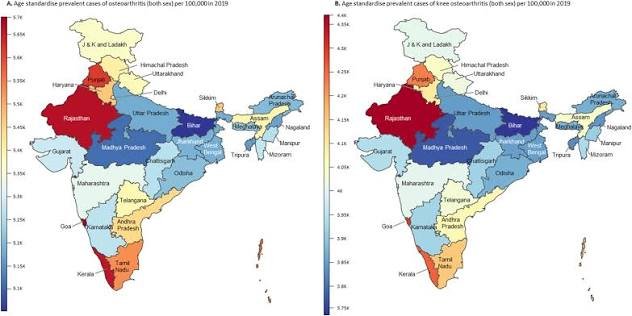
A separate systematic review and meta-analysis of population-based Indian studies, published in the Indian Journal of Orthopaedics in 2025, estimated pooled knee osteoarthritis prevalence at 20.24%, with a 95% confidence interval of 11.90%–30.13%.
These statistics describe different measures and should not be conflated. The 62.35-million figure represents modelled osteoarthritis prevalence across joint sites in 2019; the 20.24% estimate is a pooled knee-specific prevalence from studies with different populations and methods. Neither tells us exactly how many Indians need knee replacement today.
The overall message is nevertheless clear: osteoarthritis is a substantial source of disability, and India needs stronger strategies for prevention, early care and rehabilitation.
Indian research sources
-
Singh et al., Burden of osteoarthritis in India and its states, 1990–2019, Osteoarthritis and Cartilage (2022). https://doi.org/10.1016/j.joca.2022.05.004
-
Hazra et al., Prevalence of Knee Osteoarthritis in India: A Systematic Review and Meta-Analysis of Population-Based Studies, Indian Journal of Orthopaedics (2025). https://doi.org/10.1007/s43465-025-01520-4
Why Knee Osteoarthritis Develops
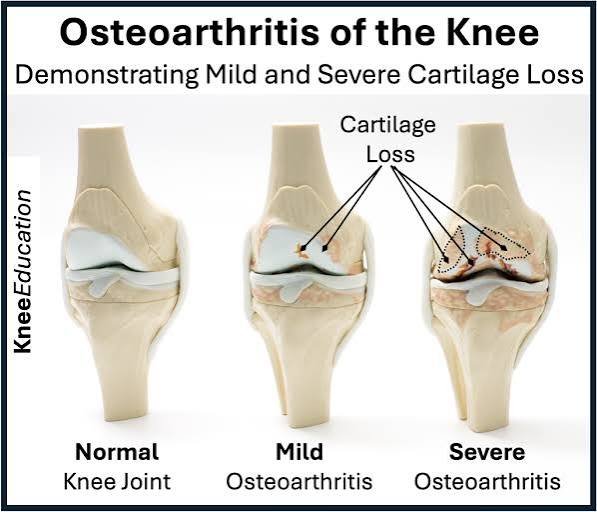
Osteoarthritis is a whole-joint disease. The smooth cartilage covering the ends of bones becomes damaged or changes in composition; the underlying bone, joint lining, muscles and surrounding tissues can also be affected.

Several factors can interact:
-
Ageing: The capacity of joint tissues to maintain and repair their matrix changes over time
-
Excess body weight: Additional loading can increase stress on the knee. In people living with overweight or obesity, weight reduction can improve pain and function
-
Muscle weakness and inactivity: Poor strength and conditioning can impair joint function and make daily activities more difficult
-
Previous injury: Meniscal injury, ligament damage and other trauma can increase later osteoarthritis risk
-
Occupational loading: Repeated kneeling, squatting, heavy lifting and demanding physical work may contribute to joint stress
-
Metabolic health: Diabetes, excessive carbohydrates consumption as in Indians, abdominal obesity and other metabolic abnormalities may interact with osteoarthritis risk and outcomes
Osteoarthritis can occur in people who are not overweight but have poor dietary habits including excessive vegetarianism or vegans.
Indian Women Deserve Particular Attention
Indian epidemiological estimates show a higher osteoarthritis burden among women.
Ageing, body composition, prior injury, work patterns, access to exercise and healthcare, and other biological and social factors such as particularly poor diets of Indian women, may all contribute to increased burden among Indian women. Research and prevention programmes should account for these differences instead of treating the average patient as a universal model.
Women who experience persistent knee pain should not be told that disability is simply inevitable with age. Appropriate assessment, progressive strengthening, physical activity adapted to symptoms and weight management when indicated can improve function.
Is Osteoarthritis Just “Wear and Tear”?
No. The term “wear and tear” is easy to understand, but it oversimplifies the biology.
Cartilage contains a collagen-rich extracellular matrix that helps the joint withstand and distribute loads. Proteoglycans help retain water and contribute to the tissue’s mechanical behaviour. Chondrocytes maintain this matrix, but their function and the tissue environment change with Food habits, ageing, injury and disease.
Glycation—the chemical reaction of sugars or reactive carbonyl compounds with proteins—is one area of scientific interest. Advanced glycation end products (AGEs) can accumulate in long-lived tissues and may alter protein properties. This is why food choices matter a lot, more than any supplement or biochemical pathway which can currently be treated as a complete explanation for knee degeneration.
India’s excessive reliance on Carbohydrates as prime source of nutrition and energy may effectively and potentially predispose millions of Indians to Glycation, eventually leading to advanced glycation end-products which accumulate in knee joints leading to potentially – Osteoarthritis.
What Indians Can and Must do Now?
The most defensible prevention and management strategy focuses on modifiable risks and maintaining function.
Build strength. Tailored strengthening and aerobic activity are core components of osteoarthritis care. People who are deconditioned or in significant pain may benefit from guidance from a physiotherapist
Manage weight where appropriate. For people with overweight or obesity, weight reduction can improve quality of life, physical function and pain. The aim should be a sustainable, nutritionally adequate plan rather than crash dieting
Eat adequately. A balanced dietary pattern should provide MORE THAN sufficient protein and a range of essential nutrients. Animal Proteins – Mutton, Fish, Eggs, dairy and poultry can all contribute protein, depending on dietary preferences and medical needs.
Take persistent symptoms seriously. Ongoing pain, swelling, stiffness, instability or declining ability to walk warrants clinical assessment. A scan alone does not determine whether surgery is needed; symptoms and function matter.
Do not fear exercise automatically. Some discomfort may occur when beginning an exercise programme. Activity should be adapted to the person, with clinical advice if pain is severe, rapidly worsening or accompanied by a hot, swollen joint.
The UK National Institute for Health and Care Excellence (NICE) recommends tailored therapeutic exercise for people with osteoarthritis and weight management for those living with overweight or obesity. These recommendations are not a substitute for Indian clinical judgement, but they provide a useful evidence-based framework.
Guideline: https://www.nice.org.uk/guidance/NG226/chapter/recommendations
Key Takeaways
India’s osteoarthritis burden is large, and the answer lies largely in food and not in a universal supplement. Stronger muscles, appropriate weight management, sound nutrition, safer physical activity and access to evidence-based treatment are the keys to managing and even preventing Osteoarthritis and potentially, knee replacements.
The next article in this series – examines one biological mechanism that could connect metabolic health with cartilage ageing: glycation. We will explore what it means, how much it matters and where the science stops short of proving that dietary changes can prevent osteoarthritis and knee replacements. Don’t miss Article 2 of this series.
Medical disclaimer: This article is for educational purposes and does not, by any means, replaces an individual medical assessment by your Orthopaedic.