



This is our special article for Young Indian Girls who usually let their hair down, after work and party harder. Under our Evidence-Explained™ series – this evidence backed article, helps you lovely girls, understand the metabolism of Alcohol in female body as compared to male body. Next time, just cut down a peg too many, enjoy more and stay healthy. Please share extensively with your loved ones…
A “Drink” – Male vs Female Metabolism
There is a quiet, unspoken script that unfolds in urban resto-bars across Mumbai, Bengaluru, and Delhi. A group of friends sits around a table. A round of drinks is ordered—say, two gin and tonics for the men and two for the lovely ladies. The glasses are identical. The measures / pegs are identical. The bartender and the server is also common.
Yet, an hour into the evening, the experience at that table diverges sharply.
For years, popular culture, social media and well-meaning peers have offered a lazy explanation for why women often feel the effects of alcohol more intensely and quickly than men: “She’s has faster metabolism” or “Her body weight is lower or rarely, she is yet to learn to handle a Drink.”
It may sound logical or even racist on the surface. We live in a culture that incessantly conditions women to monitor their body weight, so attributing alcohol sensitivity to scale numbers feels entirely natural. But that assumption is scientifically false.
The reality of how women process alcohol has almost nothing to do with body weight, willpower, or “tolerance” built through experience. It is a matter of biological design, gastric chemistry, and cellular composition.
A landmark study published in the New England Journal of Medicine revealed a fundamental truth that every young Indian woman deserves to understand: women get relatively more drunk on the exact same amount of alcohol as men, not because of their size, but because of their biology.
Female Biology is Different
Understanding the science of alcohol metabolism is not a moral lecture. It is not an argument for abstinence, nor is it a subtle attempt to police women’s social lives. Instead, it is a tool of empowerment. It is health literacy that allows women to make informed, autonomous choices about their bodies, their social habits, and their long-term health. We thoroughly, completley and respectfully, respect women’s choices and only wish to support them in staying healtheir.
When a woman holds a glass of wine, she is not holding the same physiological dose as the man sitting next to her. Here is the hidden biology behind why—and why it matters deeply for Indian women today.
First Line of Defense: The Missing Stomach Enzyme
To understand why alcohol hits women harder, you have to look at what happens long before a drink ever reaches your bloodstream or your brain.
When you take a sip of an alcoholic beverage, it travels down your esophagus and settles in your stomach. The human body, knowing that alcohol (ethanol) is a different compound, has a built-in frontline defense system designed to neutralize a significant portion of that alcohol on the spot.
This defense system relies on a specific enzyme called Alcohol Dehydrogenase (ADH), which resides in the lining of the stomach wall.
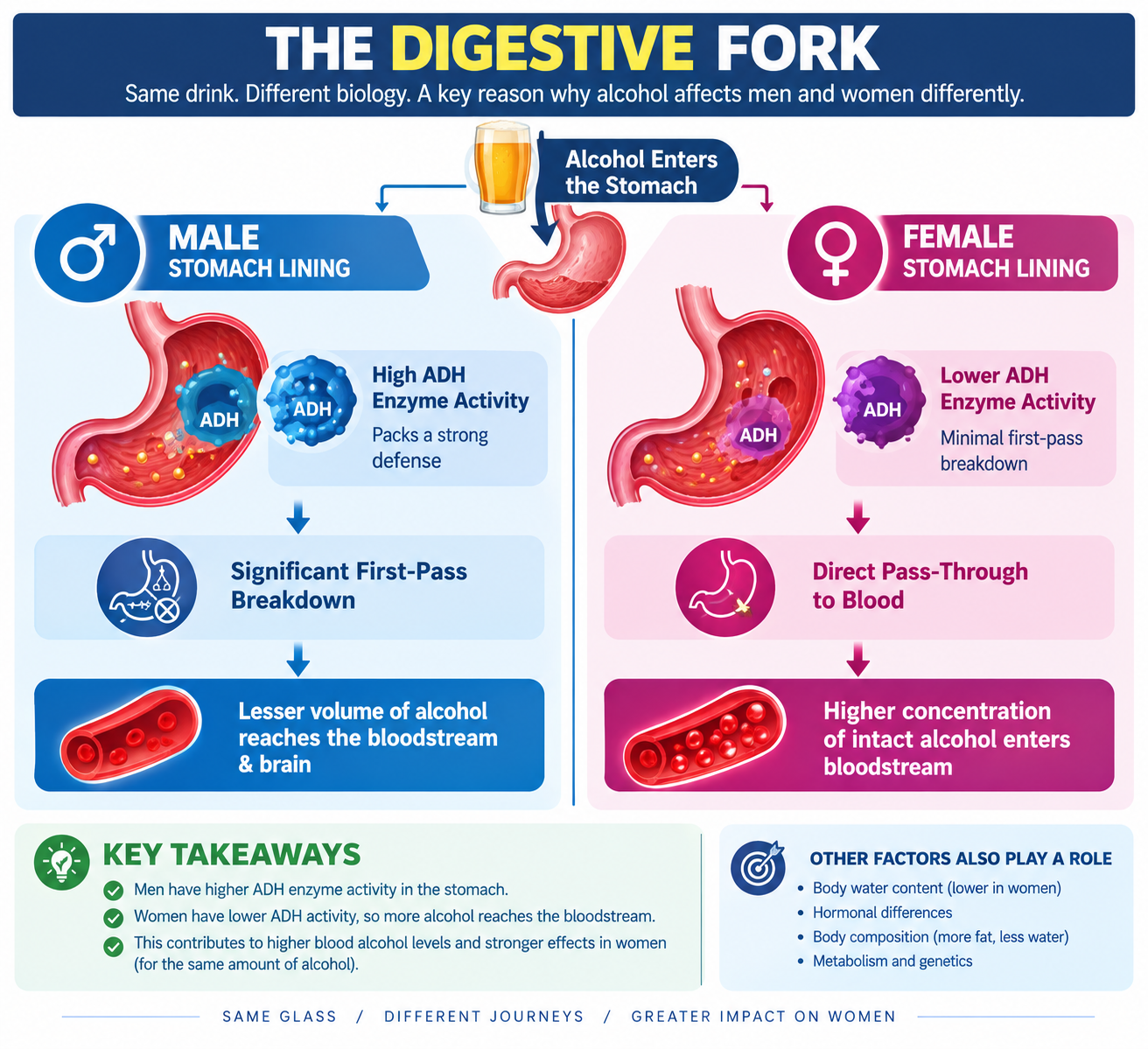
When a man drinks, the Alcohol Dehydrogenase Enzyme (ADH enzyme) in his stomach lining goes to work immediately. These enzymes initiate what biochemists call first-pass metabolism—breaking down a substantial fraction of the ethanol before it ever gets a chance to escape the digestive tract.
By the time the remaining liquid passes from his stomach into his small intestine and leaks into his bloodstream, a noticeable percentage of the alcohol has already been deactivated by ADH.
In women, the biological architecture is fundamentally different. Women naturally produce significantly less gastric ADH enzyme activity in their stomach lining. Because this biological “shield” is less active, the first-pass metabolism in a woman’s stomach is dramatically reduced.
Instead of being broken down safely in the stomach, almost the entire volume of alcohol passes straight through the stomach lining, enters the small intestine intact and floods directly into the bloodstream. From there, it travels straight to the brain. This means that if a young woman and a young man of the exact same height, weight and fitness level sit down and drink the exact same 30ml shot of spirit:
-
Man’s stomach neutralizes a chunk of the alcohol immediately
-
Woman’s stomach lets virtually all of it pass through unharmed
Even before the alcohol has been distributed through the rest of the body, the woman has absorbed a significantly higher effective dose. The biological playing field was never equal to begin with.
Dilution Factor: Water, Fat and Human Anatomy
The gastric enzyme disparity is only the first half of the biological equation. The second half lies in how the human body is constructed at a cellular level.
Alcohol is a water-soluble molecule. It does not dissolve in adipose tissue (fat); it dissolves almost exclusively in body water. The more water your body holds, the more diluted a dose of alcohol becomes once it enters your system.
Here again, male and female biology diverge sharply:
Physiological Marker |
Average Male Physiology |
Average Female Physiology |
Average Body Water Content |
~60% to 65% of total mass |
~50% to 55% of total mass |
Average Essential Body Fat |
Lower proportion naturally |
Higher proportion naturally |
Primary Alcohol Distribution Volume |
Larger pool of body water |
Smaller pool of body water |
Resulting Blood Alcohol Concentration (BAC) |
Lower concentration (More diluted) |
Higher concentration (More concentrated) |
Because women naturally carry a higher percentage of essential body fat—which is biologically necessary for hormonal regulation, reproductive health and metabolic balance—they inherently possess a smaller total volume of body water relative to their total weight. Think of it through a simple visual analogy:
Bucket Analogy: Imagine pouring a single standard shot of food coloring (representing alcohol) into two different containers. Container A holds a 10-liter bucket of water (representing male physiology). Container B holds a 7-liter bucket of water (representing female physiology).
Even though you added the exact same amount of dye to both containers, the liquid in Container B will be visually darker and far more concentrated than the liquid in Container A.
Because a woman’s body provides a smaller reservoir of water for alcohol to dissolve into, every drink produces a rapidly elevated Blood Alcohol Concentration (BAC).
When you pair a weaker enzymatic defense in the stomach with a smaller water volume in the tissues, the result is exponential: a woman absorbs more alcohol faster, reaches a higher peak BAC quicker and takes longer to clear that alcohol from her system.
It is not a personal failure. It is not a lack of stamina. It is basic human biochemistry.
South Asian Context: Genetics, Diets, and Changing Lifestyles
While these biological facts apply to women universally, the conversation takes on a unique and urgent relevance when framed specifically around modern Indian women.
Over the last two decades, India’s urban social landscape has transformed at an incredible pace. Higher disposable income, career independence, shifting social norms and the rapid expansion of nightlife in Tier-1 and Tier-2 cities have made social drinking a commonplace experience for millions of young women and rightfully so – why should men have all the “fun”.
However, our social habits have evolved much faster than our awareness of South Asian metabolic health.
“Thin-Fat” Phenotype
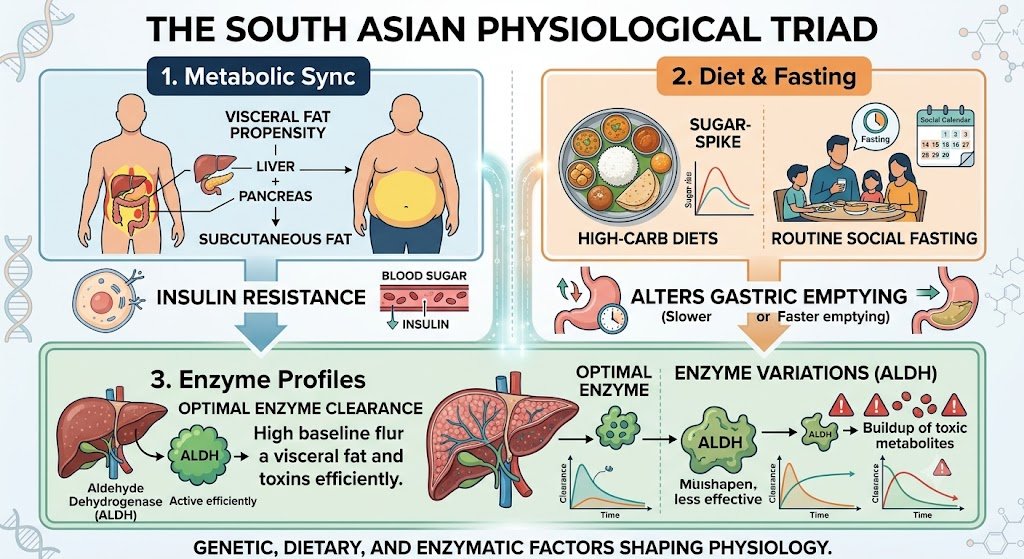
South Asian populations possess a well-documented genetic predisposition known medically as the “TOFI” phenotype (Thin-Outside, Fat-Inside) or the South Asian metabolic profile. Compared to Western populations, South Asians tend to carry a higher percentage of body fat and lower lean muscle mass, even at a lower overall Body Mass Index (BMI).
For an Indian woman, this means her total body water percentage may be lower than global averages, further concentrating alcohol in her bloodstream and placing a heavier burden on her liver.
Dietary Patterns and Gastric Emptying
In urban India, social drinking often happens little late at night, frequently preceded by long work hours, skipped meals, or restrictive diets.
Drinking alcohol on an empty stomach collapses what little gastric ADH protection a woman has. Without food present to slow down the stomach from emptying its contents into the small intestine, alcohol rushes through the digestive tract instantly, producing an extreme, sudden spike in Blood Alcohol Concentration.
Furthermore, traditional Indian diets—often rich in carbohydrates or, conversely, modified by sudden crash diets—can influence liver glycogen stores, altering how efficiently the liver processes metabolic toxins overnight.
Long-Term Health Consequences: A Different Timeline
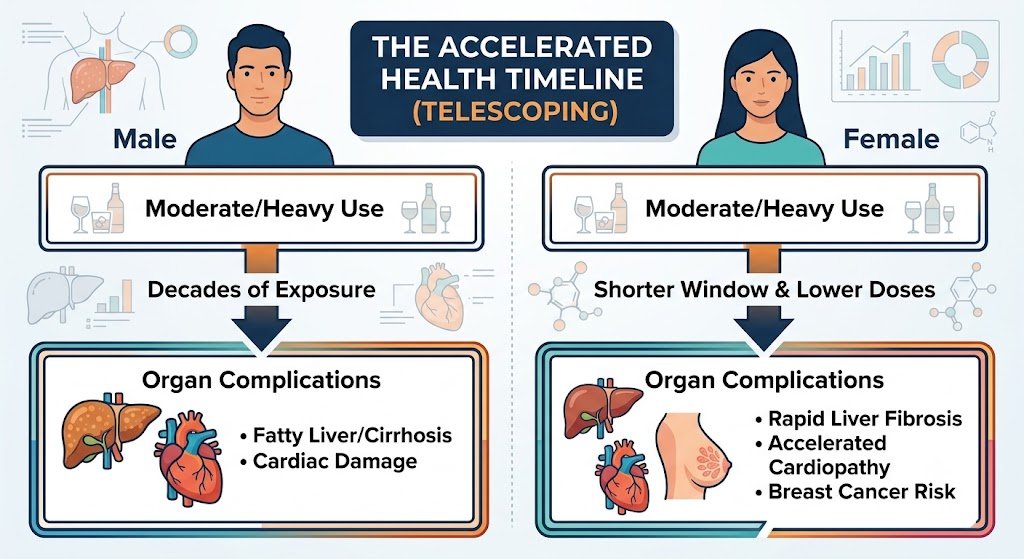
Because alcohol sits in a woman’s body at higher concentrations for longer periods, the physiological damage caused by chronic or heavy drinking follows an accelerated timeline in women.
Medical science refers to this as the “telescoping effect”—where the time gap between the onset of regular alcohol use and the development of severe medical complications is significantly shorter in women than in men.
Liver Disease
The liver is responsible for clearing the alcohol that escapes first-pass metabolism. Because women process higher relative concentrations of alcohol with every drink, female liver tissue is exposed to greater oxidative stress.
Women develop alcohol-induced liver disease—including fatty liver, hepatitis and cirrhosis—after fewer years of regular drinking and at substantially lower daily doses than men.
Breast Cancer Risk
One of the most critical, yet under-discussed, health risks for young women is the direct link between alcohol consumption and breast cancer.
Alcohol elevates circulating estrogen levels and causes direct DNA damage through its toxic byproduct, acetaldehyde. Epidemiological data shows that the risk of developing breast cancer begins to rise with as little as one standard drink per day.
Unlike liver cirrhosis, which typically requires years of heavy exposure, the oncological risk associated with alcohol is incremental and linear. There is no biological safe threshold where the risk is zero; every drink adds a marginal increase in lifetime risk.
Cardiovascular Health
While low-dose alcohol was historically mischaracterized as “heart-healthy,” modern cardiology has thoroughly debunked this myth.
In women, chronic alcohol exposure damages the heart muscle (alcoholic cardiomyopathy) and triggers high blood pressure faster than in men. The vascular inflammation caused by alcohol clearance leads to premature arterial stiffening, disrupting natural circulatory health.
Societal Myths vs. Biological Realities
To navigate social spaces safely and confidently, Indian women must unlearn several pervasive cultural myths surrounding alcohol.
Myth of “Building Tolerance”
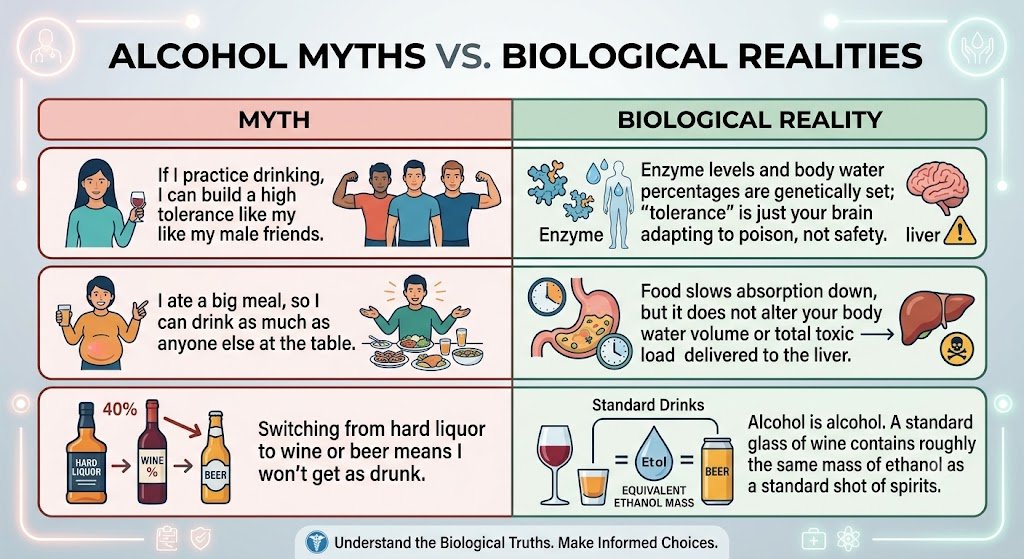
When people speak of building tolerance, they are usually describing functional tolerance—a process where the central nervous system adapts to high levels of alcohol, suppressing the obvious outward signs of drunkenness (like slurred speech or unsteady walking). However, functional tolerance is a dangerous optical illusion.
Building tolerance does not increase the amount of ADH enzymes in your stomach lining, nor does it increase your body’s water volume. While your brain may learn to mask the feeling of intoxication, your liver, heart, breast tissue, and brain cells are still exposed to the exact same concentration of toxic acetaldehyde. “Tolerant” drinkers suffer organ damage just as fast as non-tolerant drinkers.
Standard Drink Standard
In conversation, a “drink” is often treated as a vague, emotional unit. But in science and medicine, a drink is a strict measure of chemical volume.
In global health guidelines, a Standard Drink contains approximately 10 to 14 grams of pure ethanol.
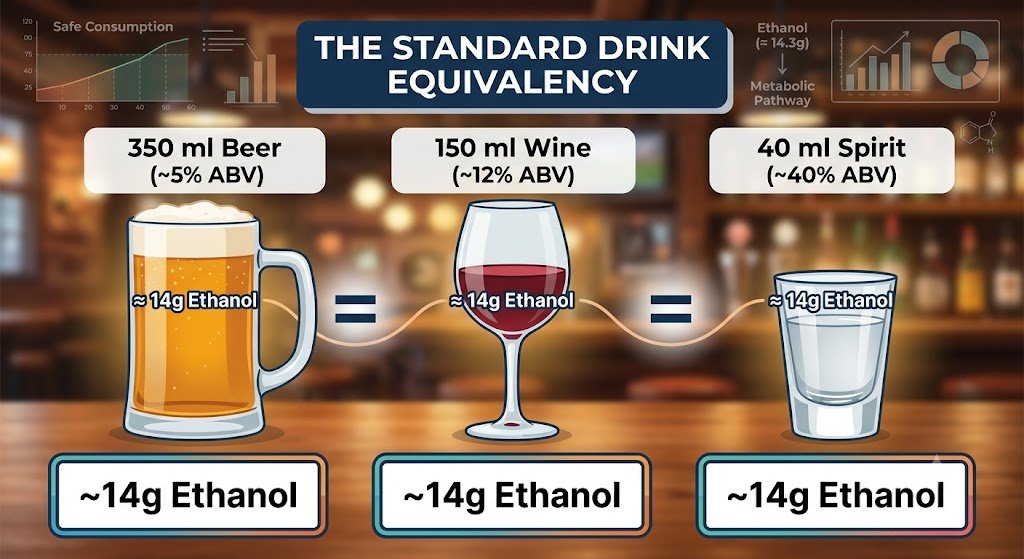
Because of the enzymatic and water volume differences outlined above, one standard drink given to a woman produces the physiological impact of roughly two standard drinks in a man.
When official health guidelines state that moderate drinking means “up to one drink a day for women and up to two for men,” they are not setting arbitrary double standards. They are acknowledging basic biochemistry.
Practical Rules for Modern Social Life
Navigating modern social environments does not require fear; it requires strategy. Equipped with an understanding of your body’s unique biochemistry, you can adopt smart, practical habits that protect your health, your safety, and your long-term well-being.
Rule 1: Never Drink on an Empty Stomach
Eating a balanced meal containing complex carbohydrates, healthy fats, and protein before your first sip is your most effective practical defense. Food forces the pyloric valve at the bottom of your stomach to close, keeping the alcohol inside the stomach longer. This gives your limited supply of gastric ADH enzymes more time to process the ethanol before it can flood your bloodstream.
Rule 2: Master the 1:1 Hydration Strategy
For every alcoholic drink you consume, drink one full glass of pure water. While drinking water after the fact will not magically erase the alcohol already in your system, hydrating continuously helps offset alcohol’s diuretic effects and prevents severe systemic dehydration.
Rule 3: Pace for Your Biology, Not for Table’s
Avoid falling into the pace-matching trap. In mixed-gender social settings, there is often an unconscious pressure to order rounds at the same speed as everyone else at the table. Remember that your body clears alcohol significantly slower. Spacing your drinks out over longer intervals gives your liver time to process metabolic toxins safely.
Rule 4: Know Your Mixers
Energy drinks and highly caffeinated mixers hide the sensation of drunkenness without reducing your blood alcohol concentration. The caffeine tricks your central nervous system into feeling alert, masking the physiological impact of the alcohol and leading to unintended overconsumption. Stick to water, soda, or natural fruit juices as mixers.
Ownership Over Your Physiology
For too long, conversations around women and alcohol have swung between two unhelpful extremes: moral judgment on one end and reckless disregard for body’s biology masked as empowerment on the other.
True empowerment lies in facts. It lies in understanding your body so clearly that no social pressure, cultural expectation, or dietary myth can compromise your decision-making.
Women do not process alcohol the same way men do. Recognizing this fact is not an admission of weakness or inferiority; it is an embrace of biological reality. Your stomach lining carries a different enzyme profile, your tissue holds a different water density, and your organs operate on a unique metabolic schedule.
The next time you sit down at a restaurant, a wedding or a casual night out with family and friends, remember the science sitting inside your glass: The same glass is never the same dose. Girls – Respect your biology, protect your health and take total ownership of your choices. Lets Raise our Toast Responsibly.
References
-
Crabb, D. W., Matsumoto, M., Chang, D., & You, M. (2004). Overview of the role of alcohol dehydrogenase and aldehyde dehydrogenase and their variants in the genesis of alcohol-related pathology. Proceedings of the Nutrition Society, 63(1), 49–63. https://doi.org/10.1079/pns2003327
-
Vatsalya, V., Liaquat, H. B., Ghosh, K., Mokshagundam, S. P., & McClain, C. J. (2017). A review on the sex differences in organ and system pathology with alcohol drinking. Current Drug Abuse Reviews, 9(2), 87–92. https://doi.org/10.2174/1874473710666170125151410