



Increasing urbanization, changing lifestyles and increasing levels of daily stress are taking a heavy toll on tiny, hapless millions of sperms in Indian males. Indian males are increasingly reporting lower testasterone levels, drastic drop in sperm counts, sperm motility and eventual, idiopathic infertility.
Male infertility contributes to nearly 40–50% of infertility cases worldwide, and India is no exception. Yet, for many couples, one of the most frustrating diagnoses is idiopathic male infertility. In simple terms, this means that a man has abnormal sperm quality, but doctors cannot identify a clear medical cause such as hormonal disorders, genetic abnormalities, infections, or blockage of the reproductive tract.
For these men, the question is obvious: Can nutritional supplements and antioxidants improve fertility? The answer is encouraging—but it also requires conscious efforts on part of Indian males.
What Is Idiopathic Male Infertility?
Idiopathic infertility is diagnosed when a man has poor sperm count, reduced sperm motility (movement), abnormal sperm shape (morphology), or increased sperm DNA damage despite a normal medical evaluation.
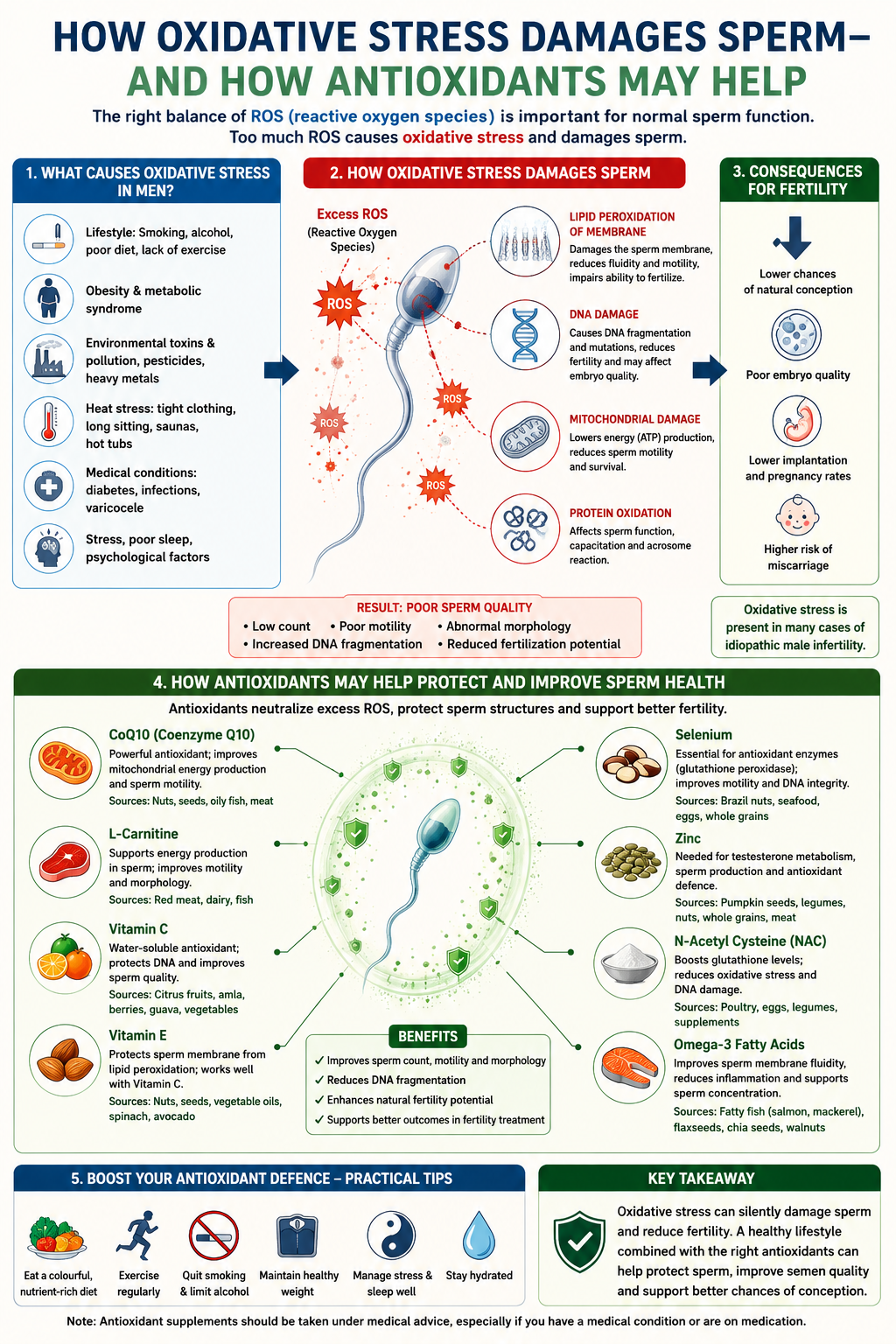
Research suggests that oxidative stress may be one of the hidden contributors in many of these men. Oxidative stress occurs when harmful molecules called reactive oxygen species (ROS) are produced in excess and overwhelm the body’s natural antioxidant defence system. While small amounts of ROS are essential for normal sperm function, excessive levels can damage sperm membranes, DNA and the tiny energy-producing structures (mitochondria) that power sperm movement.
Because sperm cells contain high amounts of polyunsaturated fats and have relatively limited antioxidant protection, they are particularly vulnerable to oxidative damage.
Why Oxidative Stress May Be More Common in Indian Men
Several factors common in modern India can increase oxidative stress:
-
Air pollution
-
Tobacco smoking and chewing tobacco
-
Obesity and abdominal fat
-
Type 2 diabetes and insulin resistance
-
Chronic psychological stress
-
Poor-quality diets low in fruits, vegetables and nuts
-
Heat exposure from prolonged sitting or certain occupations
-
Environmental pollutants and pesticides
Not every infertile man has excessive oxidative stress, but many do. This is one reason why antioxidant therapy has become an area of intense scientific research.
What Does the Latest Research Show?
The strongest evidence comes from a recent Cochrane systematic review, which analysed 90 randomised controlled trials, including more than 10,000 subfertile men. The review found that antioxidant supplementation was associated with:
-
Higher clinical pregnancy rates
-
Higher live birth rates
-
No increase in miscarriage risk
-
Mostly mild side effects such as nausea or stomach discomfort
Although the evidence was rated as low certainty because many studies were relatively small in size and used different antioxidant combinations, the findings suggest that antioxidants may provide a modest benefit for selected men attending fertility clinics.
This is important because most earlier studies focused only on improving sperm test results, whereas the Cochrane review evaluated outcomes that matter most to couples—pregnancy and live birth.
Which Antioxidants Have the Best Evidence?
Not all antioxidants work in the same way, and they should not be viewed as interchangeable.
L-Carnitine – Among the most extensively studied nutrients, L-carnitine helps transport fatty acids into mitochondria, where sperm produce the energy needed for movement.
Several clinical trials have shown improvements in sperm motility, and network meta-analyses suggest L-carnitine consistently ranks among the most effective supplements for improving sperm movement and morphology.
Coenzyme Q10 (CoQ10) – CoQ10 is a powerful antioxidant that also supports mitochondrial energy production. Studies have demonstrated improvements in sperm concentration, motility and antioxidant capacity. Men with increased oxidative stress may particularly benefit because CoQ10 helps protect sperm from free radical damage.
Selenium – Selenium forms part of important antioxidant enzymes that protect sperm membranes and support normal sperm development. Low selenium intake has been associated with poorer semen quality in some populations.
Vitamin C – Vitamin C is abundant in seminal fluid and protects sperm DNA from oxidative injury. Some studies have shown improvements in sperm morphology and reductions in DNA damage following supplementation.
Omega-3 Fatty Acids – Omega-3 fatty acids improve the structure and flexibility of sperm membranes and have shown benefits for sperm concentration and overall sperm function in several studies.
Why Are Scientists Still Debating Antioxidants?
Although many studies report improvements in sperm count, movement and morphology, not every trial has shown better pregnancy outcomes.
One of the largest, highest-quality clinical trials—the multicentre MOXI trial—found that a combination of antioxidants did not significantly improve sperm quality, pregnancy rates or live birth rates compared with placebo.
Does this mean antioxidants do not work?
Not necessarily – Male infertility is not a single disease. Some men have oxidative stress, while others have hormonal disorders, genetic factors, varicoceles, infections or female partner-related fertility issues that antioxidants cannot correct.
This explains why some men respond well whereas others experience little or no benefit.
Who May Benefit the Most?
Current evidence suggests antioxidant supplementation may be most helpful for men who have:
-
Idiopathic infertility
-
Abnormal semen analysis
-
Increased sperm DNA fragmentation
-
Evidence of oxidative stress
-
Lifestyle-related risk factors such as smoking, obesity or diabetes
On the other hand, antioxidant supplements should not be viewed as a substitute for treating identifiable medical conditions such as hormonal deficiencies, infections or large varicoceles.
Lifestyle Changes Matter Too
Supplements work best when combined with healthy lifestyle choices. Men trying to improve fertility should:
-
Stop smoking and avoid tobacco in all forms
-
Achieve and maintain a healthy body weight
-
Exercise regularly but avoid excessive endurance training
-
Sleep for 7–8 hours each night
-
Eat a balanced diet rich in colourful fruits, vegetables, whole grains, nuts and seeds
-
Reduce alcohol intake
-
Manage stress through regular physical activity, meditation or yoga
-
Avoid prolonged exposure to excessive heat around the testes
Because sperm production takes approximately 70–90 days, improvements from lifestyle changes and supplementation usually require at least three months before they become evident.
The Bottom Line
For Indian men with idiopathic infertility, antioxidants are not a miracle cure, but neither should they be dismissed. The best available scientific evidence suggests that antioxidant therapy can improve sperm quality and may modestly increase the chances of pregnancy and live birth in carefully selected men, particularly those with evidence of oxidative stress. However, results are not universal, and supplements cannot overcome every cause of infertility.
If you have been diagnosed with idiopathic infertility, discuss antioxidant therapy with your fertility specialist rather than choosing supplements on your own. A personalised approach—combining medical evaluation, healthy lifestyle changes and evidence-based nutritional support—offers the best chance of improving reproductive health.
The goal is not simply to produce a better semen report. The goal is to maximise the opportunity for a healthy pregnancy and, ultimately, the birth of a healthy baby.
Comparison of Major Antioxidants for Idiopathic Male Infertility
Antioxidant |
Primary Mechanism of Action |
Main Benefits on Sperm |
Evidence for Pregnancy/Live Birth |
Strength of Clinical Evidence* |
Best Suited For |
|---|---|---|---|---|---|
Coenzyme Q10 (CoQ10) |
Powerful antioxidant; supports mitochondrial energy production (ATP); reduces oxidative stress |
Improves sperm concentration, motility, mitochondrial function and antioxidant capacity |
Some studies suggest improved pregnancy rates, but evidence remains inconsistent |
⭐⭐⭐⭐☆ Strong |
Men with low motility (asthenozoospermia), oxidative stress, increasing age |
L-Carnitine |
Transports fatty acids into mitochondria, increasing sperm energy production |
Consistently improves sperm motility and morphology |
Limited evidence for pregnancy; laboratory improvements are consistent |
⭐⭐⭐⭐⭐ Very Strong |
Men with poor sperm motility and reduced sperm energy production |
Selenium |
Essential component of glutathione peroxidase; protects sperm membranes from oxidative injury |
Improves motility and supports normal sperm development |
Pregnancy benefit uncertain; may work better in deficient individuals |
⭐⭐⭐⭐☆ Strong |
Men with low selenium intake or oxidative stress |
Vitamin C |
Water-soluble antioxidant that protects sperm DNA and seminal plasma |
Improves morphology, reduces DNA damage and oxidative stress |
Limited evidence for live birth despite better semen quality |
⭐⭐⭐☆☆ Moderate |
Smokers, men exposed to pollution, oxidative DNA damage |
Vitamin E |
Fat-soluble antioxidant protecting sperm cell membranes from lipid peroxidation |
May improve motility and membrane stability, particularly with other antioxidants |
Evidence inconsistent when used alone |
⭐⭐⭐☆☆ Moderate |
Men with elevated oxidative stress; often combined with Vitamin C or CoQ10 |
Zinc |
Essential for testosterone metabolism, DNA synthesis, sperm maturation and antioxidant enzymes |
Supports sperm production and normal reproductive function, especially in deficient men |
Limited direct evidence for improved pregnancy |
⭐⭐⭐☆☆ Moderate |
Men with dietary zinc deficiency or poor nutrition |
N-Acetyl Cysteine (NAC) |
Increases glutathione production; reduces reactive oxygen species and inflammation |
May improve concentration, motility and DNA integrity |
Insufficient evidence for pregnancy outcomes |
⭐⭐⭐☆☆ Moderate |
Men with oxidative stress, inflammation or elevated sperm DNA fragmentation |
Omega-3 Fatty Acids (EPA/DHA) |
Improves sperm membrane fluidity, mitochondrial function and reduces inflammation |
Strong improvement in sperm concentration; supports membrane integrity |
Pregnancy evidence remains limited |
⭐⭐⭐⭐☆ Strong |
Men with low seafood intake, metabolic syndrome or inflammatory conditions |
A Practical Message for Indian Men
Current evidence does not support taking large numbers of antioxidants indiscriminately. The greatest benefits are likely in men who have:
-
Idiopathic infertility
-
Abnormal semen analysis
-
Increased oxidative stress
-
Elevated sperm DNA fragmentation
-
Smoking history
-
Obesity or metabolic syndrome
-
Diabetes
-
Exposure to pollution or environmental toxins
For these men, a clinician-guided antioxidant strategy—combined with lifestyle improvements such as smoking cessation, weight management, regular exercise and a nutrient-rich diet—appears more rational than relying on supplements alone.
Key Takeaway: Antioxidants consistently improve sperm quality, especially motility, concentration and morphology. However, improvements in pregnancy and live birth rates are more modest and less consistent, highlighting the importance of selecting the right patients rather than prescribing antioxidants universally.