



Can magnesium protect your heart? Discover what 25 years of scientific research says about Magnesium, blood pressure, heart rhythm, heart attacks, stroke and cardiovascular health.
Magnesium: Overlooked Mineral That Your Heart Cannot Live Without
When people think about nutrients that protect the heart, cholesterol, omega-3 fatty acids, potassium and fibre usually come to mind. Magnesium rarely makes the list. Yet Magnesium is one of the most important minerals for cardiovascular health.
Every heartbeat depends on it. Every blood vessel uses it. Every heart muscle cell requires it to produce energy, maintain electrical stability and contract normally.
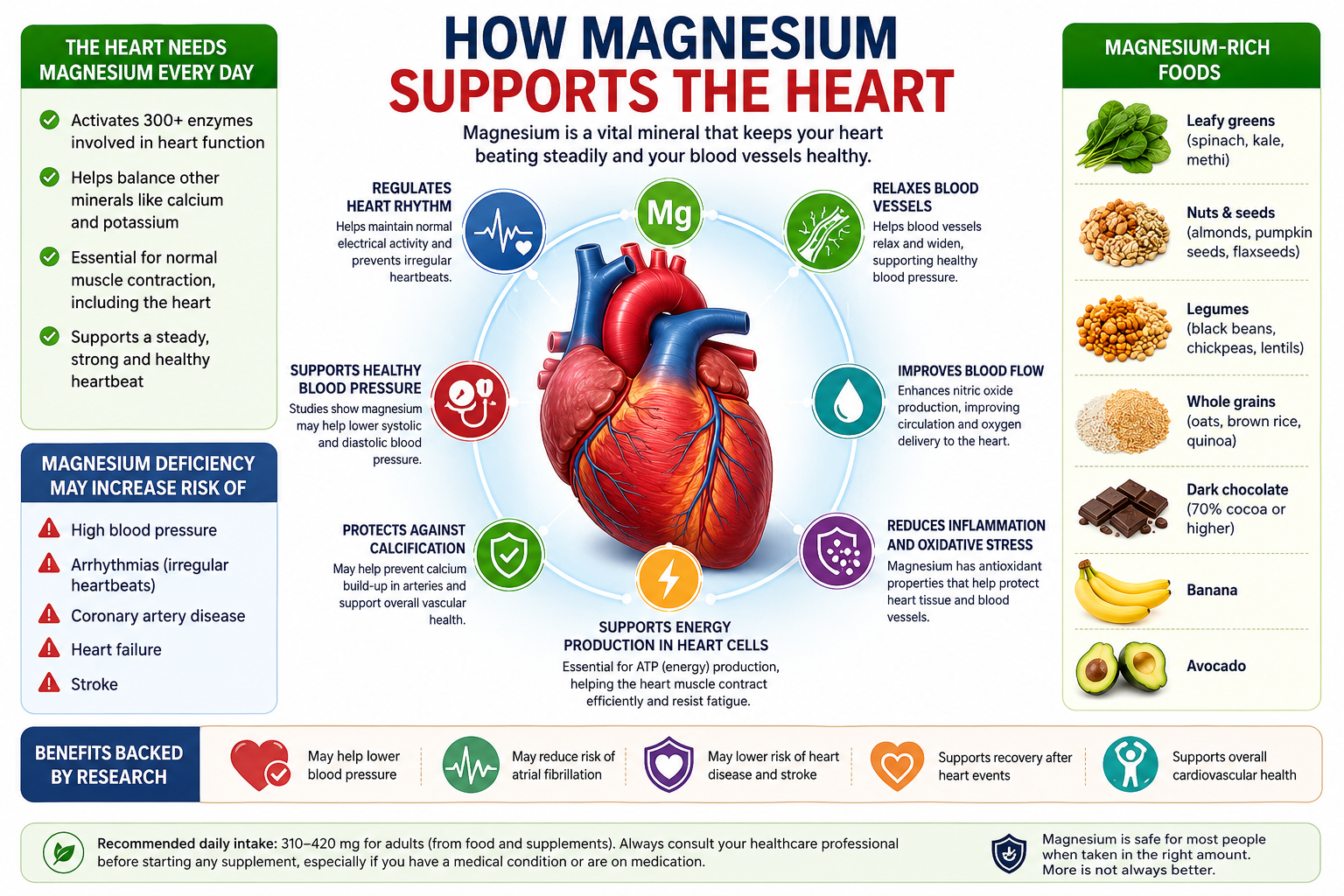
Scientists report that Magnesium participates in more than 300 enzymatic reactions throughout the human body, many of which are directly involved in maintaining a healthy cardiovascular system. It regulates the movement of calcium and potassium into cells, supports the production of cellular energy (ATP), helps blood vessels relax, maintains normal heart rhythm and influences blood pressure regulation.
Despite these essential roles, Magnesium deficiency is surprisingly common. Modern diets rich in refined grains and ultra-processed foods often provide far less Magnesium than diets based on whole grains, legumes, nuts, seeds and leafy green vegetables. Older adults, people with diabetes, gastrointestinal disorders and those taking certain medications—including long-term proton pump inhibitors and some diuretics—are particularly vulnerable to inadequate Magnesium levels.
Over the past 25 years, researchers have conducted hundreds of studies to answer an important question: Can increasing magnesium intake improve heart health? The answer is OVERWHELMINGLY encouraging—but it is also more nuanced than many social media claims suggest.
Magnesium – Levels, Deficiency in Indians
Estimates indicate that roughly 60% to 78% of urban Indians have low Magnesium intake or subclinical deficiency, driven largely by dietary shifts, refined foods, and modern farming.
Standard serum blood tests often fail to reflect total body magnesium stores since less than 1% of the mineral circulates in the blood.
Key Causes of Deficiency in India include Dietary Shifts: Transition from traditional whole grains and millets to refined wheat flour (maida) and white rice, which lose up to 80% of their Magnesium content during processing
Soil Depletion: Intensive agricultural practices over recent decades have reduced overall mineral concentrations in farm soil
Water Treatment: Widespread reliance on RO (reverse osmosis) and bottled filtration strips drinking water of naturally occurring Magnesium and Calcium
Lifestyle Stress & Sugar: High consumption of sugar and chronic urban stress increase renal excretion of Magnesium
Daily Requirements: ICMR-NIN Guidelines: Recommended daily allowance for Indian adults ranges from 310 mg to 440 mg per day depending on gender and life stage
What Makes Magnesium So Important for the Heart?
Unlike many dietary supplements promoted for cardiovascular health, magnesium has a well-established biological role. The heart is an electrical pump. Every heartbeat depends on precisely coordinated movement of sodium, potassium, calcium and magnesium across the membranes of heart muscle cells.
Magnesium acts as one of the body’s natural regulators. It helps:
- Maintain a steady heartbeat
- Relax blood vessels
- Regulate blood pressure
- Support normal muscle contraction and relaxation
- Produce ATP, the energy currency of cells
- Reduce excessive calcium accumulation within heart cells
- Improve insulin sensitivity
- Reduce oxidative stress and chronic inflammation
Because Magnesium influences so many interconnected processes, scientists have long suspected that inadequate Magnesium intake may increase the risk of hypertension, heart rhythm disturbances and cardiovascular disease. Over the past two decades, this hypothesis has been tested in hundreds of observational studies and randomized clinical trials.
What Does the Best Research Show?
One of the challenges in nutrition science is that individual studies often produce conflicting results. Some clinical trials have reported meaningful benefits from magnesium supplementation, while others found little or no effect.
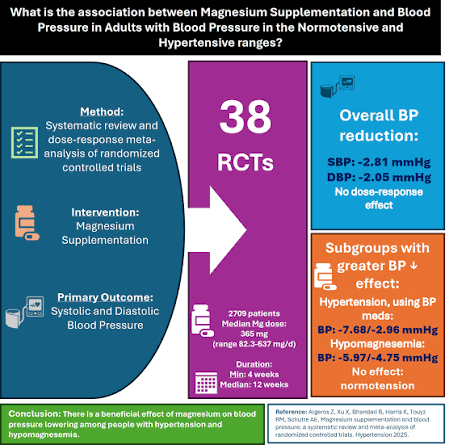
To resolve these inconsistencies, researchers combine results from multiple studies using systematic reviews and meta-analyses, which provide a more reliable estimate of the overall evidence. One of the most comprehensive analyses was published in the Journal Hypertension in 2025.
Researchers analysed 38 randomized controlled trials involving 2,709 participants who received magnesium supplementation for at least four weeks. Their findings were remarkably consistent.
Compared with placebo, magnesium supplementation lowered:
- Systolic blood pressure by an average of 2.81 mmHg
- Diastolic blood pressure by an average of 2.05 mmHg
Although these reductions may appear modest, even small reductions in blood pressure at the population level are associated with meaningful reductions in cardiovascular risk. Importantly, the benefits were much greater in people who already had hypertension or low magnesium levels.
Magnesium Is Not a Magic Pill—But It is an Important Piece of Puzzle
One of the biggest misconceptions surrounding Magnesium supplements is that they can replace prescribed blood pressure medicines.That is not what the research shows.
Instead, magnesium appears to work best as part of an overall cardiovascular health strategy that includes:
A balanced, nutrient-rich diet
Regular physical activity
Weight management
Adequate sleep
Stress reduction
Smoking cessation
Appropriate medical treatment when required
For individuals with uncontrolled hypertension or documented magnesium deficiency, supplementation may provide an additional, clinically meaningful benefit. In contrast, studies have generally found little or no blood pressure reduction in people with normal blood pressure and normal magnesium status.
Why Are Scientists Interested in Magnesium?
Several observations have attracted researchers’ attention over the years. Large population studies have consistently shown that people who consume more magnesium-rich foods tend to have:
Lower blood pressure
Lower risk of stroke
Better metabolic health
Lower incidence of type 2 diabetes
Better vascular function
While observational studies cannot prove that magnesium alone is responsible for these benefits, the consistency of findings across different populations has strengthened interest in magnesium as a cardioprotective nutrient.
Randomized controlled trials have since provided additional evidence that magnesium supplementation can improve certain cardiovascular risk factors, particularly among individuals with hypertension, insulin resistance or magnesium deficiency.
Why Magnesium Deficiency Matters
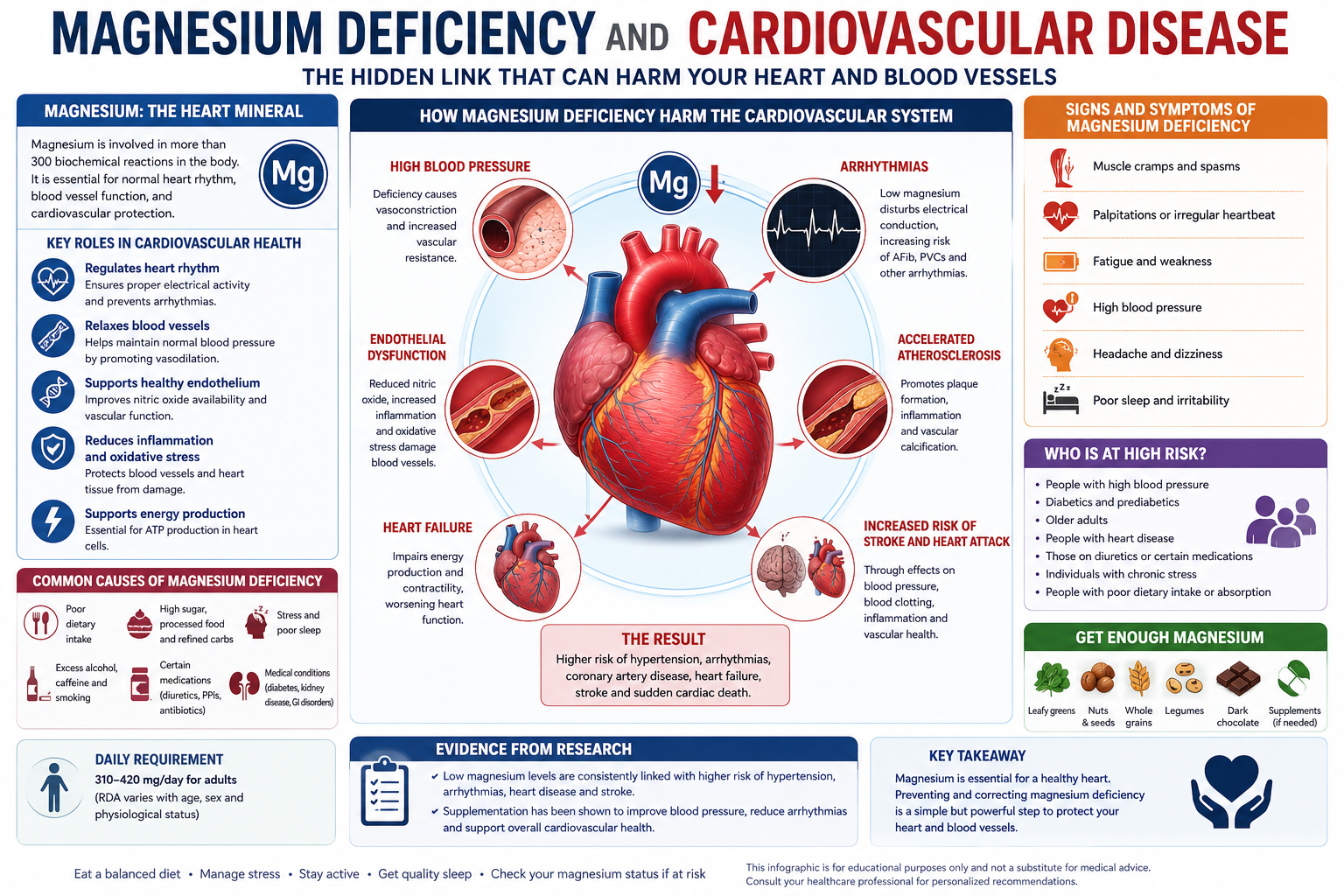
Magnesium deficiency rarely causes dramatic symptoms in its early stages. Instead, it often develops gradually over months or years. Low magnesium levels may contribute to:
Increased vascular stiffness
Higher blood pressure
Impaired insulin sensitivity
Increased inflammation
Greater oxidative stress
Electrical instability within the heart
Because these changes develop slowly, magnesium deficiency has sometimes been described as a “hidden” cardiovascular risk factor.
However, it is equally important to recognise that magnesium supplementation is most effective when there is an underlying deficiency or increased physiological need. Simply taking high-dose magnesium supplements does not guarantee additional cardiovascular protection in otherwise healthy individuals.
Evidence Is Strongest for Blood Pressure
Among all cardiovascular outcomes studied so far, the evidence supporting magnesium supplementation is strongest for blood pressure reduction. Multiple systematic reviews have reached similar conclusions:
Magnesium produces small but statistically significant reductions in blood pressure. Benefits are greatest in people with hypertension. Individuals with low magnesium status appear to respond particularly well. There is little evidence of clinically important benefit in people with normal blood pressure.
These findings help explain why cardiologists increasingly view magnesium as a supportive therapy rather than a stand-alone treatment but very important supportive therapy, nonetheless.