



Future of TB Control May Depend as Much on Nutrition as on Medicines, specially for Indians.
For more than 70 years, tuberculosis (TB) control has focused on four pillars:
-
Early diagnosis
-
Effective antibiotics
-
Contact tracing
-
Vaccination
These remain essential. But a growing body of evidence now argues that a fifth pillar—nutrition—deserves equal attention. The 2025 Lancet Global Health Health Policy paper calls for nutritional assessment, counselling and support to become a routine part of tuberculosis care rather than an optional add-on.
It recommends that every person diagnosed with TB undergo anthropometric assessment, haemoglobin testing and receive appropriate macro- and micronutrient support, with nutritional recovery monitored throughout treatment. For India, where undernutrition and micronutrient deficiencies remain common, this could fundamentally change the way TB is prevented and treated.
Why Nutrition Matters Before, During and After TB
Nutrition influences TB at every stage of the disease.
Before infection – A well-nourished immune system is better able to contain Mycobacterium tuberculosis, preventing latent infection from progressing to active disease.
During illness – People with TB often experience: Loss of appetite, Rapid weight loss, Muscle wasting, Anaemia and Vitamin and mineral deficiencies These changes weaken immunity further and slow recovery.
After treatment – Even after microbiological cure, many patients remain underweight and have reduced muscle mass, increasing the risk of relapses and long-term disabilities.
For this reason, The Lancet Global Health recommends reassessing nutritional status at the end of treatment and providing continued follow-up for patients who remain undernourished.
Indian Clinical Trial – RATION Study, Details
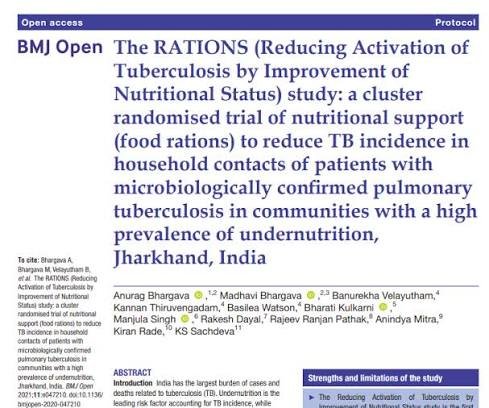
The RATIONS trial (Reducing Activation of Tuberculosis by Improvement of Nutritional Status) is a landmark study from India that proved food rations and micronutrients significantly cut active tuberculosis (TB) cases and deaths. It was conducted in Jharkhand by researchers including teams from ICMR-NIRT.
Location: Four districts in Jharkhand, India, across 28 National Tuberculosis Elimination Programme units
Participants: 2,800 adult pulmonary tuberculosis patients and roughly 11,200 of their uninfected household contacts
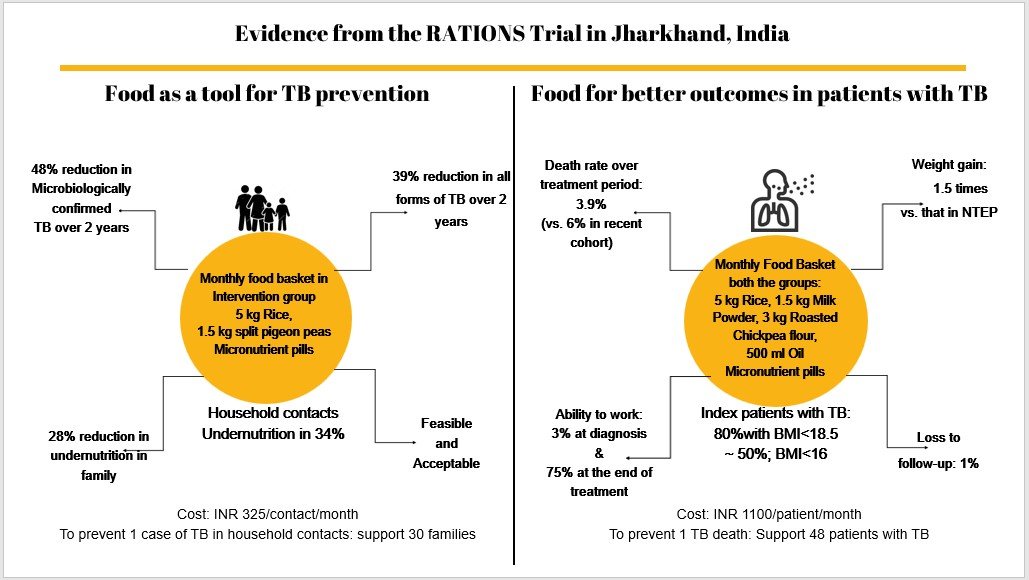
Intervention: Index patients received standard food rations (1,200 kcal, 52g protein daily) and micronutrients for six months. Household contacts in the intervention arm received monthly food baskets (750 kcal, 23g protein daily) plus multi-micronutrient tablets.
Main Findings Lower TB Incidence: Nutritional support reduced new active TB cases among household contacts by roughly 39% to 48% over a two-year follow-up
Reduced Mortality: Weight gain in the first two months of nutritional care sharply lowered the risk of death in index TB patients
Public Health Impact: The findings show that treating undernutrition as part of regular care acts like an effective vaccine layer, shaping global World Health Organization policy recommendations for high-burden countries.
Protein: The Foundation of Recovery
As explained above in the RATION Trial – a 52 g daily provision of Protein to TB Patients resulted in lower incidences and reduced mortality. Protein is your body’s Pillar of strength and immunity. Protein is required to:
- Build immune cells
- Produce antibodies
- Repair damaged lung tissue
- Preserve muscle mass
- Improve strength during recovery
Many Indian TB patients begin treatment with low body weight and reduced muscle stores, making protein replenishment a critical priority. Protein should only be had from High-quality sources include: Eggs, Milk and curd, Fish, Chicken and Paneer.
In our personal opinion, Protein MUST BE HAD ONLY from animal food sources as these animal food sources Not Only Deliver High Qulaity, Highly Bio-available Protein, with all essential and non-essential amoni acids, but this protein comes bundled with a number of other micronutrients such as Vitamins and Minerals unlike Plant Protein Sources. If anything Milk, which is acceptable to vegetarians, is an excellent source of good quality protein and 1 liter of milk delivers at least 24 to 25 gm Protein, apart from Calcium and some minor concentrations of vitamins.
Vitamin D: A Key Regulator of Immunity
Vitamin D has received considerable attention in TB research because immune cells possess vitamin D receptors that help activate antimicrobial responses. Experimental and clinical studies suggest vitamin D plays an important role in macrophage function—the immune cells that help control TB infection.
India, the sunshine country, ironically also has one of the world’s highest burdens of vitamin D deficiency. Although routine high-dose vitamin D supplementation has not consistently shown faster TB cure in all clinical trials, correcting deficiency remains important for bone health, immune function and overall recovery.
Iron: A Delicate Balance
Iron deficiency anaemia is extremely common in India. However, iron metabolism becomes more complex during infection. Many TB patients develop anaemia because inflammation alters iron handling in the body.
The Lancet roadmap recommends routine haemoglobin estimation at diagnosis so anaemia can be identified and managed appropriately as part of comprehensive nutritional care. Again, our personal opinion – goat meat and lamb meat are an excellent source of highly bio-available Iron alongwith high quality protein and few other vitamins and minerals such as Zinc.
Zinc: Supporting the Immune Response
Zinc is essential for: T-cell function, Immune signalling, Wound healing and Tissue repair. Low zinc status has been associated with impaired immune responses in several infectious diseases, including TB.
Indian diets that rely heavily on cereals with limited animal-source foods may provide inadequate absorbable Zinc, particularly among economically disadvantaged populations. Hence supplementation with chelated Zinc becomes a necessity.
Why Body Weight Should Be Monitored Throughout Treatment
One of the practical recommendations from The Lancet Global Health is surprisingly simple: Monitor body weight regularly. Failure to gain weight during treatment may indicate:
- Persistent food insecurity
- Poor treatment adherence
- Drug-resistant TB
- Malabsorption
- Uncontrolled diabetes
- Ongoing illness
Weight monitoring therefore provides valuable clinical information beyond nutrition alone.
India’s Nutrition Support Programme for TB Patients
India already recognises the importance of nutrition through the Nikshay Poshan Yojana, which provides financial support intended to help people with TB purchase nutritious food during treatment. The programme represents one of the world’s largest nutrition-support initiatives linked to tuberculosis care.
In 2018, the Nikshay Poshan Yojna (NPY) was launched by the Indian Government to strengthen the National Tuberculosis Elimination Program by universally assisting people with tuberculosis through regular financial support of ₹1,000/- per month to each notified tuberculosis (TB) patient for nutritional support.
All TB patients notified on or after 1st April 2018 and registered on the NIKSHAY portal are eligible. The scheme aims to improve treatment outcomes by addressing malnutrition and supporting patients throughout their treatment.
However, public-health experts have noted that timely delivery, adequate financial support and effective implementation remain essential if the programme is to achieve its full potential.
Nutrition Is Also a Social Issue
The Lancet authors stress that nutritional care cannot be separated from broader social determinants. Many TB patients experience:
Poverty
Food insecurity
Loss of wages
Limited access to healthcare
Poor housing
Social stigma
These factors influence both nutritional status and treatment outcomes. As a result, ending TB requires coordinated action across healthcare, nutrition, agriculture and social protection programmes.
Key Takeaways
-
The Lancet Global Health recommends making nutritional assessment, counselling and support a routine part of tuberculosis care
-
Adequate protein intake is essential to restore muscle mass, strengthen immunity and support lung repair
-
Correcting deficiencies of Vitamin D, Zinc, Iron (when appropriate), Vitamin A and other micronutrients may contribute to overall recovery and immune health
-
Regular monitoring of body weight and haemoglobin can help identify patients at higher risk of poor outcomes
-
India’s Nikshay Poshan Yojana reflects recognition that nutrition is an integral component of TB care, though effective implementation remains critical
-
Addressing undernutrition alongside diagnosis and treatment could play a major role in reducing India’s tuberculosis burden
Editor’s Note
This emerging evidence reinforced by Indian RATION Trial shares a broader message: nutrition is not just about preventing deficiency diseases—it is central to immune resilience and metabolic health.
While antibiotics remain the cornerstone of tuberculosis treatment, ensuring adequate intake of protein, energy, vitamins and minerals, largely from animal food sources, may improve recovery, support immune function and strengthen national TB control efforts. For a country like India, where undernutrition and hidden micronutrient deficiencies remain widespread, integrating nutrition into routine healthcare could yield benefits far beyond tuberculosis, improving overall public health and resilience against infectious diseases. Lets make each and every Indian Healthier and Happier.
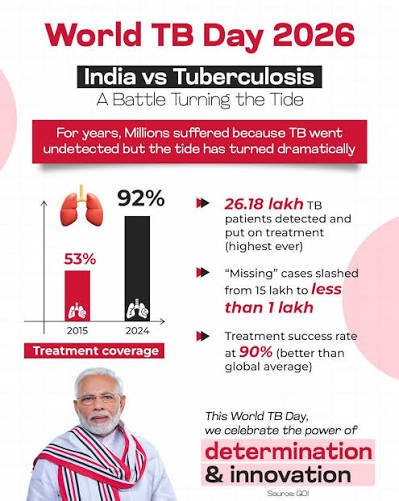
India’s Achievements in TB Control – a glimpse
Select References
-
Sinha P, Bhargava M, Carwile ME, et al. A roadmap for integrating nutritional assessment, counselling, and support into the care of people with tuberculosis The Lancet Global Health. 2025;13(5):e967–e973
-
McQuaid CF, Clark RA, White RG, et al. Strengthening nutritional care to end tuberculosis in India. The Lancet Global Health. 2025
-
World Health Organization. WHO releases new guidelines on tuberculosis and undernutrition 2025