



Tiny Organ That Controls Your Blood Sugar, Powers Every Cell and Keeps You Alive. Learn how your Pancreas works, what beta cells do, how insulin regulates blood sugar and why protecting pancreatic health is essential for preventing Type 2 diabetes.
Part 2 of 10 Part Series on The Silent Death of Pancreas – For Part 1, Click Here
Pancreas – Important Organ Most People Never Think About
Most people know where their heart is. They know their lungs help them breathe. They know the brain controls the body. But ask someone where their pancreas is—and many people cannot answer.
Yet this small organ works quitely, every minute of every day to keep you and me alive.
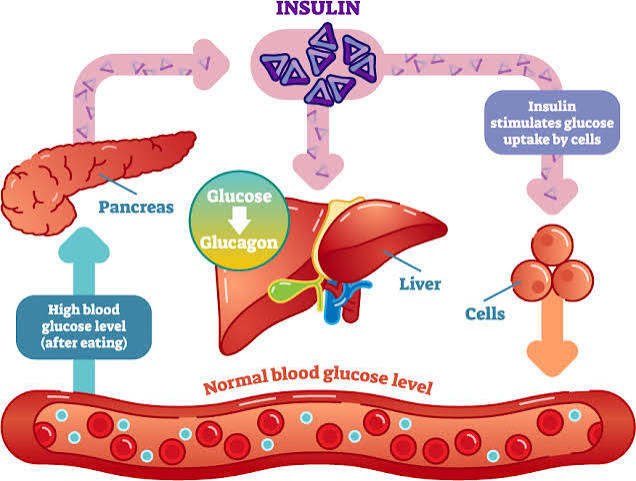
Every meal you eat, every spoonful of rice, every bite of fruit, every cup of tea with sugar, every chapati and every piece of gulabjamun, triggers a remarkable response from your pancreas. Within minutes, it senses rising blood glucose levels and releases precisely the right amount of insulin to keep those levels within a narrow, healthy range.
You never notice it. You never feel it. But without this continuous balancing act, life would not be possible. No, we are not being dramatic.
Where Is the Pancreas?
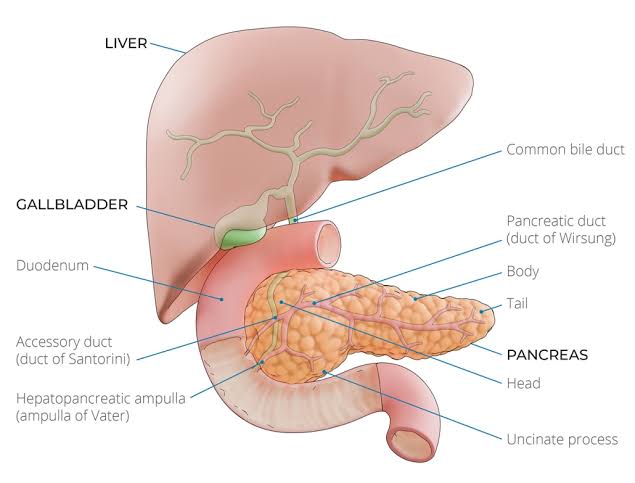
The pancreas is a soft, elongated organ located deep inside the upper abdomen. It lies:
-
Behind the stomach
-
In front of the spine
-
Between the liver and the spleen
-
Close to the first part of the small intestine (duodenum)
In adults, it is typically 15–20 cm long, weighs 70–100 grams, and is roughly shaped like a flattened pear or fish. Despite its modest size, the pancreas performs two completely different but equally essential jobs.
Pancreas Has Two Lives, Unlike Us
Scientists describe the pancreas as having two major functions.
1. Exocrine Function (Digestive System)
About 95–98% of the pancreas is made up of exocrine tissue. These cells produce digestive enzymes that help break down:
-
Carbohydrates
-
Proteins
-
Fats
The enzymes travel through pancreatic ducts into the small intestine, where they help digest food and allow nutrients to be absorbed. Without these enzymes, the body cannot efficiently extract nutrition from food.
2. Endocrine Function (Insulin Factory)
The remaining 2–5% of the pancreas is endocrine tissue. Though it occupies only a tiny fraction of the organ, it plays an enormous role in maintaining health.
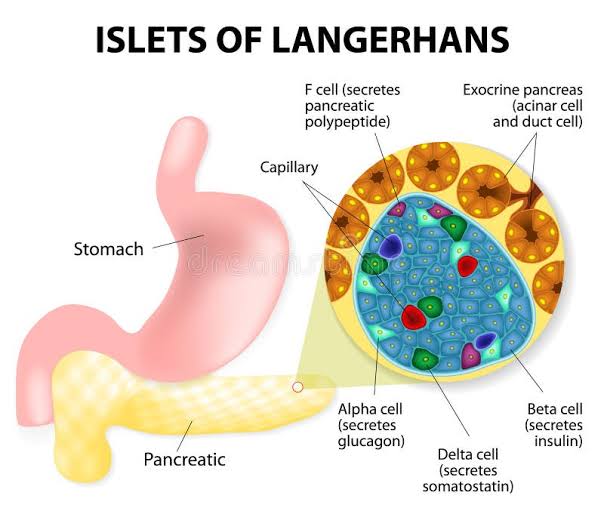
Scattered throughout this endocrine tissue are microscopic clusters called the Islets of Langerhans. Each islet contains several specialized cell types, called beta cells, that release hormones (NOT ONLY INSULIN – as you will discover in next lines) directly into the bloodstream.
These hormones regulates blood sugar, energy use and body metabolism.
Meet the Islets of Langerhans
If you could zoom into the pancreas under a microscope, you would see tiny islands of hormone-producing cells scattered throughout the organ.
These are the Islets of Langerhans, named after German scientist Paul Langerhans, who first described them in 1869. A healthy pancreas contains hundreds of thousands to more than a million islets, although estimates vary depending on age and individual anatomy.
Each islet is only about 50–300 micrometers in diameter but contains several different types of endocrine cells working together.
The four main cell types are:
-
Beta cells – produce insulin
-
Alpha cells – produce glucagon
-
Delta cells – produce somatostatin
-
PP (gamma) cells – produce pancreatic polypeptide
Of these, beta cells are the stars of our story.
Beta Cells: Our Body’s Glucose Guardians
Beta cells make up approximately 50–70% of the cells within an islet. Their primary job is to produce, store and release insulin. Insulin acts like a biological messenger. It tells cells throughout the body: “Glucose is available. Open your doors and let it in.”
Without insulin, glucose cannot efficiently move from the bloodstream into muscles, fat tissue and many other cells. Without Insulin – result is rising and uncontrolled blood sugar.
How Does a Beta Cell Know When to Release Insulin?
One of the most elegant systems in human biology begins after you eat. When carbohydrates are digested, they are broken down into glucose, which enters the bloodstream. As blood glucose rises:
-
Beta cells sense the increase through specialized glucose transporters
-
Glucose enters the beta cell and is metabolized, producing ATP (cellular energy)
-
Rising ATP closes ATP-sensitive potassium channels
-
The cell membrane depolarizes
-
Voltage-dependent calcium channels open
-
Calcium enters the cell
-
Insulin-containing granules move to the cell surface and release insulin into the bloodstream
This sequence occurs within minutes and is one of the most tightly regulated processes in the body.
Insulin: More Than a Blood Sugar Hormone
Many people think insulin simply “lowers sugar.” Its role is far broader. Insulin helps:
-
Move glucose into muscle cells for energy
-
Promote glycogen storage in the liver
-
Suppress excessive glucose production by the liver
-
Encourage fat storage when energy intake exceeds immediate needs
-
Support protein synthesis and muscle maintenance
Because insulin influences so many tissues, problems with insulin production or action affect the entire body—not just blood sugar.
Body’s Delicate Balance
Insulin does not work alone. When blood glucose falls too low, another pancreatic hormone—glucagon, produced by alpha cells—acts in the opposite direction. Glucagon signals the liver to release stored glucose into the bloodstream.
Together, insulin and glucagon function like a thermostat:
-
High glucose → insulin rises
-
Low glucose → glucagon rises
This dynamic balance helps keep blood glucose within a healthy range throughout the day and night.
Why Beta Cells Matter So Much
Unlike many other cells in the body, beta cells have a demanding job. Every day they respond to multiple meals, snacks, stress hormones, exercise, sleep patterns and illness.
When insulin resistance develops, they must work even harder, producing more insulin to maintain normal blood sugar. Over time, this constant demand for insulin only because you won’t pause, can contribute to declining beta-cell function.
Scientists believe several mechanisms contribute to this decline:
-
Chronic, continued exposure to high glucose (glucotoxicity)
-
Elevated fatty acids (lipotoxicity)
-
Oxidative stress
-
Inflammation
-
Fat accumulation in the pancreas
-
Genetic susceptibility
-
Aging
The pancreas can compensate for years, but not indefinitely.
Pancreas Is Surprisingly Vulnerable
Despite its resilience, the pancreas can be affected by a range of conditions, including:
-
Acute and chronic pancreatitis
-
Pancreatic cancer
-
Cystic fibrosis
-
Autoimmune destruction of beta cells in Type 1 diabetes
-
Progressive beta-cell dysfunction in Type 2 diabetes
-
Fat accumulation within the pancreas (sometimes referred to as fatty pancreas or pancreatic steatosis)
Maintaining pancreatic health therefore has implications far beyond diabetes alone.
Why We Indians Need to Pay Special Attention
Research suggests that many South Asians, including Indians, develop Type 2 diabetes with lower body mass index (BMI) than many Western populations. Several factors contribute:
-
Higher visceral fat at a given BMI
-
Lower lean muscle mass
-
Earlier insulin resistance
-
Greater tendency toward fatty liver
-
Reduced metabolic reserve
As a result, the pancreas may need to compensate earlier and more intensely, increasing the importance of preventive strategies such as maintaining a healthy weight, engaging in regular physical activity, and undergoing timely screening.
Protecting Your Pancreas Starts Long Before Diabetes
The pancreas works quietly for decades without asking for attention. The choices you make today influence how hard it must work tomorrow. Evidence consistently supports lifestyle measures that reduce metabolic stress on the pancreas:
-
Maintain a healthy body weight
-
Be physically active most days of the week
-
Include adequate animal proteins which are carbohydrates free, fibre, vegetables, fruits, legumes and whole grains in your diet in moderate quantities
-
Limit sugar-sweetened beverages and ultra-processed foods completely
-
Get sufficient sleep
-
Avoid tobacco and limit alcohol
-
Monitor blood glucose and other metabolic markers if you are at increased risk
These habits support overall metabolic health and may help delay or reduce progression toward Type 2 diabetes.
Key Takeaways
-
The pancreas performs two essential functions: producing digestive enzymes and regulating blood sugar through hormones.
-
Beta cells, located within the Islets of Langerhans, produce insulin—the hormone that allows glucose to enter cells.
-
Insulin and glucagon work together to keep blood sugar within a healthy range.
-
Beta cells respond continuously to changes in blood glucose and are central to metabolic health.
-
Long-term insulin resistance places increased demand on beta cells, contributing to declining function over time.
-
Protecting pancreatic health through healthy lifestyle choices is a cornerstone of diabetes prevention.
Select References
-
American Diabetes Association. Standards of Care in Diabetes (latest edition)
-
DeFronzo RA. From the Triumvirate to the Ominous Octet. Diabetes. 2009;58:773–795
-
Ashcroft FM, Rorsman P. Diabetes Mellitus and the Beta Cell: The Last Ten Years. Cell. 2012
-
Weir GC, Bonner-Weir S. Five Stages of Evolving Beta-Cell Dysfunction During Progression to Diabetes. Diabetes. 2004
-
National Institute of Diabetes and Digestive and Kidney Diseases (NIDDK). Pancreas and Diabetes resources
-
International Diabetes Federation. IDF Diabetes Atlas
-
Hall JE. Guyton and Hall Textbook of Medical Physiology, latest edition