


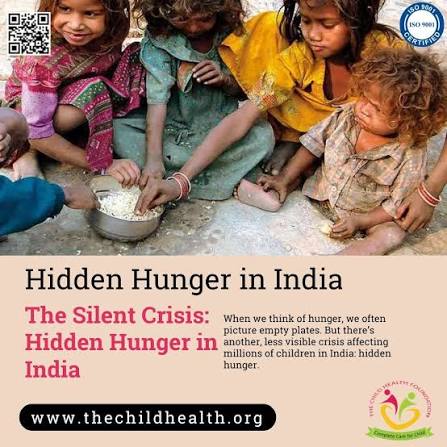
Why Millions of Indians Are Deficient in Essential Vitamins and Minerals Despite Having Enough Food – When most people think of malnutrition, they imagine children with visible signs of starvation or severe undernutrition. However, one of India’s greatest nutritional challenges is far less obvious.
Hidden Hunger in India
Millions of Indians consume enough calories every day yet remain deficient in one or more essential vitamins and minerals. This phenomenon is known as hidden hunger—a form of malnutrition in which the body receives sufficient energy but inadequate amounts of key micronutrients required for normal growth, immunity, brain function, bone health, reproduction and metabolism.
Unlike protein-energy malnutrition, hidden hunger rarely produces dramatic symptoms in its early stages. Instead, it silently impairs physical performance, cognitive development, immune function, pregnancy outcomes and healthy ageing. By the time clinical signs become apparent, deficiency may have persisted for years.
Recent modelling studies estimate that more than two billion people worldwide are affected by micronutrient deficiencies. India, because of its large population, dietary patterns and socioeconomic diversity, carries one of the world’s highest burdens.
A comprehensive analysis published in a Frontiers journal has highlighted the scale of this problem by estimating deficiency risks across India’s population for several essential micronutrients, including vitamin A, vitamin B12, calcium, folate, zinc and iron. These findings reinforce earlier evidence from the Indian Council of Medical Research (ICMR), the National Family Health Survey (NFHS), the Comprehensive National Nutrition Survey (CNNS), and the World Health Organization (WHO), all of which point to a widespread but often overlooked micronutrient crisis.
Copy of Frontiers Journal – Indias Hidden Hunger
Hidden hunger is therefore not simply a nutritional issue—it is a public health, educational, economic and developmental challenge.

What Is Hidden Hunger?
Hidden hunger refers to inadequate intake or poor absorption of vitamins and minerals despite sufficient calorie consumption.
A person may eat three meals a day, maintain a normal body weight and never feel hungry, yet still lack the micronutrients needed for optimal health.
These deficiencies often develop gradually because the body stores some vitamins and minerals for weeks, months or even years. Symptoms therefore appear slowly and may be mistaken for ageing, stress or overwork. Hidden hunger commonly affects:
-
Children
-
Adolescents
-
Women of reproductive age
-
Pregnant women
-
Older adults
-
Vegetarians and vegans
-
People with digestive disorders
-
Individuals consuming highly processed diets
Why Is Hidden Hunger So Common in India?
India has made remarkable progress in reducing severe undernutrition, yet micronutrient deficiencies remain widespread. Several factors contribute.
1. Diets Dominated by Cereals
Traditional Indian diets rely heavily on rice and wheat. Although cereals provide energy, they are relatively poor sources of several essential micronutrients, particularly vitamin B12, calcium and zinc.
When cereals form the majority of daily calorie intake without adequate vegetables, fruits, pulses, dairy, eggs or meat, nutrient density declines substantially.
2. Low Dietary Diversity
Many households consume similar foods every day. Limited intake of:
-
green leafy vegetables,
-
fruits,
-
nuts,
-
seeds,
-
dairy products, fish, eggs – high quality animal proteins
3. High Phytate Intake
Whole grains and legumes contain phytates, naturally occurring compounds that bind minerals such as: zinc, iron and calcium.
Although whole grains offer many health benefits, diets extremely high in phytates and low in enhancers of mineral absorption may reduce the bioavailability of these nutrients. Traditional preparation methods such as soaking, sprouting and fermentation can help reduce phytate content and improve mineral absorption.
4. Vegetarian Dietary Patterns
India has one of the world’s largest vegetarian populations. Plant-based diets provide many health advantages, including higher fibre intake and lower saturated fat.
However, strict vegetarian diets require careful planning because vitamin B12, CoQ10 etc are found almost exclusively in foods of animal origin only. Vegetarians may also have lower intake or reduced bioavailability of iron and zinc if dietary diversity is limited.
5. Modern Processed Food Consumption
Urbanization has transformed eating habits. Ultra-processed foods are often rich in calories but relatively poor in vitamins, minerals and dietary fibre. Replacing traditional home-cooked meals with processed snacks, sugary beverages and refined foods increases the risk of hidden hunger despite adequate calorie intake. Your health is being (z)doomatoed.
The Six Major Nutrient Deficiencies Identified
The Frontiers analysis highlighted six micronutrients that deserve particular attention in India:
-
Vitamin A
-
Vitamin B12
-
Calcium
-
Folate
-
Zinc
-
Iron
Each of these nutrients performs unique biological functions, and deficiency can have far-reaching consequences.
Vitamin A: Protecting Vision and Immunity
Vitamin A is essential for: normal vision, immune function, healthy skin, reproduction and childhood growth.
Deficiency increases susceptibility to infections and remains a leading preventable cause of childhood blindness globally. Although severe vitamin A deficiency has declined due to public health programmes, subclinical deficiency remains an important concern in several regions of India.
Children, pregnant women and individuals with poor dietary diversity remain particularly vulnerable.
Vitamin B12: India’s Silent Epidemic
Among all micronutrient deficiencies, vitamin B12 deserves special attention in India. Vitamin B12 is essential for: red blood cell formation, DNA synthesis, nerve function, cognitive health, energy metabolism.
Unlike many other vitamins, vitamin B12 occurs naturally almost exclusively in animal-derived foods. This creates particular challenges for populations consuming predominantly vegetarian diets.
Calcium: More Than Strong Bones
Calcium is widely recognised for maintaining healthy bones and teeth. Its functions extend much further. Calcium is also required for:
-
muscle contraction,
-
nerve transmission,
-
blood clotting,
-
hormone secretion,
-
normal heart rhythm.
Several dietary surveys indicate that calcium intake among many Indians remains below recommended levels. Low dairy consumption, lactose intolerance, limited intake of fortified foods and inadequate vitamin D status all contribute to poor calcium nutrition. Insufficient calcium intake during childhood and adolescence may reduce peak bone mass, increasing the future risk of osteoporosis and fractures.
Iron Deficiency: India’s Largest Nutritional Challenge
Among all micronutrient deficiencies, iron deficiency remains India’s most significant public health concern. Iron is essential for:
-
Formation of haemoglobin, the protein that carries oxygen in red blood cells
-
Energy production
-
Brain development
-
Immune function
-
Physical performance
-
Healthy pregnancy
When iron intake or absorption is inadequate, the body’s iron stores gradually decline. Over time, this can lead to iron deficiency anaemia, one of the most common nutritional disorders worldwide. According to the National Family Health Survey (NFHS-5), anaemia remains highly prevalent across India:
-
Approximately 67% of children aged 6–59 months are anaemic.
-
Around 57% of women aged 15–49 years are anaemic.
-
Nearly 25% of men aged 15–49 years are also anaemic.
While not all anaemia is caused by iron deficiency, iron deficiency remains the leading contributor in India.
Why Iron Deficiency Is So Common
Several factors contribute: Low intake of iron-rich foods, Poor absorption of non-haem iron from plant foods, Diets high in phytates, Menstrual blood loss, Pregnancy, Repeated infections, Intestinal parasites in some populations
Iron deficiency affects far more than haemoglobin. Children may experience impaired learning, reduced attention span and slower cognitive development. Adults often report fatigue, reduced productivity and decreased exercise capacity.
Zinc Deficiency: The Overlooked Mineral
Compared with iron and vitamin D, zinc deficiency receives far less public attention, yet its impact is substantial. Zinc participates in more than 300 enzymatic reactions and influences: Immune function, Wound healing, Growth, Fertility, Hormone regulation, Skin health, Taste and smell and DNA synthesis
The Frontiers analysis identified zinc as one of the nutrients at greatest risk of inadequate intake in India.
Why Are Indians Vulnerable?
Typical Indian diets are often: High in cereals, Moderate in legumes, Low in animal-source foods and red meat.
Folate: Essential for Every Dividing Cell
Folate (Vitamin B9) is required for: DNA synthesis, Cell division, Red blood cell production, Brain development and Healthy pregnancy
One of its most important functions is preventing neural tube defects during early pregnancy.. Because the neural tube closes within the first month after conception—often before a woman realizes she is pregnant—adequate folate intake before conception is essential.
The Double Burden of Malnutrition
India now faces what nutrition scientists describe as the double burden of malnutrition. Many households experience:
-
Micronutrient deficiencies
-
Overweight or obesity
simultaneously. This paradox occurs because calorie-rich diets are not necessarily nutrient-rich.
Economic Cost of Hidden Hunger
Hidden hunger is not merely a medical problem—it has profound economic consequences. Micronutrient deficiencies contribute to:
-
Reduced educational achievement
-
Lower workplace productivity
-
Increased healthcare expenditure
-
Pregnancy complications
-
Higher infection rates
-
Reduced national economic output
The World Bank and other international agencies have repeatedly identified nutrition as one of the highest-return public health investments.
Every rupee invested in improving nutrition has the potential to generate multiple rupees in long-term economic benefits through improved health, productivity and human capital.
Can Food Fortification Solve the Problem?
Food fortification has emerged as an important public health strategy. In India, fortification initiatives include:
-
Iron-fortified rice
-
Iodized salt
-
Double-fortified salt (iron + iodine)
-
Fortified edible oils
-
Fortified milk
Fortification can improve nutrient intake across large populations without requiring major changes in eating habits. However, fortification is not a complete solution. It cannot replace: Diverse diets, Fresh fruits, Vegetables, Pulses, Dairy, Animal Meats, Nuts and Seeds.
Nutrition experts therefore emphasize a combination of dietary diversity, fortification and targeted supplementation where clinically indicated.
When Are Supplements Appropriate?
Supplements should not be viewed as substitutes for healthy eating. However, they may be appropriate in specific situations, including:
-
Documented nutrient deficiencies
-
Pregnancy
-
Lactation
-
Older adults
-
Strict vegetarians or vegans (particularly for vitamin B12)
-
Individuals with malabsorption disorders
-
People taking medications that interfere with nutrient absorption
Supplement use should ideally be based on clinical evaluation rather than self-prescription, as excessive intake of certain nutrients may also carry risks.
Practical Steps to Reduce Hidden Hunger
Addressing hidden hunger requires action at multiple levels.
For Individuals
-
Eat a more diverse diet
-
Include a variety of fruits and vegetables daily
-
Consume adequate ANIMAL protein daily without break
-
Choose whole foods over ultra-processed foods
-
Consider fortified foods where appropriate
-
Seek medical advice if symptoms of deficiency develop
For Families
-
Encourage healthy eating from early childhood
-
Prioritize nutrient-dense animal foods during pregnancy
-
Introduce diverse complementary animal foods during infancy
-
Promote regular outdoor activity to support vitamin D status
For Healthcare Professionals
-
Recognize that micronutrient deficiencies may exist even in individuals with normal body weight
-
Consider dietary assessment as part of routine care
-
Identify high-risk groups early
For Public Health
-
Strengthen nutrition education
-
Expand dietary diversity programmes
-
Continue evidence-based fortification initiatives
-
Improve access to affordable nutrient-rich foods
Major Micronutrients of Concern in India
| Nutrient | Major Functions | Common Consequences of Deficiency | Key Food Sources |
|---|---|---|---|
| Iron | Oxygen transport, energy production | Anaemia, fatigue, impaired cognition | Meat, legumes, green leafy vegetables |
| Vitamin B12 | Nerve function, DNA synthesis | Anaemia, neuropathy, cognitive impairment | Dairy, eggs, fish, meat |
| Calcium | Bone health, muscle contraction | Reduced bone density, fractures | Dairy, fortified foods, sesame, ragi |
| Zinc | Immunity, growth, wound healing | Poor immunity, delayed healing, hair loss | Meat, seafood, legumes, nuts |
| Folate | DNA synthesis, pregnancy | Megaloblastic anaemia, neural tube defects | Green leafy vegetables, pulses |
| Vitamin A | Vision, immunity | Night blindness, increased infection risk | Liver, dairy, carrots, spinach |
Conclusion
India has made remarkable progress in improving food security, yet hidden hunger remains one of the country’s greatest public health challenges.
The problem is no longer simply one of insufficient calories. Instead, it reflects inadequate intake, poor absorption or increased requirements for essential micronutrients that support nearly every biological process.
Evidence from Frontiers, ICMR, NFHS, CNNS, WHO and other authoritative sources consistently demonstrates that deficiencies of iron, vitamin B12, calcium, zinc, folate and vitamin A remain widespread across different age groups and regions. The solution does not lie in any single intervention. It requires a comprehensive approach that combines:
-
Better dietary diversity
-
Nutrition education
-
Evidence-based food fortification
-
Targeted supplementation when indicated
-
Strong maternal and child nutrition programmes
-
Regular nutritional assessment of high-risk populations
As India strives to become a healthier and more productive nation, addressing hidden hunger should be viewed not merely as a nutritional priority but as an investment in human capital, economic development and the well-being of future generations.We owe it to them.
Frequently Asked Questions
What is hidden hunger?
Hidden hunger is a form of malnutrition in which people consume enough calories but insufficient vitamins and minerals needed for optimal health.
Which nutrient deficiencies are most common in India?
Iron, vitamin B12, calcium, zinc, folate and vitamin A are among the most significant micronutrient deficiencies identified in national surveys and scientific studies.
Can a person be overweight and still have hidden hunger?
Yes. Hidden hunger frequently coexists with overweight and obesity because calorie-rich diets are often poor in essential micronutrients.
Are supplements necessary for everyone?
No. Most people should aim to obtain nutrients from a balanced, diverse diet. Supplements may be appropriate for specific groups or when deficiencies are confirmed.
Selected References:
-
Beal T, et al. Global and national estimates of hidden hunger. Frontiers (nutrition/public health series).
-
Indian Council of Medical Research (ICMR). Dietary Guidelines for Indians (latest edition).
-
National Family Health Survey (NFHS-5), India.
-
Comprehensive National Nutrition Survey (CNNS), Government of India.
-
World Health Organization. Micronutrient Deficiencies.
-
Food and Agriculture Organization (FAO). The State of Food Security and Nutrition in the World.
-
The Lancet Series on Maternal and Child Nutrition.
-
UNICEF. The State of the World’s Children.