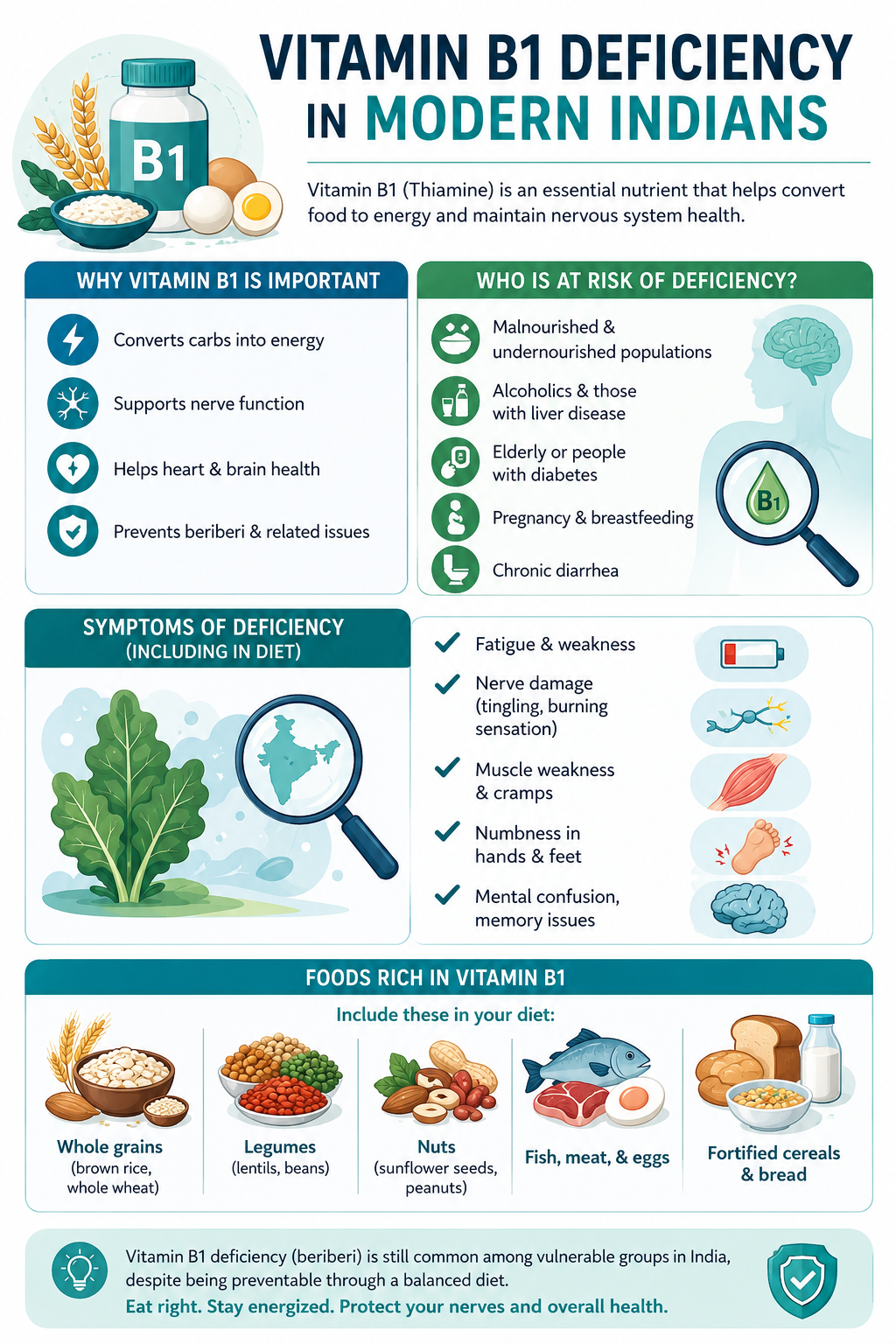



Thiamine (aka vitamin B1) is an essential water-soluble vitamin that plays a crucial role in how cells make energy. It is also very important for how nerves send messages throughout the body, and how the brain makes specific neurochemicals. It is a key cofactor for enzymes involved in converting carbohydrates/fats/proteins into ATP, the body’s primary energy source.
Thiamine is especially needed for production of the neurotransmitter acetylcholine. It is therefore extremely important for the autonomic nervous system, and maintaining the balance between sympathetic and parasympathetic modes.
Thiamine Deficiency in India
Thiamine (Vitamin B1) deficiency in India is a significant public health concern, frequently seen in vulnerable groups due to heavy reliance on polished white rice, traditional dietary habits and regional food insecurity.
Key Drivers and Prevalence in India
- Polished Rice Consumption: Processing and milling rice strips it of its natural, thiamine-rich outer layers. This is a prominent factor in states like Kerala, Tamil Nadu and West Bengal, as well as in the eastern and northeastern regions.
- Cooking Practices: Washing rice more than two to three times before cooking or prolonged boiling leaches out the remaining water-soluble thiamine.
- Antithiamine Factors: Frequent consumption of tea, coffee, betel nuts (supari), and certain fermented or dried fish can inhibit thiamine absorption
- Regional Vulnerability: Studies, including recent research in Northeast India and Kashmir, show prevalence rates where up to 18.4% to 20% of specific populations—particularly pregnant women—are deficient.
Sources of Thiamine – Vit B1
It is found in a variety of foods in low amounts: meats, organs, legumes, whole grains. From a conventional standpoint, a severe deficiency is known to affect the brain, heart, peripheral nerves, and gut.
However, a mild deficiency can lead to a wide variety of NON SPECIFIC symptoms, which vary from person to person: Fatigue, brain fog, nerve pain, muscle pain, insomnia, anxiety, restlessness, autonomic nervous system problems/dysautonomia (blood pressure imbalances, vertigo, circulation problems, heart rate problems, body temperature dysregulation), SIBO, stomach acidity imbalances, constipation, sometimes diarrhea, intestinal permeability and any number of function gut disorders.
What causes Thiamine / Vit B1 deficiency
There are many potential causes. Thiamine status depends on carbohydrate intake, meaning the more carbs/sugar someone consumes, the greater demand for thiamine.
-
High intake of refined carbohydrate/refined foods – Alcohol destroys thiamine – Tannins (not caffeine) in tea/coffee inactivate thiamine
-
Medications: Metronidazole/flagyl, metformin, diuretics, omeprazole – Sulfites destroy thiamine
-
Chronic gut conditions which involve nutrient malabsorption/gut inflammation
-
Any state of prolonged physical stress (excessive exercise, critical illness, hyperthyroid, etc)
In short, there are numerous things which can lead to/trigger a deficiency. A classical deficiency can be fairly straightforward to treat, but can take several months to manifest (depending on severity of the deficiency).
However, there are also many individuals who don’t display the risk factors, but respond to high-doses of thiamine.