



This is Part 2 of our 3-Part Series on Vit C efficacy and evidence for skin health. For Part 1 of the series, please click here.
Topical Vitamin C – The Science Behind One of Dermatology’s Most Powerful Skincare Ingredients, what you should know to get maximum benefits from your skincare routine.
In recent years, Vitamin C serums have become one of the fastest-growing categories in the global skincare market. Dermatologists frequently recommend them for reducing signs of ageing, improving skin brightness and protecting against environmental damage. Yet many consumers remain disappointed after using products that fail to deliver the promised results.
The reason is simple: not every Vitamin C serum is scientifically formulated, and not every form of Vitamin C behaves the same way once it reaches the skin.
The latest dermatology research shows that the success of topical Vitamin C depends on several critical factors, including the chemical form of Vitamin C, its concentration, the product’s pH, formulation stability and packaging. Understanding these factors helps explain why some products produce measurable improvements while others offer little more than marketing claims.
Why Apply Vitamin C Directly to the Skin?
When Vitamin C is consumed through food or supplements, it enters the bloodstream before being transported to different tissues, including the skin. This process is tightly regulated by specialised transport proteins, meaning skin Vitamin C levels cannot increase indefinitely simply by taking larger oral doses.
Topical application follows a different pathway. A properly formulated serum delivers Vitamin C directly to the epidermis and upper dermis, where much of the damage from ultraviolet (UV) radiation, pollution and oxidative stress occurs.
Clinical research has shown that this targeted delivery can increase Vitamin C concentrations in the skin far beyond what is achievable through diet alone, provided the product is formulated correctly.
How Topical Vitamin C Benefits the Skin
Vitamin C influences several biological processes that contribute to healthier, younger-looking skin.
1. Stimulates Collagen Production – One of the best-established benefits of topical Vitamin C is its ability to support collagen synthesis.
Laboratory and human studies have demonstrated that Vitamin C stimulates dermal fibroblasts—the cells responsible for producing collagen and other components of the skin’s extracellular matrix. As collagen production improves, skin may gradually become:
-
Firmer
-
Smoother
-
More elastic
-
Better able to resist wrinkle formation
Clinical improvements usually develop over several weeks or months rather than days.
2. Protects Against Oxidative Stress – Every day, the skin encounters environmental aggressors including: Ultraviolet radiation, Air pollution, Tobacco smoke, Ozone and Blue light from digital devices (an area of ongoing research). These exposures generate free radicals that damage collagen, lipids and DNA.
Vitamin C neutralises many of these reactive molecules before they cause significant cellular injury. This antioxidant action helps slow one of the major biological processes responsible for premature skin ageing.
3. Reduces Photoageing – Photoageing refers to skin ageing caused primarily by chronic sun exposure. Typical features include: Fine lines, Wrinkles, Rough skin texture, Uneven pigmentation, Loss of elasticity and Dull complexion.
Multiple clinical trials have shown that regular application of topical Vitamin C can improve several of these visible changes, particularly when combined with daily sunscreen use. Importantly, Vitamin C is not a substitute for sunscreen. Instead, it complements sun protection by reducing oxidative damage that occurs even when sunscreen is applied correctly.
4. Improves Skin Brightness – Vitamin C has become one of the most popular ingredients for improving skin radiance. Unlike bleaching agents, Vitamin C works by helping regulate melanin production and reducing oxidation reactions involved in pigment formation. Clinical studies suggest benefits for:
-
Sun-induced pigmentation
-
Post-inflammatory hyperpigmentation
-
Acne marks
-
Uneven skin tone
Results typically become noticeable after several weeks of consistent use.
5. Supports Wound Healing – Vitamin C contributes to several stages of wound repair. It supports: Collagen formation, New blood vessel development, Skin barrier repair and Reduction of oxidative stress during healing. Although wound healing depends on many factors, adequate Vitamin C availability is considered important for normal tissue repair.
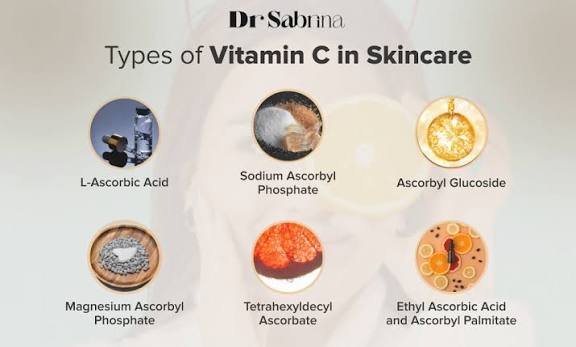
Which Form of Vitamin C Works Best?
One of the biggest misconceptions is that every Vitamin C ingredient performs equally well. In reality, several different forms are used in skincare products.
L-Ascorbic Acid – This is the pure, biologically active form of Vitamin C and remains the most extensively studied. Advantages include:
-
Strong clinical evidence
-
Excellent antioxidant activity
-
Proven collagen stimulation
-
Good pigmentation benefits
However, L-ascorbic acid is also highly unstable. Exposure to oxygen, light, heat or moisture can rapidly degrade the molecule, reducing effectiveness.
Sodium Ascorbyl Phosphate – A more stable derivative often used in cosmetic formulations. Potential benefits include: Better product stability, Less skin irritation and Good suitability for sensitive skin. Some evidence also suggests benefits in acne-prone skin because of its antimicrobial properties.
Magnesium Ascorbyl Phosphate – Another stable derivative frequently found in moisturisers and anti-ageing creams. Research suggests it may: Improve skin hydration, Reduce oxidative stress and Support collagen synthesis. However, more clinical studies are needed compared with L-ascorbic acid.
Ascorbyl Glucoside – This derivative gradually converts to active Vitamin C after application. Advantages include: Excellent formulation stability, Reduced irritation and Longer shelf life. Its clinical effectiveness continues to be investigated.
Does Concentration Matter?
Consumers often assume that higher concentrations automatically produce better results. Current evidence suggests otherwise.
Most dermatologists recommend concentrations between 10% and 20% L-ascorbic acid for photoageing and pigmentation. Below approximately 8–10%, absorption may be insufficient for optimal biological effects.
Above about 20%, studies have generally found little additional benefit while the likelihood of irritation increases. More is therefore not necessarily better.
Why pH Is So Important
For pure L-ascorbic acid to penetrate the skin effectively, formulations generally require a low pH (around 3.5 or lower). This acidic environment improves skin penetration but may also cause temporary: Stinging, Burning and Mild redness.
Individuals with sensitive skin often tolerate Vitamin C derivatives better because they remain effective at higher, less acidic pH levels.
The Stability Challenge
Vitamin C is notoriously unstable. When exposed to: Air, Light, Heat and Moisture, it oxidises quickly and gradually loses activity. Oxidised Vitamin C often changes colour from clear or pale yellow to dark yellow, orange or brown.
Once significant oxidation occurs, the product may no longer deliver the expected clinical benefits. For this reason, dermatologists recommend choosing products packaged in:
-
Opaque containers
-
Air-tight pumps
-
Dark glass bottles
-
Small-volume packaging that reduces repeated exposure to air
Can Vitamin C Be Combined with Other Ingredients?
Yes—and in many cases, combinations enhance effectiveness. Some of the best-supported combinations include:
Vitamin C + Vitamin E – Vitamin E protects cell membranes, while Vitamin C helps regenerate oxidised Vitamin E. Together they provide broader antioxidant protection than either nutrient alone.
Vitamin C + Ferulic Acid – One of the most extensively studied combinations. Ferulic acid helps stabilise Vitamin C while enhancing protection against UV-induced oxidative damage.
Several clinical studies have demonstrated improved photoprotection with this combination.
Vitamin C + Sunscreen – Perhaps the most important partnership.
Sunscreen blocks much of the incoming UV radiation, while Vitamin C helps neutralise free radicals generated by sunlight that penetrates the skin despite sunscreen use. The combination provides better protection against photoageing than sunscreen alone.
What Does Clinical Research Show?
Systematic reviews published over the past several years consistently conclude that topical Vitamin C can improve several indicators of skin health when used regularly. The strongest evidence supports benefits for:
-
Fine wrinkles
-
Photoageing
-
Skin roughness
-
Uneven pigmentation
-
Collagen production
-
Overall skin appearance